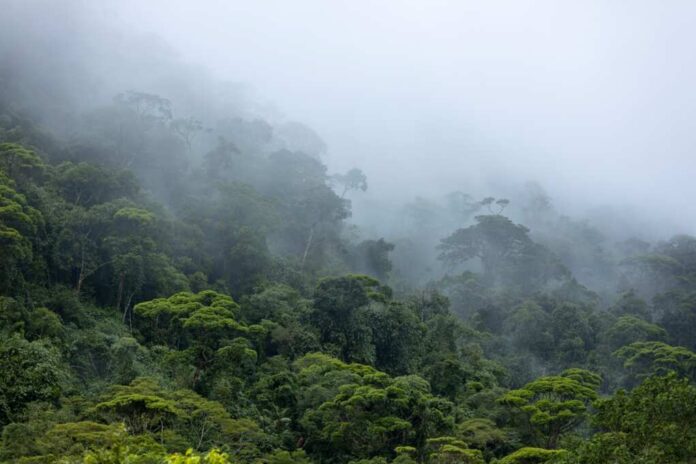
Record Amazon fires have turned the world’s largest rainforest from a carbon sink into a significant carbon source.
Story Highlights
- Amazon fires release 791 million tons of CO₂, surpassing emissions of entire countries.
- Fire-driven degradation overtakes deforestation as the main carbon source.
- Weak law enforcement and climate change exacerbate the crisis.
- Global implications for climate, biodiversity, and human health.
Amazon’s Transition from Carbon Sink to Source
The Amazon rainforest, previously considered the planet’s largest carbon sink, has experienced unprecedented fire activity, releasing 791 million tons of CO₂ in 2024 alone. This figure surpasses the annual emissions of several entire countries, highlighting a significant shift in the forest’s role from a carbon absorber to a source. The primary driver of these emissions has shifted from deforestation to fire-driven degradation, marking a dangerous new phase in the Amazon’s decline.
Fire-driven degradation, exacerbated by climate change and weakened law enforcement, has become the primary source of carbon emissions from the Amazon. This shift is attributed to persistent drought conditions, partly fueled by global climate change, making the forest increasingly flammable. Additionally, the rollback of environmental protections and enforcement under President Jair Bolsonaro’s administration has facilitated illegal land clearing, further contributing to the crisis.
Watch: Amazon’s indigenous people hit by record forest fires in Brazil | BBC News
Stakeholders and Environmental Policies
The Brazilian government, tasked with balancing economic development and environmental protection, has faced criticism for its policy choices that favor short-term economic gains over long-term sustainability. The National Institute for Space Research (INPE) monitors these developments, providing critical data on fire and deforestation rates. Meanwhile, indigenous communities, who are the forest’s traditional stewards, find their lands and livelihoods threatened by these fires.
The agribusiness sector, driven by profit motives, continues to expand agriculture and cattle grazing through land clearing by fire. This practice, coupled with reduced penalties for environmental violations, has weakened the forest’s resilience, prompting calls for stronger international climate funding and forest protection measures.
Global Impacts and Future Implications
The consequences of the Amazon fires are far-reaching, affecting not only local biodiversity and human health but also contributing to global climate change. The loss of the Amazon’s carbon sink capacity accelerates global warming, with potential economic costs for Brazil estimated at up to $3.5 trillion over the next 30 years. Scientists emphasize the urgent need for coordinated international action to mitigate these impacts and restore the forest’s ecological balance.
Despite the dire situation, there remains an opportunity for change. Strengthening law enforcement, implementing sustainable land-use practices, and increasing international cooperation can help restore the Amazon’s role as a vital carbon sink and protect its immense biodiversity for future generations.
Sources:
Amazon sees worst fires in 20 years, 791m tons CO₂ emissions
New data: Brazilian Amazon fires have released 104-141 million metric tons of CO₂
2019 Amazon rainforest wildfires
Increased Amazon carbon emissions a result of weak law enforcement