KU Leuven said Flemish bishops were consulted before Quran verses were chanted during its opening Catholic Mass, intensifying a cross-faith debate now spreading well beyond Belgium.
Story Highlights
- KU Leuven said the Quran recitation at its opening Mass was planned and approved in advance.
- The university called the moment an interreligious gesture for peace and reconciliation.
- Critics said the chant put Islam above Catholic identity and blurred worship lines.
- Reports said an archbishop attended, adding weight to the controversy.
University Explains Planning and Oversight
KU Leuven said the inclusion of non-Catholic prayers at its major ceremonies is a standing practice. The university told AdVaticanum that its parish planned the moment with the rector’s office and in consultation with Flemish bishops. It said a student mosque proposed the Quran verses, which were vetted and approved in advance. A chaplain trained in Arabic reviewed the text before the Mass. The school framed the act as an interreligious gesture toward peace and reconciliation.
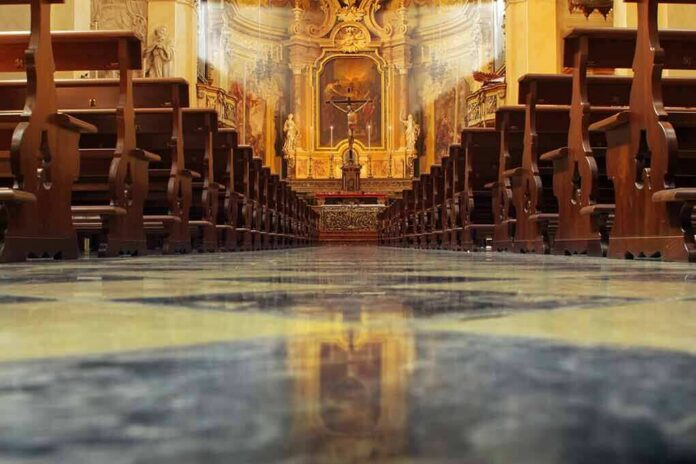
Reports identified the passage as Surah Ash-Shu’ara, chapter 26, verses 69–70. The line “What do you worship?” featured in the chant. Video clips spread online over the weekend, showing a young man chanting in Arabic at the lectern during the opening liturgy at Saint Peter’s Church. The university said the choice aligned with the theme of the celebration. It also said similar interreligious elements had appeared at prior principal events over the years.
Backlash From Catholic Groups and Student Critics
A Catholic student association in Flanders, KVHV-Leuven, led public criticism after the clips appeared. The group said the university chose Islam over its own heritage. It argued that hearing Islamic chants during a Catholic Mass crossed a line. Advocacy and commentary outlets echoed that claim and said the event blurred the boundary between interfaith dialogue and Christian worship. Social media posts amplified the dispute and drove wider attention to the video.
Coverage also said the opening Mass was attended by Archbishop Luc Terlinden, who leads the Archdiocese of Mechelen-Brussels and chairs the Belgian bishops’ conference. His presence signaled that the event sat within an official Catholic setting, which made the moment more sensitive. That visibility raised questions among skeptics about liturgical norms and how far interreligious gestures can go inside a Eucharistic celebration.
What Is Confirmed and What Remains Unclear
The record shows KU Leuven’s claim that Flemish bishops were consulted, but no public letter from the bishops has been released to detail who agreed to what, or when. No full Mass program has been provided in the sources to show the exact placement of the chant inside the liturgy. Without those documents, observers cannot test whether the recitation functioned as a reading, a hymn, a meditation, or something outside the strict order of Mass.
A video from KU Leuven’s Sept. 16 opening Mass has sparked controversy after a segment was described by critics as Islamic chanting in Arabic.
KU Leuven has not yet published a transcript explaining the passage.
The debate: where should interreligious dialogue end and Catholic… pic.twitter.com/unxJ1rXA7S
— SG News (@SGNews123) September 19, 2026
The university’s explanation fits a larger pattern since the Second Vatican Council. Church teaching encourages dialogue and collaboration with non-Christian religions while asking Catholics to stay true to their own worship. Guidance from Rome supports multi-faith settings that are carefully planned and respectful, yet debate continues on how to apply that guidance within a Mass. This case lands on that fault line, where small choices carry large meaning for many believers.
Why This Matters Beyond Leuven
People across the political spectrum see powerful institutions acting without clear accountability. This story taps that nerve. Supporters of interfaith outreach see a planned, reviewed gesture for peace. Critics see leaders making big changes without transparent rules, then asking the public to accept it. When officials cite consultation but do not share documents, trust erodes. That dynamic fuels the belief that cultural and religious norms can be reset from the top down, without the people’s consent.
What To Watch Next
Watch for any formal statement from the Belgian bishops’ conference naming who was consulted and what was approved. Look for the official program or a full recording that shows how the chant fit in the service. Clear records would help answer the key question: did the moment align with Catholic liturgical norms, or did it cross into shared prayer inside the Mass? Until those details surface, strong feelings will likely outrun facts in the public square.
Sources:
lifesitenews.com, advaticanum.com, ground.news, iqsaweb.org, pal.be