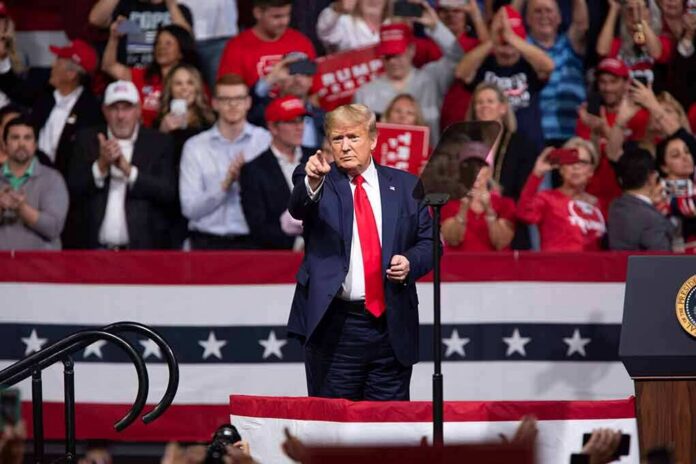
President Trump warned he could halt trade with deficit countries unless the Federal Reserve cuts interest rates, tying a major foreign‑trade threat to the latest jobs data.
Story Snapshot
- Trump linked a trade cutoff threat to his demand for lower interest rates after the August jobs report.
- He cited a Supreme Court tariff case as proof of presidential authority, though details remain unclear.
- Reports say investors watched the remarks alongside shifting odds for near‑term rate moves.
- Economists and past reporting show the Federal Reserve focuses on inflation and jobs, not political threats.
What Trump Said And Why It Matters
President Trump posted that the Federal Reserve should “LOWER THE RATE OR I’LL STOP TRADING WITH COUNTRIES WITH WHICH WE HAVE A DEFICIT,” shortly after the August jobs report came out. He argued the economy is strong enough to handle easier policy and framed trade deficits as leverage. Reports tie his statement to ongoing efforts to use tariffs and trade tools to shape policy outcomes, making the post more than an offhand comment.
Trump also referenced a Supreme Court ruling on tariffs, saying it showed the president has sweeping power to act. The reports quote his description of that case but do not provide the exact legal language that would clearly allow a full trade cutoff based on deficits. That gap leaves questions about the legal path, timing, and which countries would be targeted if the threat were used.
The Jobs Data And Rate‑Cut Debate
Coverage notes the August jobs report shaped market bets on interest rates, as investors weighed whether a cooling labor market or inflation risks should guide the next move. The reporting places Trump’s demand inside that debate, with some seeing room for a cut and others urging caution. Prior analyses show the Federal Reserve weighs employment, inflation, and stability over political pressure, even when the jobs data become a flashpoint.
Earlier cycles showed similar tension. When hiring slowed in 2025, analysts discussed rate cuts, yet they still pointed to the Federal Reserve’s dual mandate. That history suggests presidents can try to sway policy, but the central bank protects its process. The new twist here is the explicit link between interest rates and trade deficits, which economists usually treat as separate policy channels, not a single bargaining chip.
Trade Power, Market Stakes, And Public Frustration
Trump’s threat fits his long‑running view that trade deficits justify strong action, including tariffs or limits. Reports from 2025 and 2026 show a pattern of using deficit country pressure to seek better terms, and now to press for lower rates. Markets took notice because trade shifts can lift prices and unsettle supply chains, while rate cuts can loosen credit. That mix can move stocks, bonds, and the dollar in fast and sometimes opposite ways.
🚨MAJOR BREAKING: TRUMP THREATENS GLOBAL TRADE CUTOFF UNLESS THE FED LOWERS INTEREST RATES!🚨
👉Following today’s blowout jobs report, President Trump demanded that the US have the lowest interest rate of any country in the world:
🔥“LOWER THE RATE OR I’LL STOP TRADING WITH… pic.twitter.com/yFmBcOQ30K— International Stacker (@IntlStacker) September 4, 2026
Americans across the political spectrum worry that powerful actors play games with the economy while regular people face high prices and job insecurity. This episode taps that anger. Supporters may see a hard line to lower borrowing costs and protect industry. Critics may see a risky gamble that blurs independent monetary policy with trade brinkmanship. The record so far shows no clear Federal Reserve endorsement of a trade‑for‑rates swap, and no implementation plan from the White House.
What To Watch Next
Watch for an on‑record response from Federal Reserve leaders on whether trade deficits affect their rate path. Look for any formal White House documents that outline legal authority to halt trade with deficit countries and name who would be hit first. Investors will track futures pricing around rate meetings and any tariff announcements. If either side escalates, households could see effects through prices, mortgage rates, and job openings within weeks, not months.
Sources:
insiderpaper.com, abc17news.com, dailysabah.com, finance.yahoo.com, news.sbs.co.kr, reuters.com