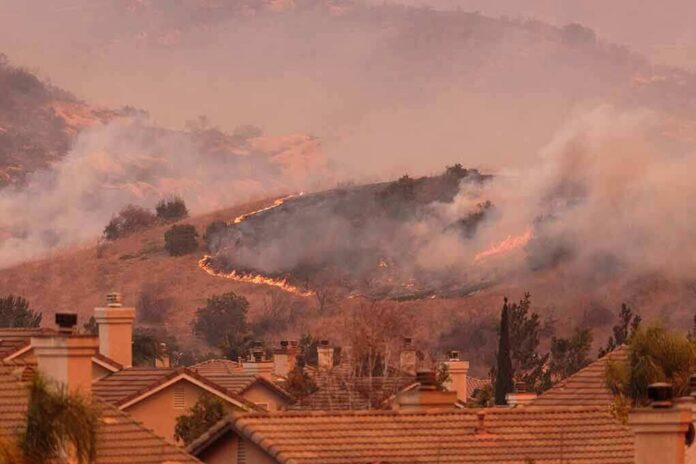
A fast-growing wildfire in northern Spain forced evacuations, cut a key highway, and came close to a famed monastery complex, putting people and heritage at risk.
Story Snapshot
- Emergency crews mobilized aircraft, brigades, and the military to fight the fire.
- Authorities cut the A-132 highway and evacuated residents from several towns.
- Officials later said the fire slowed and was partly contained along parts of the edge.
- Protecting the San Juan de la Peña monasteries became a priority, with artifacts moved as a precaution.
Rapid escalation and a large-scale response
Government of Aragón emergency managers declared the Las Peñas de Riglos wildfire early on August 10 and raised their operational status the same day. They deployed an advanced command post, water tankers, ground crews, and several helicopters. They requested support from the Emergency Military Unit, Spain’s military disaster force, to bolster the lines. The fast resource surge shows officials treated the incident as a high-risk, active threat from the start.
By that afternoon, officials had closed the A-132 highway and ordered preventive evacuations in towns near the flames. Regional media reported more than 200 people from Aragón, the Emergency Military Unit, the national environment ministry, and nearby Navarra were fighting the fire. Buses moved about 120 affected people to shelters in Ayerbe and Jaca. Crews focused on keeping the fire north of the highway to protect communities and access routes for responders.
Progress on containment amid shifting conditions
As winds and terrain shifted, crews from several agencies kept working through August 11 to hold the line near the road and limit spread into new valleys. Officials warned the perimeter was not yet secure and the fire could push again if the weather turned. The joint effort across regional, national, and military teams aimed to stop the fire from crossing the highway barrier and threatening more towns downstream.
By August 12, the regional minister said the fire was moving very slowly and that crews had closed half of the edge. Teams worked the right flank to block heat pockets and remove unburned fuel. That update signaled progress but not a full stop. The minister’s note also implied risk remained if winds picked up or embers found new brush. Firefighters kept aircraft and ground resources on the line to tighten control.
Historic monasteries under precautionary protection
The flames approached the San Juan de la Peña monastery complex, a symbol of Aragón’s history set into the rock near the fire area. Cultural officials treated the site as a priority. Authorities removed some valuable artifacts from the complex as a precaution while firefighters worked to keep flames away. Reports said the fire neared but did not enter the monastery grounds during that phase, reducing the chance of cultural loss.
Crews from the Emergency Military Unit and regional services continued night operations later that week to hold gains and cool hot spots near communities and heritage sites. Night shifts used lower winds and higher humidity to build containment. The push aimed to protect the nearby village, reopen the cut highway sections when safe, and prevent new runs toward cultural sites as temperatures rose again during the day.
Why this fire drew national attention
This incident checked several boxes that raise urgency. It threatened towns, disrupted a key road, and put a famous cultural site at risk. Those factors brought more staff, aircraft, and military support in hours, not days. They also focused the public on whether the state could protect both people and history at once. Officials leaned on proven wildfire tactics while giving regular updates on the pace, the edge, and the defense of landmarks.
Numbers across reports varied as the situation changed. Burned area and evacuee totals often shift in the first days of a large fire. That is normal when crews move people out in stages and when mapping improves with flights. The key facts remained steady: evacuations happened, the highway closed, the fire slowed later in the week, and the monasteries received extra protection steps. Those points frame the core record of this event.
What to watch next
Residents and travelers will look for road reopening timelines, utility checks, and any changes in evacuation status. Cultural officials will likely assess smoke and heat effects on the monastery sites after the perimeter holds. Fire managers may release a fuller incident log that details resource use, containment lines, and the exact swing points on each flank. For now, crews remain in the area to finish containment and reduce the chance of flare-ups near towns or heritage sites.
Sources:
elconstitucional.es, heraldo.es, youtube.com, bernama.com, europapress.es, ground.news