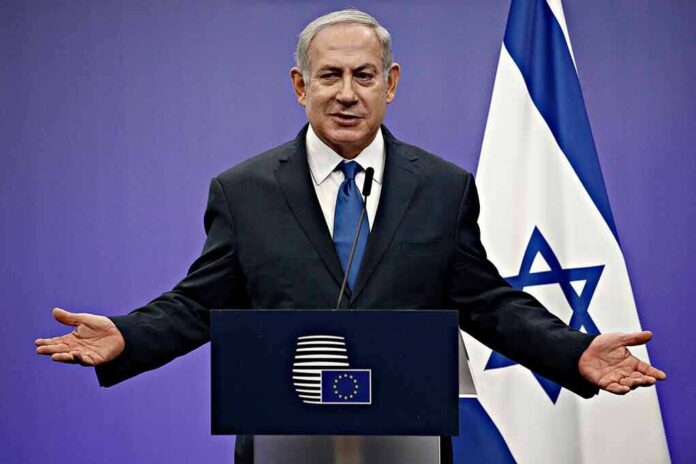
Netanyahu’s public rejection of the Gaza peace plan has turned a diplomatic pause into a sharp test of power, trust, and control.
Quick Take
- Netanyahu said Israel did not agree to the U.S.-backed draft and would not withdraw until Hamas is disarmed.
- He said Israeli forces would stay on their current lines until Hamas gives up all weapons.
- The United States plan was described as phased, with withdrawal tied to disarmament and verification.
- The public dispute shows how Gaza talks keep collapsing over who moves first and what counts as compliance.
Netanyahu Draws a Hard Line
Prime Minister Benjamin Netanyahu said Israel rejected the 15-point Gaza document and would not pull back its forces until Hamas is fully disarmed. In a video statement, he said Israel “did not agree” to the draft, that it was “not our draft,” and that his government sent back comments. The stance leaves little room for a quick troop withdrawal and puts security conditions before any wider deal.
That message matters because it came after days of mixed signals and behind-the-scenes talks. CNN reported that Trump, mediators, and Arab countries initially treated the plan as a breakthrough, while Israeli officials signaled that Israel had not signed on and would not withdraw before full disarmament. In that sense, the fight is not only about Gaza. It is also about who gets to define the deal.
What the Plan Was Meant to Do
The plan described in coverage was not framed as an immediate Israeli retreat. Reported details show a phased process in which Hamas would disarm as Israel pulled back in stages, with third-party monitoring and a future transfer of power to Palestinian bodies. Netanyahu pushed back on that sequence, saying Israel wants “genuine disarmament,” not a paper promise. His position suggests he wants the armed group neutralized before any real movement on the ground.
That sequencing fight goes to the heart of Gaza diplomacy. Previous talks have failed over the same question: whether a ceasefire should begin with a pause, a pullback, or a full security guarantee first. Hamas has often demanded withdrawal and prisoner releases, while Israel has insisted that Hamas cannot remain armed or in control. The public debate now repeats that pattern in a new form, with the same old deadlock.
Why the Breakdown Resonates Beyond Gaza
The bigger problem is trust. CNN described the broader Gaza response as a mix of silence, skepticism, and competing claims from officials and allies. That leaves the public with two very different stories. One side says the plan offered a path through staged steps. The other says the draft did not match Israel’s position and would have forced risky concessions too soon. Both can sound plausible because the process is still partly opaque.
To understand what happened with Gaza today:
Board of Peace 15 point plan: Hamas disarmament and IDF withdrawal would happen gradually and in parallel, through a phased, monitored process.
Netanyahu: Hamas fully disarms first. Only then does the IDF withdraw.
— Open Source Intel (@Osint613) August 9, 2026
The dispute also fits a wider frustration that crosses party lines: governments announce peace frameworks, then argue over wording while the fighting and suffering continue. BBC reporting on an earlier ceasefire round showed how Netanyahu rejected phased terms when Hamas wanted a complete Israeli pullout, calling the proposal “bizarre” and insisting on “complete and final victory.” That history helps explain why many people now see Gaza diplomacy as a cycle of promises, delays, and blame.
Sources:
cbsnews.com, timesofisrael.com, bbc.com, jpost.com, uniindia.com, youtube.com, unn.ua, theconversation.com