

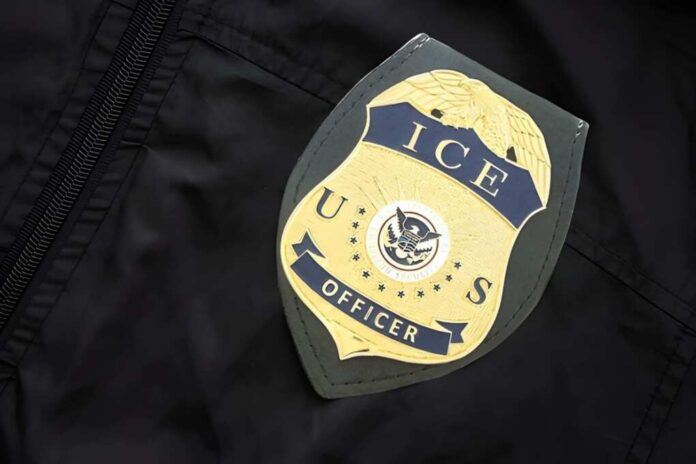
A federal judge has stepped in to stop New York from unmasking federal immigration agents, sharpening a national fight over who really runs law enforcement in this country.
Story Snapshot
- A federal court blocked New York’s new rule that would have forced federal immigration agents to uncover their faces and show ID while working in the state.
- The judge said New York likely crossed the line by trying to directly control federal officers, raising Supremacy Clause concerns.
- New York leaders argue masked, anonymous agents scare communities and make it easier for criminals to pose as law enforcement.
- The same ruling still lets New York block local police from partnering with federal immigration agents, keeping state control over its own officers.
What the Judge Decided About Masked Federal Agents
On Monday, United States District Judge Mae D’Agostino issued a preliminary injunction that stops New York from enforcing its new mask and ID rules on federal immigration agents. The law would have barred United States Immigration and Customs Enforcement officers from wearing face coverings and required them to display visible identification while interacting with the public. Judge D’Agostino said the federal government is likely to win its case because the state’s rules directly regulate federal officers, which conflicts with the United States Constitution’s Supremacy Clause.
Judge D’Agostino wrote that New York officials may be right that masked agents without clear badges can create dangerous situations by scaring residents and opening the door for impersonators. Still, she found that only federal authorities, not states, set policy for how federal immigration laws are enforced. Her order means federal agents can continue wearing tactical face coverings and keeping some identifying details shielded while they carry out arrests or raids in New York. For the Trump administration, this marks another court victory against state attempts to rein in federal immigration enforcement.
New York’s Push for Transparency and Local Control
New York lawmakers passed the mask and identification rules in May as part of a broader package they said would “protect the rights of New Yorkers” during civil immigration enforcement. The law requires all law enforcement officers working in New York—state, local, and federal—to keep their faces and identification clearly visible when dealing with the public, with limited exceptions for health, safety, or undercover work. State leaders argued that masked, anonymous agents with military-style weapons burst into homes or workplaces without judge-issued warrants and spread panic while making it easier for criminals to pretend to be police.
The same legislation also cuts off local and state police cooperation agreements with federal immigration authorities, known as 287(g) contracts. These agreements let local officers act as federal immigration agents in some situations. Judge D’Agostino upheld New York’s ban on such cooperation, ruling that the state does have power to control how its own police agencies interact with federal immigration enforcement. That split decision creates a sharp line: New York can choose not to help, and can set rules for its own officers, but it cannot tell federal agents how to dress or identify themselves.
Why This Fight Matters Beyond Immigration Policy
This clash goes far beyond masks; it speaks to a deeper struggle over who is accountable when armed government agents show up at people’s doors. New York’s move came after high-profile operations where masked federal agents used deadly force, stirring anger among residents who already feel the government is distant, secretive, and unresponsive. For many on the left, masked immigration raids symbolize a harsh America First push that ignores human rights and widens the gap between those with power and those without. For many on the right, aggressive federal action reflects long-standing frustration with illegal immigration and weak border enforcement.
Fact Check: TRUE, as Grok fleshes it out a bit.
A federal judge in New York issued a preliminary injunction blocking state laws that banned ICE and other federal agents from wearing face coverings or requiring visible identification during operations.
U.S. District Judge Mae…
— ♞ Steven Douglas 🇺🇸 (@StevieDougie) August 4, 2026
Yet there is growing overlap in the core worry: ordinary people see government agents—whether federal or state—acting behind masks, with little transparency, and they doubt anyone will be held responsible if things go wrong. New York’s law tried to answer that fear by forcing all officers to show their faces and identification, creating a clearer trail if abuses occur. The Justice Department’s complaint pushed back, arguing that exposure has led federal officers to face doxing, harassment, and violence, and that the state was risking their safety to score a political point. Both sides invoke safety, but for different groups—officers on one hand, civilians on the other.
A Growing National Pattern and the Deep State Debate
This case is not isolated. Earlier this year, a federal judge blocked a similar California law that aimed to restrict masks and demand identification from federal immigration agents. States like New York and California are testing how far they can go in putting transparency and civil rights rules around federal operations, while the federal government keeps citing the Supremacy Clause and intergovernmental immunity to push back. Each ruling reinforces a pattern: Washington insists on control of its agents’ gear and tactics; states look for new ways to shield their residents and distance local police from federal immigration crackdowns.
For many Americans, this back-and-forth fuels a familiar suspicion that a “deep state” of powerful insiders makes the real decisions, out of sight and beyond reach. Masked federal agents, operating in neighborhoods without local oversight, fit that fear for people across party lines who already feel locked out of the American Dream. At the same time, New York’s leaders are not shy about using state power either, banning cooperation and shaping how police work inside their borders. The result is a tug-of-war where both sides claim to defend safety and rights, but ordinary citizens still see armed, anonymous officers at their door and wonder who, if anyone, is truly on their side.
Sources:
facebook.com, politico.com, nytimes.com, vinnews.com, news10.com, youtube.com