

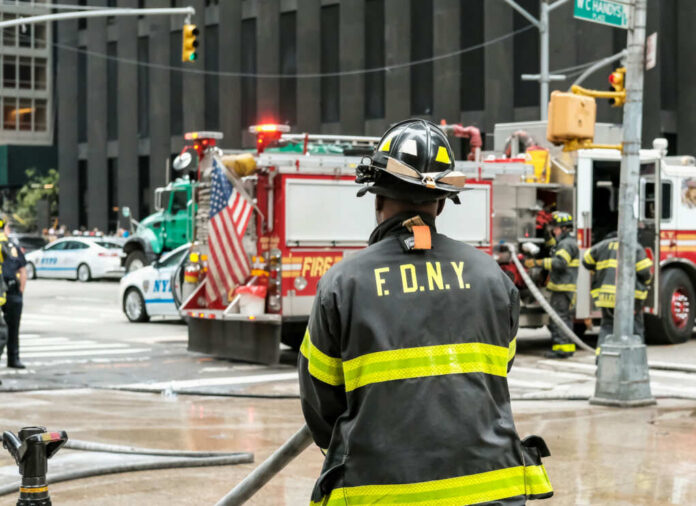
A middle-of-the-night work-train fire in Amtrak’s New York tunnels injured five and paralyzed regional travel, reviving hard questions about rail safety, aging infrastructure, and who is accountable when commuters pay the price.
Story Snapshot
- Five workers were injured after an Amtrak work-train car caught fire near Penn Station, triggering major service suspensions [1].
- Initial reports placed the blaze in the Hudson River tunnel area, with service halts rippling across Amtrak and New Jersey Transit [3][4].
- Regional officials cited a work-train incident and electrical damage as the likely source of disruption while investigations continue [2][3].
- Early narratives differ between “accident under investigation” and possible preventable failure, a familiar gap after high-profile rail events [8].
What Happened Inside the Tunnels Overnight
Transportation officials reported shortly after 1:30 a.m. that a fire ignited on an Amtrak work-train car within the Hudson River tunnel system near Penn Station. Firefighters extinguished the blaze as morning approached, but the incident left five workers injured. News reports described two workers with more serious injuries transported for hospital care. The immediate safety response and smoke conditions prompted shutdowns and delays that rippled across morning commutes into Manhattan and along the Northeast Corridor [3][1].
Amtrak and partner agencies moved to suspend traffic into and out of Penn Station while emergency crews assessed damage and cleared equipment. The service impacts affected Amtrak routes as well as New Jersey Transit, with cascading cancellations and diversions. Coverage from Washington, D.C., to New York highlighted that several intercity services were paused until assessments and repairs allowed limited restoration. Officials emphasized that investigations were active and that early timelines for normal operations were tentative and subject to change [4][3].
Conflicting Early Narratives: Accident Versus Preventable Failure
Amtrak characterized the event as an unforeseen incident on a work train under investigation, with no confirmed determination of fault. Regional leaders and local outlets, meanwhile, pointed to an electrical component and tunnel repair context that could indicate a preventable failure. One report cited comments that two work trains appeared to have collided, damaging electrical systems and igniting the fire, reflecting a more specific operational fault line that investigators would need to verify through records and physical evidence [3][2].
This tension mirrors a well-known pattern in major rail incidents: early statements stress uncertainty while the public experiences visible disruption. That gap persists until investigators analyze event data, signal logs, and maintenance history. Coverage of Friday’s fire underscored this divide. Some accounts focused on the accident label and restoration goals; others highlighted tunnel repair work and possible power-system issues. Without conclusive findings, both frames remain provisional and must be weighed cautiously against official investigation outcomes [8][2].
Safety, Accountability, and the Commuter Burden
Friday’s shutdown rattled thousands of riders who depend on reliable service to earn a living, get medical care, or see family. Commuters have endured years of disruptions linked to aging assets and complex ownership structures in and around Penn Station. When work-train incidents disable electrical systems and force wide suspensions, the burden falls squarely on working families. Clear accountability, transparent timelines, and rapid remediation matter, because each failure chips away at public trust and drains regional productivity [4][1].
💬 MTA head rips Amtrak after train car fire sparks another transit fiasco at Penn Station https://t.co/1uSwCB8CPH
🎤 @mackrosenberg reports
📸 MTA, Amanda Alexandre, Glenn, Schuck, AP Photo/Richard Drew pic.twitter.com/EHKXlUeACm
— 1010 WINS on 92.3 FM (@1010WINS) May 29, 2026
Conservatives will expect firm accountability without political spin. If investigators confirm an electrical or procedural failure, leadership should disclose root causes, publish corrective actions, and commit to deadlines that are met, not promised. If findings show an unavoidable accident, agencies still owe riders hard data on resilience improvements. Either way, the standard is results: safer maintenance operations, hardened power systems, and predictable service. Commuters deserve infrastructure that works as advertised, not shifting explanations after preventable disruptions [2][8].
Sources:
[1] Web – Fire on Amtrak train at New York’s Penn Station injures five
[2] Web – Amtrak work train fire near Penn Station injures 5, snarls NJ Transit
[3] Web – Amtrak, NJ Transit services suspended at Penn Station in New York …
[4] Web – NJ Transit, Amtrak suspended at Penn Station due to train car fire
[8] YouTube – Amtrak train car fire disrupts services for Friday morning commuters