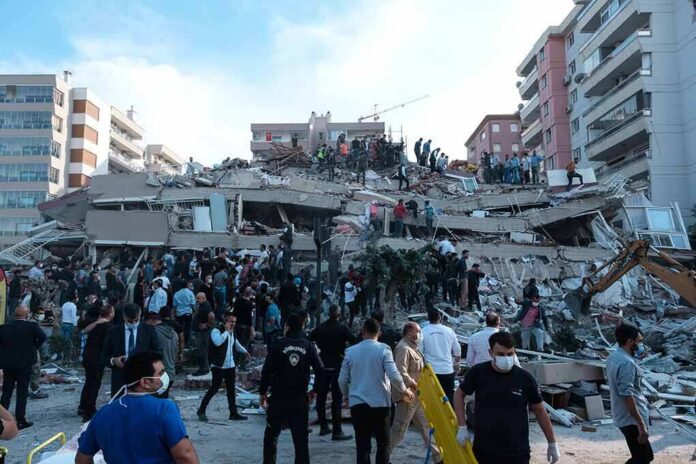
United Nations economists say Gaza’s economy collapsed by more than four-fifths in 2024, a freefall they call the deepest ever recorded for the territory.
Story Highlights
- UN trade experts report Gaza’s 2024 output plunged 83% to about $362 million.
- The United Nations describes the collapse as the deepest crisis ever recorded in the territory.
- Job losses, poverty, and destroyed businesses point to a long, costly recovery.
- World Bank and United Nations estimates put rebuilding needs in the tens of billions.
UN Findings: Scale of Economic Collapse
The United Nations Conference on Trade and Development reported that Gaza’s gross domestic product fell 83 percent in 2024, dropping to about $362 million after steep losses began in late 2023. The United Nations office for Palestine said the occupied Palestinian territory is in its deepest recorded economic crisis, with Gaza facing an unprecedented collapse. The United Nations brief cited mass business destruction, soaring job losses, and poverty levels that left most families without steady income.
United Nations analysts said Gaza’s gross domestic product per person fell to about $161 in 2024, among the world’s lowest levels. The agency warned that cumulative losses across 2023 and 2024 reached roughly 87 percent, erasing decades of progress. The broader occupied Palestinian economy also shrank, with joblessness high in both Gaza and the West Bank, compounding household hardship and making basic needs tougher to meet without outside aid.
Jobs, Poverty, and Business Destruction
United Nations trade data show that about two-thirds of pre-war jobs in Gaza vanished by January 2024, equal to more than 200,000 positions. Reports describe nine in ten businesses damaged or destroyed, choking trade and services and halting most private activity. With formal work gone, families relied on aid, informal jobs, or risky scavenging. United Nations outlets said poverty surged and inflation spiked, pushing basic goods out of reach for many homes already on the edge before the war.
World Bank assessments support the picture of an economy near standstill. The bank cited an 86 percent contraction in the first quarter of 2024 and warned that recovery to pre-war income levels could take many years. United Nations summaries added that the war set back broader development by more than two decades, wiping out gains in health, education, and infrastructure that anchor long-term growth. Together, these findings show a labor market and business base too damaged to restart without major outside support.
Reconstruction Needs and Timeline
World Bank, United Nations, and European Union damage and needs studies estimate that rebuilding Gaza will cost in the tens of billions of dollars, far beyond local capacity. United Nations trade analysts say the path back is not only about bricks and cement. It also requires restoring power, water, finance, and trade links so factories, farms, and shops can run again. Without these inputs, output stays low, prices stay high, and families cannot recover savings or rebuild small firms.
United Nations trade reports outline a long recovery even under stable conditions, given the depth of loss and the scale of debris and damage. Past cycles of rebuilding in Gaza were smaller and still took years; this time, the hit is many times larger. That fuels a shared worry across the political spectrum at home: when crises of this size keep recurring, aid money seems to vanish into a hole while regular people, not elites, pay the price in jobs, savings, and dignity.
Sources:
insiderpaper.com, unctad.org, palestine.un.org, un.org, news.un.org, gmanetwork.com