A fresh “Cuban missile crisis” rumor now claims 300 Russian and Iranian attack drones are aimed at Florida—but the public evidence so far is far thinner than the headlines suggest.
Story Snapshot
- Commentators and social posts allege Cuba holds 300 Russian and Iranian attack drones targeting the U.S. homeland.
- Available reporting shows stepped-up U.S. surveillance flights and Russian activity, but no hard proof of a 300-drone stockpile.
- Speculative threat inflation risks public panic and partisan spin instead of sober defense planning.
- Conservatives should demand clear evidence, stronger deterrence, and accountability for past neglect of homeland security.
Viral Claims Of “300 Drones In Cuba” Put Americans On Edge
Axios-style headlines and viral posts are now warning that Cuba has amassed roughly 300 Russian and Iranian attack drones within ninety miles of Florida, allegedly with U.S. critical infrastructure in the crosshairs. Much of this narrative builds on earlier speculation that a secretive Russian military aircraft quietly landed in Cuba, “possibly carrying long range weapons” intended to threaten the United States, according to one YouTube commentator who stressed that such deliveries were only “possible” at this stage, not confirmed reality [1].
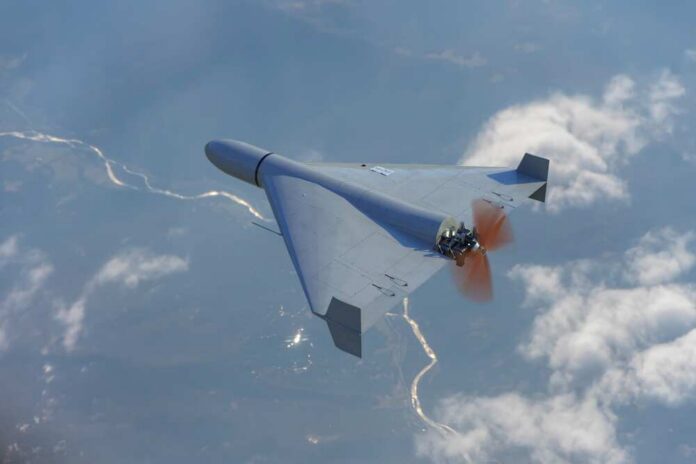
Social media amplifiers then layered on talk of Russian Shahed or so‑called Geran class drones being shipped to the island, repeating phrases like “it is possible right now that Russia is secretly delivering” these systems to Havana and that Cuba could then “arm those drones” [1]. None of these statements cited satellite imagery, intercepted manifests, or official intelligence documents. They instead relied on inference and the understandable anxiety Americans feel after watching drone warfare devastate targets in Ukraine and the Middle East over the last several years [3].
What We Actually Know: Recon Flights And Rising Tension
Concrete reporting does show that the United States has dramatically increased reconnaissance flights near Cuba since early February, with at least twenty‑five intelligence missions detected near the island’s coastline [2]. Flight‑tracking data cited by cable news coverage indicates a mix of P‑8A Poseidon patrol planes, RC‑135 electronic intelligence aircraft, and high‑altitude Triton drones flying close to Havana and Santiago de Cuba, in some cases within about forty miles of the Cuban shore. That pattern reflects real concern inside the Trump administration about hostile activity in the Caribbean [2].
Cuban President Miguel Díaz‑Canel has responded to the stepped‑up American presence with hardline rhetoric, warning that any attack on the island would trigger a “war of all the people” and heavy losses on both sides [2]. Military analysts quoted in broadcast coverage say the visible surveillance resembles the posture seen before recent United States operations in places like Venezuela and Iran, where Washington signaled resolve while mapping out potential targets [2]. All of that indicates a serious standoff atmosphere—but it still does not prove that three hundred foreign attack drones are parked on Cuban soil and ready to launch.
Speculation Versus Evidence: Separating Fear From Facts
Open‑source national security reporting has a pattern: early stories about covert weapons transfers usually begin as commentary weaving together ambiguous clues, then snowball into “security scare” narratives long before hard proof appears. That is exactly what is happening here. The strongest claims about Cuban drone stockpiles rest on phrases like “possibly carrying long range weapons” and “it is possible right now” that Russia is moving drones, not on documented inventories or confirmed deliveries [1][4]. Analysts caution that “possible transfer” and “confirmed stockpile” are very different evidentiary categories [4].
Conservatives who value common‑sense threat assessment should therefore treat the “300 drones in Cuba” talking point as an unverified warning, not a proven fact. That does not mean the danger is imaginary; Russia and Iran have used Shahed‑class and similar drones to pound civilian and military targets across Ukraine and the Gulf, launching thousands of drones and missiles that overwhelmed defenses and damaged critical facilities [3][5]. It simply means Americans should insist on real evidence before accepting specific numbers, ranges, and targets as settled truth, especially when those details can be exploited to push panic or partisan agendas.
What This Means For Homeland Security And Conservative Priorities
The Cuban drone narrative exposes how badly the political class in Washington neglected hard power and homeland security during years of woke posturing and climate symbolism. While left‑leaning administrations obsessed over pronouns at the Pentagon and throttled American energy, adversaries refined cheap drone swarms, long‑range missiles, and proxy militias. The result is a world where a relatively poor state like Cuba could, in theory, host foreign drones capable of striking American ports, power plants, or refineries in minutes if Moscow and Tehran chose that path [3][4].
🇺🇸 Cuba bought hundreds of Russian & Iranian drones, discussing strikes on US base Guantanamo, Navy ships, and Key West. No imminent attack signs, per US officials. (Axios via classified intel)
— Doggo breaking news (@datphamtha91354) May 17, 2026
For Trump‑supporting readers, the takeaway is twofold. First, demand that the federal government provide clear, declassified information where possible about real threats from Cuba, Russia, and Iran—without hiding behind vague briefings or media spin. Second, support policies that rebuild deterrence: restoring missile and drone defense stockpiles, hardening grid and refinery infrastructure, expanding coastal radar and air defense coverage, and refusing to let globalist deals or bureaucratic timidity tie America’s hands. Protecting the homeland, not appeasing foreign regimes or chasing ideological fads, must come first.
Sources:
[1] YouTube – Secret Russian Plane SNEAKS Into Cuba – Strike Weapons …
[2] YouTube – IS CUBA NEXT? US Drones Swarm Russian Ally as Havana Warns …
[3] Web – Russia hammers Ukraine in biggest prolonged drone attack since …
[4] Web – Cuban Crisis 2.0. What If ‘Gerans’ Flew From Cuba? – OpEd
[5] Web – Gasoline ‘Frequently’ Absent in Russia After Ukrainian Drone …