Qatar just warned the Middle East is minutes from an escalation that could slam global energy supplies and punish American families at the pump—again.
Quick Take
- Qatar’s foreign ministry says the region is “very close” to a point where the war’s escalation cannot be controlled.
- The warning comes as U.S.-Israeli strikes hit Iranian infrastructure while Iran keeps the Strait of Hormuz disrupted.
- Iran’s actions have threatened a chokepoint tied to roughly 20% of global oil flows, raising the risk of price spikes and broader economic damage.
- Qatar says attacks have hit part of its LNG capacity, highlighting how quickly the conflict is spilling into core energy infrastructure.
Qatar’s blunt alarm: the next hours could decide the region’s trajectory
Majed Al-Ansari, Qatar’s Foreign Ministry spokesman and an adviser to the prime minister, delivered a stark message from Doha on April 7: the region is edging toward an uncontrollable escalation. Qatar has issued similar cautions since 2023, but the latest statement stressed immediacy—measured in “the next couple of hours.” Qatar’s line is simple: once escalation crosses a certain threshold, no party “wins,” and spillover becomes far harder to stop.
Qatar’s posture matters because it’s both exposed and influential. As a major gas exporter, Doha has every incentive to prevent disruptions that can ripple through energy markets, food and water security, and broader economic stability. Qatar has also tried to position itself as a channel for dialogue in regional crises, so its public warning doubles as a signal to Washington, Tehran, and neighboring Gulf states that the crisis is nearing a dangerous tipping point.
Trump’s deadline and the Hormuz choke point collide with widening strikes
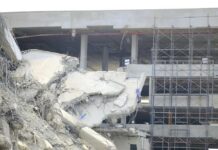
President Donald Trump set a deadline for Iran to reopen the Strait of Hormuz by 0000 GMT Wednesday, pairing the demand with forceful rhetoric about potential consequences. The deadline landed amid reports of U.S.-Israeli strikes hitting Iranian targets and infrastructure, including the Kharg Island oil hub and transportation nodes such as airports, bridges, and rail lines. Reports also described explosions, at least two deaths, and major disruptions to movement and logistics inside Iran.
Iran’s closure and disruption of the Strait of Hormuz is the central strategic fact shaping the moment. The strait is a narrow maritime corridor through which a significant share of global oil moves, and disruptions there can cascade quickly into higher energy prices and shipping delays. When Washington ties a hard deadline to a chokepoint with global consequences, it raises the stakes not only for the combatants, but for countries and consumers far outside the region.
Energy infrastructure is already in the crosshairs—and that changes the calculus
Qatar’s warning is not theoretical. Reporting indicates Iran has attacked Gulf energy infrastructure and that about 17% of Qatar’s LNG capacity has been affected. That detail is a flashing red light for Europe and Asia, where LNG supply stability is essential for electricity generation and industrial activity. Once energy facilities become routine targets, conflict management becomes harder because economic pressure spreads beyond the battlefield into everyday life.
For American readers, the stakes show up in familiar places: fuel prices, inflation pressure, and supply-chain costs. Energy shocks function like a hidden tax on households and small businesses, and they can quickly eat up wage gains. Conservatives who argue that domestic energy strength is national security will see a clear lesson here: the world’s instability can still reach into U.S. wallets, even when the fighting is far away.
Diplomacy vs. escalation: what’s known, what isn’t, and why it matters
Qatar is urging all sides to step back, warning of impacts that extend beyond military outcomes—regional security, the global economy, energy markets, and even environmental risks. At the same time, reporting shows the situation is moving fast, with continuing strikes and no confirmed resolution as the deadline approaches. The UN Security Council was preparing action related to the threats to the strait, but available reporting describes that effort as weakened.
Some claims remain difficult to fully verify in real time, including the scope of damage from strikes and the degree to which military operations are limited to strictly military targets. What is clear is that multiple outlets are aligning on the core sequence: Hormuz disruption, expanding strikes, and Qatar’s urgent warning that the escalation curve is steepening. In plain terms, this is the kind of crisis where miscalculation—not just intent—can trigger a much larger war. Limited social-media research provided included no qualifying English X/Twitter URL directly tied to the story; only YouTube links were available, so a secondary link is omitted under the rules.
Sources:
Qatar warns region ‘close’ to point where war escalation cannot be controlled
Qatar warns war is nearing an uncontrollable point as US-Israeli strikes hit Iran nonstop
Qatar warns war is nearing an uncontrollable point as US-Israeli strikes hit Iran nonstop
Qatar warns region close to point where war escalation cannot be controlled