
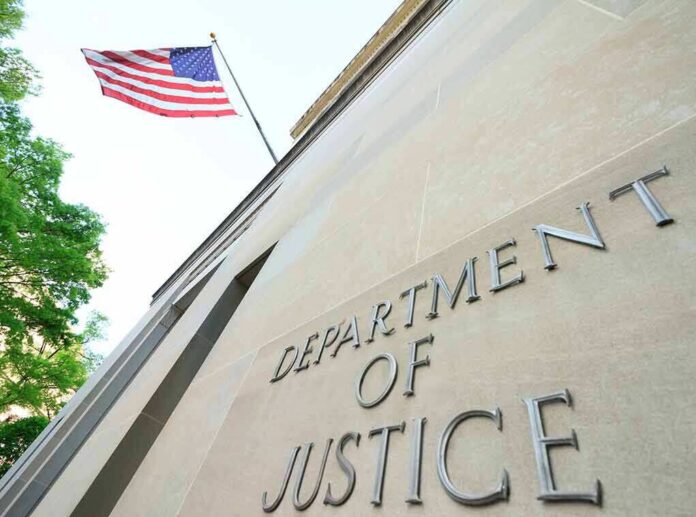
Federal prosecutors say a noncitizen in California checked “I am a U.S. citizen” on a voter form—and now faces two felonies.
Story Snapshot
- A Honduran lawful permanent resident was charged with false claim to U.S. citizenship and fraudulent voter registration.
- Investigators say a certified form showed a checked citizenship box; records showed no naturalization filing.
- The Justice Department says the defendant did not cast a ballot, but the charges still carry serious penalties.
- The case lands amid national fights over voter-roll checks and proof-of-citizenship rules.
What Federal Authorities Allege Happened
The United States Attorney’s Office in Los Angeles announced charges against Darwin Jonathan Rivera Flores, a 30-year-old Honduran national and lawful permanent resident in Winnetka, for allegedly registering to vote after claiming he was a citizen. A criminal complaint lists two felonies: a false claim of United States citizenship and fraudulent voter registration. Homeland Security Investigations stated publicly that he was charged with unlawfully registering to vote in California and falsely claiming citizenship, echoing the complaint’s core claim. An arrest followed the filing, according to the announcement.
A federal affidavit, posted by a news outlet, describes the key evidence behind the charges. Investigators say they received a certified voter registration application from the California Secretary of State’s office. The document showed a check mark next to the statement, “I am a U.S. citizen.” The affidavit also says Department of Homeland Security records did not show a naturalization application or payment from Rivera Flores. Based on those records, the agent asserted probable cause that he knowingly made a false statement.
What Is Known—and What Is Not
Fox News reported that the Justice Department said Rivera Flores did not vote in an election, even though he allegedly registered. That detail matters because federal law draws a bright line between registering as a citizen and actually voting. The criminal complaint still alleges two felonies tied to the registration, which can carry prison time and immigration risks if proven. At this stage, the charges are allegations. Prosecutors must prove that he knowingly and willfully made a false claim of citizenship to register.
Public records so far do not include a defense statement from Rivera Flores disputing the evidence. News reports and the affidavit largely reflect the government’s account of events. That makes the official documents the strongest sources on the facts now available. As with any criminal case, more details could surface in court filings or hearings. Until then, the verified record centers on the press release, the complaint, and the affidavit’s evidence claims.
Why This Case Hits a National Nerve
This arrest arrives amid heated national fights over voter eligibility checks, immigration enforcement, and trust in elections. Election experts say proven cases of noncitizen voting or registration exist but are rare, and big-number claims often fall apart under review. Still, even one high-profile case can drive calls for tougher screening. Both parties point to such cases to support their broader arguments about the system’s strength or weakness.
DOJ announces federal charges against a Honduran national accused of illegally registering to vote in California as federal officials warn the case raises broader questions about noncitizen voter registration and California’s refusal to provide requested voter roll data#NYI pic.twitter.com/PgfFyCHQg2
— NewYork-Insight (@NewYork_Insight) August 29, 2026
Past legal battles show how hard it is to police rolls without sweeping up eligible voters. Federal court rulings against broad last-minute purges warned states not to rush list removals based on shaky data matches. Supporters of tighter checks argue that citizenship is a basic voting rule and needs better proof. Critics warn that strict proof rules can wrongly block eligible voters and chill participation. The Supreme Court has limited how far states can go when federal forms are in play.
What This Means for Voters and Officials
For voters, the message is simple: only citizens can register and vote in federal and state elections, and false claims can trigger criminal charges and immigration consequences. For election officials, the case highlights a constant tension. Offices must keep accurate rolls and screen for ineligible registrations, but they also must avoid sweeping measures that mislabel lawful voters. Careful verification, clear forms, and fast corrections can help balance both goals.
For a public already wary of “the system,” this case will reinforce both sides’ frustrations. Some will see it as proof that gatekeepers fail basic checks. Others will see it as proof that prosecutors can and do catch rare violations without overhauling the rules. The outcome in court—not the headlines—will tell whether the government met its burden. Until then, the facts on record show an arrest, two felony charges, and a paper trail investigators say points to a checked citizenship box.
Sources:
washingtontimes.com, nypost.com, justice.gov, x.com, cnn.com, clearinghouse.net