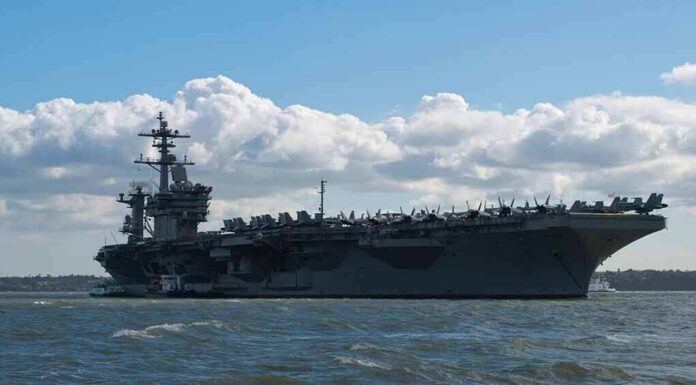
The United States Navy sold two billion‑dollar aircraft carriers for a penny each because getting rid of them cost more than keeping them, not because the ships secretly lacked value.
Story Snapshot
- The Navy sold USS Kitty Hawk and USS John F. Kennedy to a Texas scrap firm for 1 cent each.
- The buyer took on the huge cost and risk of towing, dismantling, and cleaning up hazardous materials.
- These “penny sales” are really liability transfers, not giveaways of working warships.
- Confusing prices like this fuels anger at how Washington handles billion‑dollar assets and taxpayer money.
What Really Happened With the Penny‑Priced Carriers
In 2021, the United States Navy sold the retired aircraft carriers USS Kitty Hawk and USS John F. Kennedy to International Shipbreaking Limited, a company in Brownsville, Texas, for one cent each. These conventionally powered carriers had already been out of active service for years and were sitting in reserve, still costing money to maintain. The deal made headlines because each ship had once cost hundreds of millions of dollars, equal to billions today, yet the sale price was less than a cup of coffee.
The key detail is that the scrap company did not buy ready‑to‑use warships; it bought giant, worn‑out steel hulls plus the job of tearing them apart. Towing a carrier from its base to the Texas scrapyard takes weeks, special ocean tugs, and strict safety rules. Once there, workers spend years cutting up more than 70,000 tons of metal, sorting it, and selling it bit by bit into the global scrap market. That long, slow process costs millions in labor, equipment, insurance, and environmental compliance.
Why Scrapping Costs More Than the Ship Is “Worth”
Modern warships are loaded with materials that are dangerous if mishandled, including asbestos, lead paint, and industrial chemicals. Before a carrier can be scrapped, specialists must remove or control those substances under federal and state environmental rules, which adds major expense and legal risk. Reporting on other carrier disposals shows that the Navy has sometimes paid companies just to take ships away, with one older supercarrier also contracted for scrap at a nominal penny because the recycler would only profit from salvaged metal.
For Kitty Hawk and John F. Kennedy, Naval Sea Systems Command, the part of the Navy that manages ships, confirmed that the contract price reflected the fact that the company would earn money later from selling steel, iron, and other metals. A Navy spokesman explained that towing and ship‑breaking are so costly that the Navy often pays firms large sums to recycle its ships. In this case, the recycler believed the scrap value was high enough to cover all those costs without extra payment from the government, so a single cent served as the legal “consideration” to make it a sale instead of a disposal fee.
Missed Museum Dreams and Public Frustration
Some veterans hoped to save USS Kitty Hawk as a museum ship in Long Beach, California, next to the retired ocean liner Queen Mary. They raised about five million dollars in pledges, but estimates suggested that decontamination, development, and long‑term upkeep would cost at least twice that amount. The Navy rejected the museum plan, saying it was not financially viable, and moved forward with the scrap sale. That decision upset many former sailors and fed the feeling that leaders care more about budgets and rules than about history and people.
On social sites, users joked that the penny deal was a “scam” or a legal trick and wondered how a ship that once projected American power worldwide could be sold for less than the loose change in a pocket. This kind of headline—“America sells billion‑dollar carriers for $0.01”—fits into a wider anger that the federal government plays accounting games with huge assets while ordinary families struggle with high prices, weak wages, and shrinking retirement savings. Both conservatives and liberals see stories like this as proof that Washington’s math serves insiders first.
What This Says About How Washington Handles Big Problems
The penny price itself was rational in narrow economic terms: the shipbreaker assumed massive costs and risks, and the Navy avoided writing big checks to get the hulks removed. But the way the story was communicated—short press notes, little contract detail, and a focus on the catchy one‑cent figure—left a vacuum that people filled with distrust. We never see a clear public breakdown of towing costs, hazard cleanup, scrap revenues, or who profits when taxpayer‑funded steel is sold off.
That lack of transparency feeds the growing belief, on right and left, that big federal systems are designed to protect themselves, not to level with citizens. Conservatives who already resent decades of big spending and waste see the penny sale as one more sign of poor stewardship. Liberals who worry about inequality and corporate power see a private firm gaining control of valuable metal with little apparent oversight. The truth is more technical than scandalous, but the pattern is familiar: when government hides the fine print, people assume the worst.
Sources:
19fortyfive.com, nationalinterest.org, businessinsider.com, twz.com, independent.co.uk, youtube.com, yahoo.com, reddit.com