
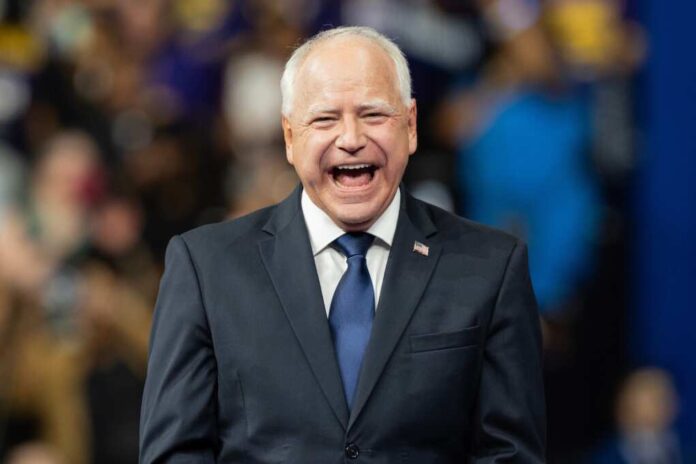
Minnesota’s new paid family leave law, championed by former Governor Tim Walz, takes effect January 1st with strict eligibility requirements that debunk claims it allows benefits “without working.”
Story Snapshot
- Minnesota Paid Leave Law requires $3,700 minimum earnings and qualifying medical events before benefits
- Program funded through 0.88% payroll tax split between employers and employees, not taxpayer handouts
- Claims of collecting “without working” contradict law’s insurance-based structure with certification requirements
- Small businesses receive premium assistance while facing new administrative compliance burdens
Walz’s Legacy Law Faces Scrutiny Over Work Requirements
Minnesota’s Paid Family and Medical Leave program launches January 1, 2026, despite ongoing concerns about the state’s track record with benefit fraud prevention. The law, signed by former Governor Tim Walz in 2023, requires workers to earn approximately $3,700 annually and meet specific medical or family care qualifications before accessing benefits. Critics question whether Minnesota’s oversight mechanisms can prevent abuse, given recent federal investigations into taxpayer-funded daycare fraud exceeding $250 million during Walz’s tenure.
The program operates as an insurance system rather than welfare, with employees and employers each paying 0.44% of wages into a shared fund. Workers must demonstrate prior employment history and undergo certification processes for qualifying events including serious health conditions lasting seven or more days, family medical emergencies, or bonding with newborns. This structure contradicts allegations that individuals can collect benefits without working, as eligibility hinges on documented employment and specific life circumstances.
Minnesota's new Paid Family and Medical Leave Law, which allows up to 20 weeks of leave and paid benefits, will take effect starting Jan. 1, 2026.
You can take paid leave to care for yourself during serious health conditions, like surgery, injury, a chronic condition, pregnancy,… pic.twitter.com/w5BPl2ZCVC
— FOX 9 (@FOX9) December 2, 2025
Administrative Burdens Hit Minnesota Employers
Employers across Minnesota face immediate compliance requirements including employee notifications, payroll system updates, and coordination with existing benefit programs. The Minnesota Chamber of Commerce warns businesses about preparation challenges, particularly for smaller operations lacking dedicated HR departments. Employers must establish accounts with the state’s Department of Employment and Economic Development or arrange equivalent private insurance plans by the implementation deadline.
Legal experts from Lathrop GPM emphasize the “complex coordination” required between the new state program and existing federal Family Medical Leave Act protections. Unlike federal FMLA, which provides unpaid leave only for larger employers, Minnesota’s law covers virtually all employers and provides partial wage replacement. Small businesses with fewer than 30 employees qualify for reduced premium rates, though administrative costs remain a concern for family-owned operations.
Constitutional Concerns Over Government Overreach
The mandatory nature of Minnesota’s paid leave program raises questions about government overreach and business autonomy. Unlike voluntary benefit programs, employers cannot opt out of the state-mandated system, forcing compliance regardless of existing generous leave policies. This represents a fundamental shift toward centralized control over workplace benefits, potentially undermining the free-market principle that allows businesses to compete through superior employee packages.
The program’s broad definition of “family” extends beyond traditional nuclear families to include domestic partners, chosen family members, and extended relatives. While supporters frame this as inclusive, critics argue it stretches the original intent of family medical leave and could complicate administration. These expansive definitions, combined with Minnesota’s recent fraud vulnerabilities, highlight the need for robust oversight mechanisms to protect taxpayer interests and prevent system abuse.
https://youtu.be/sswWHZmE6LQ?si=vp_mzFj51j2MPDPp
Sources:
Minnesota Paid Leave Law Set to Take Effect January 1, 2026
Minnesota Paid Leave – University of Minnesota HR
Minnesota’s New Laws Take Effect with Start of 2026
Minnesota Paid Leave Official Site
Are You Ready? Paid Family and Medical Leave – Minnesota Chamber
Overview of Minnesota’s Paid Family and Medical Leave Act