A new immigration flashpoint is raising an uncomfortable question for Washington: are foreign governments using America’s own openness to build political leverage inside the United States?
Quick Take
- Author Peter Schweizer argues Mexico treats mass migration as a strategic tool that can influence U.S. politics and sovereignty.
- Several underlying facts are verifiable—Mexico’s 53 U.S. consulates, a Mexican-government estimate of 39.9 million Mexicans in the U.S., and about $62.5 billion in 2024 remittances.
- Key “weaponization” claims—intentional coordination, territorial “reclamation” strategy, and organized anti-ICE activism—remain disputed and not confirmed by an independent U.S. investigation.
- The controversy is likely to intensify scrutiny of foreign-government outreach in U.S. schools, community programs, and media aimed at migrants.
Schweizer’s core claim: migration as leverage against U.S. sovereignty
Peter Schweizer’s 2026 book, The Invisible Coup, argues that Mexico views large-scale migration as more than an economic or humanitarian flow, describing it instead as a form of political leverage that can shape U.S. policy and culture. Schweizer’s framing resonates with Americans who see border enforcement as a basic function of a sovereign nation. At the same time, the central allegation—deliberate state “weaponization”—is an interpretation, not a verified finding by U.S. authorities.
Schweizer’s argument draws energy from a broader mood on the right and left: many voters believe the federal government routinely fails at core responsibilities while well-connected “elites” operate by different rules. In that environment, claims about foreign influence find a ready audience—especially when they connect to real frustrations over illegal immigration, strained public services, and uneven enforcement. The key analytical step, however, is separating what is demonstrably true from what is asserted about intent and coordination.
What is verified: consulates, diaspora size, remittances, and diaspora outreach
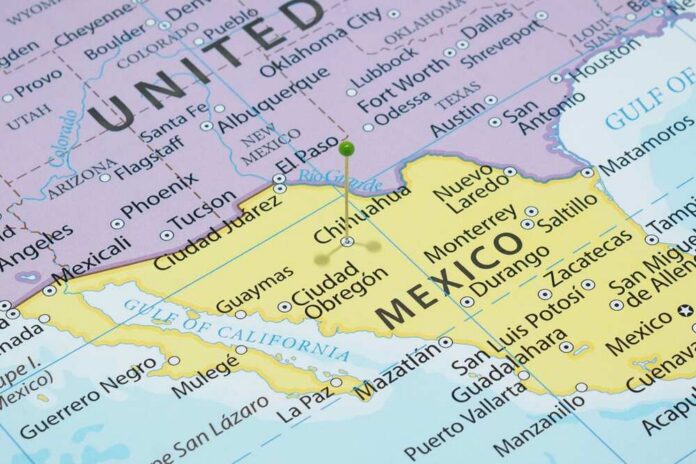
Several pillars of the debate are grounded in checkable facts cited in coverage of Schweizer’s book. Mexico maintains a large diplomatic footprint in the United States, with 53 consulates. Mexican government figures have estimated roughly 39.9 million Mexicans live in the U.S. as of late 2024. Economically, remittances from the U.S. to Mexico were reported at about $62.5 billion in 2024, making cross-border family and financial ties a major feature of the relationship.
The research discussion also points to formal Mexican-government engagement with expatriates, including programs and messaging aimed at migrants. A Mexico-backed media initiative, TV Migrante, launched in 2025 and has been characterized by critics as an influence vehicle, while supporters may see it as diaspora outreach. Schweizer and allied commentators also highlight the idea of “migrant legislators” representing Mexicans living abroad, a concept that—regardless of how Americans judge it—illustrates organized political attention to the diaspora.
What remains unproven: coordination, “anti-assimilation” intent, and organized activism claims
Schweizer’s strongest implications hinge on intent: that Mexico is coordinating immigration flows and diaspora activity to project sovereignty into the United States. The provided research flags these points as disputed, with no announced U.S. government investigation validating the “weaponized” thesis. Claims that consular officials organize anti-ICE protests, or that textbooks distributed to U.S. districts are designed to prevent assimilation, rely heavily on interpretation and selected examples rather than a publicly documented directive.
A separate line of argument points to statements attributed to Mexican Senator Felix Salgado about “reclaiming” U.S. territory. Such rhetoric can inflame tensions and understandably alarms Americans who view territorial integrity as non-negotiable. The research summary, however, notes uncertainty about context and how representative the remarks are of formal Mexican policy. That distinction matters: isolated political provocations are not the same thing as a state plan, and responsible analysis should avoid collapsing the two without corroboration.
Why the fight matters: foreign influence gray zones and America’s domestic trust crisis
The practical policy question is less about slogans and more about boundaries: where does legitimate consular assistance end and political interference begin? U.S. diplomatic norms allow consulates to provide services and legal support to their nationals, yet activists and lawmakers can still argue for tighter scrutiny if programs drift into organizing domestic political activity. In 2026, with Republicans controlling Congress and the White House, pressure may rise for oversight hearings, disclosures, and clearer rules.
Conservative author Peter Schweizer: Mexico sees mass migration as way to reclaim U.S. territory @washtimes https://t.co/DhRewkwoYp
— Alex Swoyer (@ASwoyer) May 6, 2026
For conservatives, the broader takeaway is straightforward: if sovereignty means anything, the U.S. government must enforce its border and police foreign-government influence operations with evidence-based rigor. For liberals wary of heavy-handed enforcement, the parallel concern is civil liberties and the risk of collective suspicion falling on law-abiding Mexican-American communities. Both sides share a growing frustration that federal institutions too often talk big, investigate selectively, and leave ordinary citizens stuck with the consequences.
Sources:
Mexico using ‘weaponized immigration’ to undermine US sovereignty, author new book alleges
Weaponized Immigration Methods Aimed at America
Mexico conspires to invade US, says book promoted by Trump