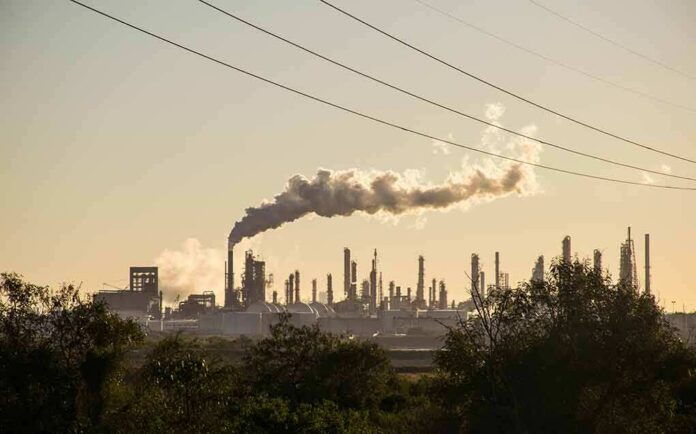
Thick black smoke pouring from a Kuwait oil hub after an Iranian drone strike is the latest sign that vital energy systems – and the people who depend on them – are caught in a war that distant leaders control but ordinary citizens pay for.
Story Snapshot
- Iranian drones have hit multiple Kuwait oil and power facilities, causing fires and material damage but reportedly no casualties.
- Kuwait’s own army and energy company blame Iran, while Tehran denies some strikes and points fingers at Israel.
- These attacks fit a wider pattern of drone warfare on Gulf energy sites that pushes up prices and deepens global instability.
- Confusing official messages and limited detail leave citizens wondering who is really protecting their security and economic future.
What Kuwait Says Happened To Its Oil Facilities
Kuwait Petroleum Corporation, the state energy firm, reported that a drone strike set off fires at its Shuwaikh oil complex in Kuwait City and caused “severe material damage” to operating units. The complex houses both the company and the national oil ministry, and authorities evacuated the site while firefighters fought the blaze. Kuwait’s state news agency and other outlets also reported drone attacks on major refineries at Mina Al-Ahmadi and Mina Abdullah, with fires breaking out in several units.
Reports from Kuwait and international media say emergency teams contained most of these refinery fires and, in official statements so far, no deaths have been confirmed. Some accounts mention minor injuries in earlier incidents, but the newer drone strikes are described as causing heavy damage to buildings and equipment rather than large human losses. Still, visual evidence shows thick smoke rising over key energy sites, making clear that the attacks were serious enough to disrupt operations and alarm nearby communities.
Iran’s Role And The Battle Over Blame
Kuwait’s army has described the attacks as “hostile missile and drone attacks” and, in later statements, identified the drones as Iranian-made Shahed-style weapons. Kuwait’s Ministry of Defense has said that Iranian drones targeted energy facilities, including an offshore platform near Shuwaikh Port, damaging infrastructure and injuring at least one worker. At the same time, Kuwait Petroleum Corporation directly linked several fires and shutdowns at refineries and headquarters to Iranian drone strikes, adding to the official case that Iran is behind the assaults.
Iran’s Islamic Revolutionary Guard Corps has claimed responsibility for strikes on petrochemical facilities in Kuwait, as well as in Bahrain and the United Arab Emirates, framing them as part of a broader campaign against Gulf energy assets. Yet Iranian officials have also denied involvement in some attacks, especially on a Kuwaiti desalination plant, and blamed Israel instead. This mix of claims and denials sends a confusing message to ordinary people: the same actor that admits hitting some oil sites refuses responsibility for others, without sharing proof that would let outsiders judge what really happened.
Drone Warfare And A Growing Pattern Of Risk
These Kuwait strikes are not a one‑time event. Research tracking the Iran war shows that, since early 2026, Iran has launched many drone and missile attacks across the Gulf, hitting energy infrastructure, airports, military bases, and civilian sites in several countries. Kuwait has already faced earlier drone attacks on its largest refinery and other oil facilities, with multiple fires and partial shutdowns reported as part of a wider regional campaign. Analysts say Iran has leaned heavily on long‑range, one‑way attack drones from the Shahed family to reach targets far beyond its borders.
This pattern matters for everyone, not just traders watching oil prices. When drones can cross borders and strike refineries, power plants, and water facilities, the basic systems that keep modern life running become targets. Ordinary people feel this in higher fuel costs, power cuts, and fear that the next blast could hit closer to homes or workplaces. At the same time, citizens in many countries see governments spending billions on wars and weapons while basic needs like income security and affordable energy stay fragile.
Confusing Narratives, Clear Costs For Ordinary People
Media coverage and official briefings often frame these attacks as pieces in a complex puzzle: United States–Iran conflict, Israeli airstrikes, Gulf security, global oil markets. That big picture matters, but it can also blur a simple fact for citizens: key energy and water sites are being hit, and people who had no say in these wars bear the risk. While Kuwait’s energy firm and army give one narrative and Iran offers another, neither side provides full forensic details to the public, like drone wreckage analysis or satellite proof, that could settle doubts.
For Americans watching from afar, this only adds to a long‑running frustration. Many on the right see yet another example of global chaos driving up energy prices and threatening security, while Washington seems more focused on messaging than on shielding the economy. Many on the left see vulnerable workers and communities trapped between state oil giants, foreign militaries, and distant politicians who treat them as numbers in a strategy game. Both sides increasingly agree on one thing: elites talk in careful phrases, but ordinary people are the ones breathing the smoke.
Sources:
facebook.com, youtube.com, bloomberg.com, theguardian.com, aljazeera.com, thenationalnews.com, wsj.com, maritime-executive.com, houseofsaud.com, apnews.com, jpost.com, timesofisrael.com, csis.org, longwarjournal.org