
The White House just used its own declassified files to accuse the media of an election cover‑up—while those same files say no foreign power changed a single American vote.
Story Snapshot
- The administration released declassified intelligence on foreign threats, voter data, and voting machines.
- The documents confirm China and others gathered huge amounts of U.S. voter data and probed systems.
- The same intelligence record says no foreign actor altered the 2020 voting process or changed results.
- The clash between the White House and media deepens public distrust in both government and press.
What the White House Says the Documents Prove
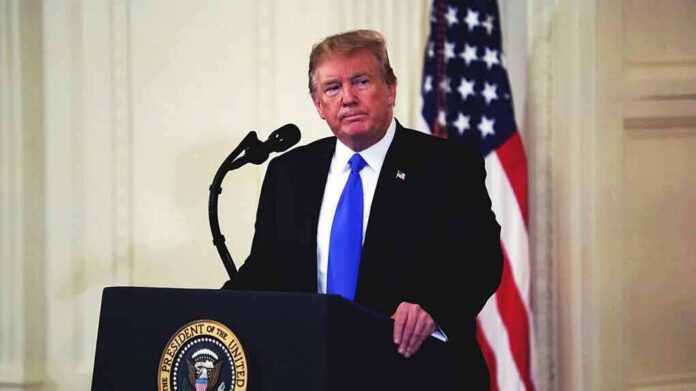
President Trump used a primetime address to claim the new documents expose a “deep state” and media cover-up about election vulnerabilities and foreign interference. He argued that China carried out “the largest compromise of election data in history,” that hostile regimes can hack voting machines, and that hundreds of thousands of noncitizens are on voter rolls. The White House posted four main files: on electronic voting vulnerabilities, China’s voter-data haul, a Michigan registration case, and noncitizens on voter lists.
The administration’s core message is that elites knew the system was exposed and hid it from the public. A January 2020 National Intelligence Council memo said adversaries such as China, Russia, Iran, and North Korea have the capability to compromise U.S. election infrastructure. That language is now central to Trump’s push for the Save America Act, which he says is needed to lock down voting machines, clean voter rolls, and punish officials who ignore security warnings.
What the Files Actually Show About Foreign Threats
The declassified record does confirm that foreign powers targeted the United States around the 2020 election, but in narrower ways than many headlines suggest. A key intelligence assessment says China, Russia, and Iran ran online influence operations and probed some networks, yet “no foreign adversary” prevented Americans from voting or changed vote tallies. A later report from the Office of the Director of National Intelligence states there were “no indications” any foreign actor altered voter registration, ballot casting, tabulation, or reporting.
China did obtain large amounts of U.S. voter data, often by buying or downloading information that states legally sell or post. One declassified document describes a Chinese actor downloading publicly available voter registration information for several states from commercial U.S. websites. Analysts say this kind of data is usually used for intelligence and “public opinion analysis,” not proof of hacked election systems. Media fact-checks note the files do not show China tampered with voter databases by deleting or changing records.
Claims About 220 Million Files and Voting Machines
In his speech, Trump said China illicitly acquired 220 million voter files across 18 states. Fact-checkers who reviewed the same documents say that number is not backed up in the released material. The files do mention more than 200 million voter records, but much of the context is blacked out, and the text that remains points to “unspecified U.S. voter data” and publicly available state files. Analysts argue Trump appears to be stretching a redacted table into a sweeping hacking claim.
The voting machine file is more mixed. Intelligence officials did warn before 2020 that some electronic systems, especially those without paper backups, are “particularly vulnerable” to cyber, supply-chain, or insider threats. They also judged that at least five foreign powers have the technical ability to compromise parts of U.S. election infrastructure. Yet the same assessment stresses that security measures and the decentralized, state-run structure make it “difficult to manipulate on a wide enough scale to alter the election outcome.”
Noncitizen Voters, Michigan, and the Evidence Gap
The White House points to a Department of Homeland Security document claiming more than 250,000 noncitizens are illegally registered to vote in several states. The file, as released, provides no clear method behind that number and does not show those people actually voted. Media reviews say data quirks—like name matches or outdated records—could easily inflate such counts, but there has been no independent forensic audit to confirm or debunk the figure.
China Cooked The 2020 Election – 7/17/2026 – grrrgraphics
—President Trump delivered a primetime speech from the White House focused on election security ahead of the midterms. He announced intelligence documents had been declassified. They revealing major vulnerabilities in… pic.twitter.com/Vc2QohVnDd— Sue Ellen (@SueEllenBelI) July 18, 2026
Another file covers a 2020 Michigan voter-registration investigation. Trump cites it as proof of organized fraud, yet the publicly released Federal Bureau of Investigation summary states that agents exhausted leads and “did not identify a criminal violation or a priority threat to national security.” That does not mean every question about sloppy registrations is solved. It does mean the government’s own investigators could not turn those irregularities into a prosecutable fraud case.
Media Fact-Checks, Censorship Fears, and Deepening Distrust
Major outlets like BBC, ABC, and others quickly said the documents do not prove votes were changed or that the 2020 election was stolen. Their reviews highlight a pattern: the files show real foreign interest, real cyber risks, and messy voter rolls, but stop short of confirming large-scale fraud. Some networks also stress that earlier government statements called 2020 “the most secure election in American history,” with no evidence any voting system deleted or changed votes.
The administration, in turn, accuses parts of the media of ignoring the speech or downplaying the new files to protect their own past narratives. Many Americans on both the right and the left see a familiar picture: intelligence warnings buried in redactions, politicians spinning half-truths, and media outlets selecting which facts fit their brand. The result is a dangerous middle ground. The documents show serious vulnerabilities and foreign pressure, but also say votes were not changed—yet neither the White House nor its media critics fully confront both halves of that reality at once.
Sources:
pjmedia.com, whitehouse.gov, lynnwoodtimes.com, bbc.com, youtube.com, factcheck.org, france24.com, brennancenter.org