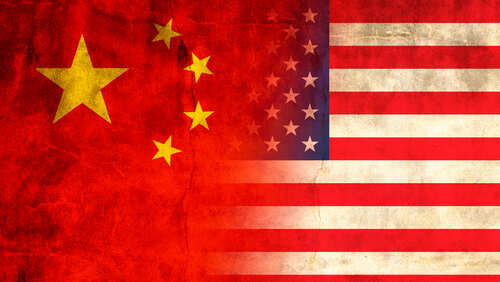
When a sitting president says China holds 220 million American voter files — and major media mostly respond by changing the subject — you know the trust problem in our system has gone from bad to dangerous.
Story Snapshot
- Trump’s primetime speech and declassified documents show Chinese access to large volumes of U.S. voter data and deep interest in his presidency.
- Official U.S. intelligence assessments still say foreign actors did not change votes or results in the 2020 election.
- Media coverage focused on mocking missing “smoking guns” instead of explaining what the documents actually do and do not show.
- Both China’s data collection and the media’s reaction feed a growing belief on left and right that powerful institutions are not being straight with the public.
What Trump Claimed In His Primetime Speech
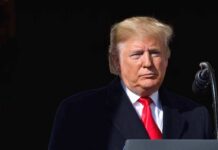
President Trump used a national primetime address to unveil declassified intelligence documents and claim China pulled off the “largest election data breach in history.” He said Chinese-linked actors obtained up to 220 million U.S. voter files starting in the 2020 cycle, across 18 states, using access to commercial data and state voter rolls. He also cited Department of Homeland Security findings that hundreds of thousands of noncitizens appeared on voter rolls, and pointed to Federal Bureau of Investigation files from a Michigan case where canvassers allegedly admitted filing fake registrations for gift cards.
In the same speech, Trump read from a declassified Central Intelligence Agency note describing a Chinese Communist Party policy to “leverage every available lever” against the U.S. president starting in mid‑2018. He used that language to argue Beijing was actively working to remove him from power. He linked that claim to broader warnings about vulnerabilities in voting machines and ballot counting systems, based on classified assessments spanning 2020 through 2026. For many viewers already worried about “deep state” influence, this package sounded like proof that elites had rigged the game against ordinary voters.
What The Declassified Documents Actually Show
The released documents do confirm heavy Chinese data collection and interest in American politics, but they stop short of proving votes were changed. One set catalogues voter registration records from many states, including names, addresses, birth dates, party affiliation, and more, with an 18‑state memo noting that Chinese analysts were actively working with this data to profile the U.S. electorate. Other material describes Chinese hackers tracking email accounts tied to Joe Biden’s 2020 campaign, mapping networks and potential future targets.
At the same time, intelligence assessments in the same batch state that China had not deployed efforts “intended to change the outcome” of the 2020 election, and that its moves were judged “low-level, exploratory steps.” The official 2021 Intelligence Community Assessment had already said no foreign actor altered voter registrations, ballots, tabulation, or results. A joint report from the Department of Justice and Department of Homeland Security likewise found no evidence a foreign government manipulated U.S. election results. So the core tension is clear: aggressive foreign data grabs and surveillance, but no documented flip of actual votes.
How Major Media Framed The Speech
Large television networks and digital outlets did not treat the speech as a serious security address; many focused on what they saw as Trump’s lack of proof. Coverage stressed that he repeated earlier fraud claims and again pointed to 2020 as “stolen,” despite losing dozens of court cases and prior audits showing no large‑scale fraud. Commentators compared the event to a famous empty “Al Capone’s vault” TV stunt, saying the promised bombshells never appeared.
Some outlets either declined to air the full speech live or cut away to anchors fact‑checking Trump in real time. Analysts highlighted that the documents discussed known vulnerabilities and foreign interest but did not show direct vote hacking or changed tallies. For many Americans already skeptical of corporate media, this reaction felt familiar: when evidence raises hard questions about elections or national security, the public sees quick dismissal, selective coverage, and little effort to unpack the details in plain language.
Intelligence Community Versus Deep Skepticism
Top intelligence bodies continue to insist the 2020 results were not changed by foreign interference. Their 2021 assessment, backed by the Department of Justice and Department of Homeland Security, says Russia and others tried to influence opinions but did not alter votes. A follow‑up Department of Homeland Security report on foreign interference likewise stressed resilience of election systems while calling for better defenses. Many Democratic leaders and some Republicans cite these documents to dismiss any talk of a “stolen” election as baseless conspiracy.
On the other side, Trump and his allies argue these same institutions are captured by entrenched interests and are hiding the full story. They point to the newly declassified China files to say the earlier assessments were misleading or incomplete, and accuse officials of slow‑walking or burying uncomfortable findings. Research on fraud narratives shows this kind of clash can deeply damage public trust; repeated claims of “rigged” elections, even without proof, have been shown to lower confidence in voting among the speaker’s own supporters and widen the gap between citizens and institutions.
Why This Matters Beyond Partisan Lines
For many Americans on both the right and the left, the biggest alarm here is not just China’s behavior but the way every major power center responds. Foreign governments collecting huge volumes of personal and voter data fits a broader pattern of global surveillance that worries civil libertarians and nationalists alike. Intelligence leaders assuring everyone that “nothing important was changed,” after years of missed warnings on other crises, does little to calm those who already suspect a self‑protecting bureaucracy.
In a recent prime-time address, Donald Trump alleged that the Chinese government interfered in the 2020 election. Alongside the speech, his administration released newly declassified FBI records, many of them emails and messages between intelligence officials.
I reviewed those… pic.twitter.com/FNfjoA06ve
— Davis Jones (@pdavisjones) July 17, 2026
Media companies choosing to minimize or mock a sitting president’s claims rather than walking viewers through the documents in full only strengthens the belief that information gatekeepers serve their own class first. When elites fight over narratives instead of facts, ordinary Americans see more reason to doubt, stay angry, and disengage. Whether one believes Trump’s fraud story or not, the combination of foreign data access, institutional spin, and shallow coverage points to a deeper problem both sides increasingly agree on: a federal system that protects itself faster than it protects the people.
Sources:
redstate.com, dw.com, theepochtimes.com, facebook.com, afr.com, timesofindia.indiatimes.com, instagram.com, dni.gov, dhs.gov, govinfo.gov, nytimes.com, justice.gov, web.mit.edu, frontiersin.org, cambridge.org