
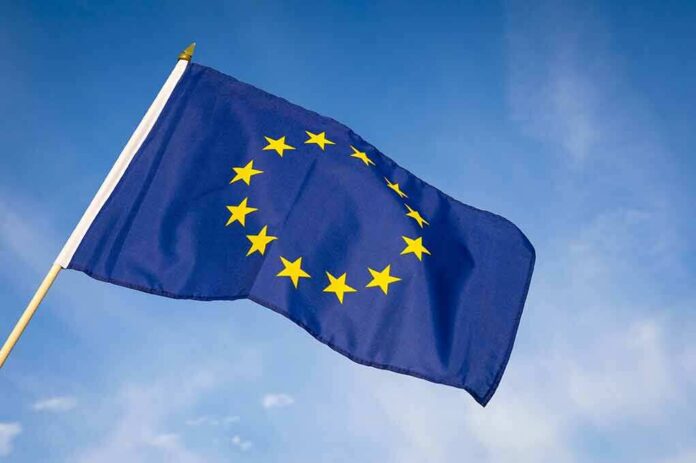
European officials warned social media companies to stop any livestream of a planned U.S. firing-squad execution, putting free-speech claims on a collision course with rules on violent content and child safety.
Story Highlights
- Dutch leader and Irish regulator pressed platforms to prevent circulation of execution footage in Europe.
- Pentagon officials said Nidal Hasan’s execution would be livestreamed, with Defense Secretary Pete Hegseth vowing public access.
- United Nations rights office said livestreaming an execution is like a public execution and breaches the torture ban.
- Major platforms restrict graphic death videos; Meta bans livestreams of capital punishment.
EU Pressure Targets Platforms Over Violent Death Footage
Dutch Prime Minister Rob Jetten urged social media companies to prevent the U.S. execution from being broadcast in Europe and warned of mass reporting if it appeared online. Ireland’s media regulator said platforms that show scenes of gratuitous violence must use strong age checks to keep children out. These steps highlight a European focus on limiting graphic content exposure. They also show how child-safety and violence rules may apply when a state plans to show an execution on the internet.
European officials did not cite a specific European Commission order or case under the Digital Services Act. That leaves open which exact legal tool would force a full block. Still, the message to platforms was clear: use current rules to stop or wall off the stream. The warning reflects a broader European stance that platforms carry duties over violent video. It also sets up a test of how far those duties reach when governments are the speakers.
Pentagon Says Execution Will Be Publicly Viewable
United States defense officials said the execution of Nidal Hasan, who killed 13 soldiers at Fort Hood in 2009, would be livestreamed. Defense Secretary Pete Hegseth said people would be able to watch and that it would be public. The plan marked a sharp break from modern U.S. practice, where executions are not broadcast to the general public. The Pentagon did not specify which site or service would host the stream, leaving the distribution path unclear.
Vice President J.D. Vance questioned whether the livestream would actually happen, and some reporting said a final decision was still pending. That mixed messaging created uncertainty about timing and venue. But the core on-the-record claim remained: Pentagon officials announced plans for a public stream. If carried out, the event would likely be the first U.S. execution openly broadcast to a general internet audience in nearly a century, which adds to global attention and pressure.
Global Rights Concerns and Platform Rulebooks
The Office of the United Nations High Commissioner for Human Rights said livestreaming an execution equals a public execution and would break the absolute ban on torture. That statement framed the broadcast as more than a policy choice. It cast it as a human-rights problem with global impact. Such language increases pressure on companies with worldwide reach. It also raises diplomatic stakes for allies who object to capital punishment or to public displays of state violence.
Platform policies point in the same direction, though with differences. Meta’s rules ban livestreams of capital punishment. YouTube bars gory content meant to shock but allows public-interest exceptions. TikTok restricts extremely graphic violent content, including the moment of death. Those gaps could lead to mixed enforcement. A government-produced video might trigger a public-interest claim on one platform, while another may block it outright. Age gates and delays could also appear instead of total removal.
Why This Clash Resonates Across the Spectrum
Americans across the aisle see a larger pattern: powerful institutions set the terms, and citizens live with the fallout. Many conservatives want harsh penalties for mass killers but distrust tech gatekeepers. Many liberals oppose executions and also distrust Big Tech to act fairly. Both groups suspect elites use rules when convenient and ignore them when not. A public execution stream, filtered by opaque platform tools, taps that shared fear of unaccountable power.
The European Union on Monday warned online platforms not to livestream the scheduled December 3 firing-squad execution of Nidal Hasan, the former US Army psychiatrist convicted of killing 13 people in the 2009 Fort Hood shooting.
US Defence Secretary Pete Hegseth and the… pic.twitter.com/4OuL9WCeUG
— Vitamvivere (@Vitamvivere) October 12, 2026
This case also exposes how policy was built. Europe wrote rules to limit violent content, not to referee state-run executions. U.S. agencies built media operations for public outreach, not for death chambers. Social networks wrote global standards, but they kept “public interest” carve-outs. Now those parts rub together. The result is confusion over jurisdiction, duty of care for children, and whether a state’s message gets a special lane online.
What To Watch Next
Watch for a clear host platform or a government website plan from the Pentagon. That choice will decide which rulebook applies. Look for any formal European Commission action, which would raise the stakes above national warnings. Expect platforms to lean on age checks, delays, or camera framing to avoid graphic shots. Also listen for U.S. legal guidance on filming and sharing executions. Any shift on those points would shape what the public can actually see.
Sources:
insiderpaper.com, politico.eu, bbc.com, webcast.ec.europa.eu, eur-lex.europa.eu, thejournal.ie