

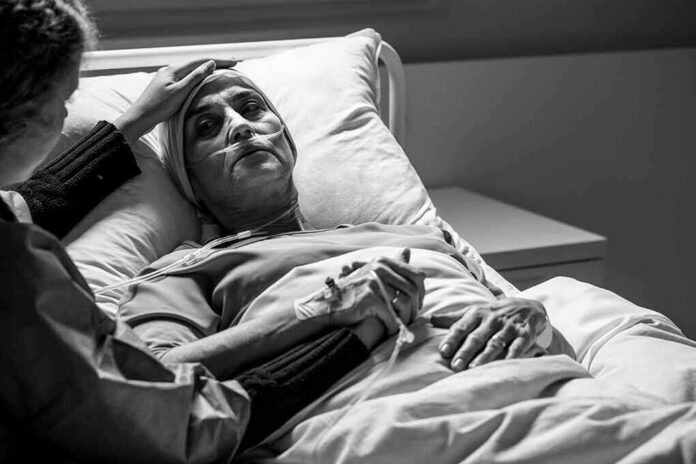
Police and coroners are reviewing whether a Canadian grandmother’s assisted death followed the very safeguards meant to prevent abuse, putting the country’s system under a harsh spotlight.
Story Snapshot
- The family alleges the patient first rejected assisted death but later was approved while they were away.
- Reports say she struggled on a capacity check and could not answer basic family questions.
- Canadian guidance requires informed consent from a capable person, not a substitute decision-maker.
- Officials in Ontario and local police are examining whether safeguards were followed.
The Disputed Timeline and Core Allegations
Family caregiver Brigitte Kranendonk says her grandmother, Brigitte Stegemann, first said no to assisted death and later was assessed and approved when relatives were away from the care home. She says the family cut a trip short after learning a second assessment was set. She also says her grandmother held strong religious beliefs against the act. The family argues the care team bypassed them even though Kranendonk held power of attorney, and that final consent was not valid.
Media reports quote Kranendonk saying Stegemann faltered on a capacity screen, giving wrong answers about close family, which the family views as proof she could not consent. Other coverage says providers have maintained, through reporting summaries, that Stegemann legally consented and was deemed capable, though they have not issued a detailed public account. These are serious claims either way, and they will likely be tested against medical notes and required forms if officials release findings.
What Canada’s Rules Require
Canadian guidance says providers must get informed consent from a capable adult and cannot accept consent from a substitute decision-maker for an incapable person. Federal materials also explain that capacity and voluntariness are essential, and that people should have a real chance to withdraw right before the drugs are given. Ontario’s Office of the Chief Coroner runs a Medical Assistance in Dying Review Team to examine cases, gather data, and support consistent oversight across the province.
National monitoring collects data on requests and outcomes, but case-by-case oversight largely sits with provinces and territories. That split can slow answers when families and providers disagree about what happened. In 2024, officials reported that over one thousand people who asked for assisted death were ruled ineligible, showing that screens can and do stop cases that do not meet the rules. The key question here is which side of that line Stegemann’s case fell on, and whether the checklist steps were actually done.
Why This Case Taps a Deeper Public Anxiety
Across Canada, the biggest fights are about capacity, pressure, and final consent when death is near. Scholars and regulators have warned that trust depends on clear, timely oversight, not just end-of-year statistics. When families claim safeguards failed and records stay sealed, people on the right and left see a system that answers to itself, not to the public. That fuels fear that the vulnerable can be hurried along while officials argue over paperwork.
MAID requires eligibility, a voluntary request and informed consent. The Stegemann case is being investigated precisely because those safeguards are alleged to have failed. None of that makes MAID equivalent to execution. Different issue entirely. Try harder.
— Dean Anthony 🇨🇦 (@deananthony1962) October 2, 2026
This story touches a broader unease many Americans share about distant institutions. Families fear elites make life-and-death calls with little sunlight. Advocates of assisted death say strict rules protect choice and dignity. Critics see growing cracks and want hard proof that consent is real, informed, and current. The investigation in Ontario will need to show who asked what, when consent was confirmed, how capacity was judged, and whether final safeguards were met—step by documented step.
What To Watch Next
Watch for the Ontario coroner’s review team to state whether capacity was established by two independent clinicians, whether a written request existed, how final consent was confirmed, and whether any waiver of final consent applied under law. Look for whether police share any findings or refer matters to regulators. Clear answers on these points, backed by records, can either restore trust or force changes to how assisted deaths are checked and reported.
Sources:
afn.net, quintenews.com, internewscast.com, catholicregister.org, washingtonstand.com, nrlc.org, frnt.com, todayville.com, christiantoday.com