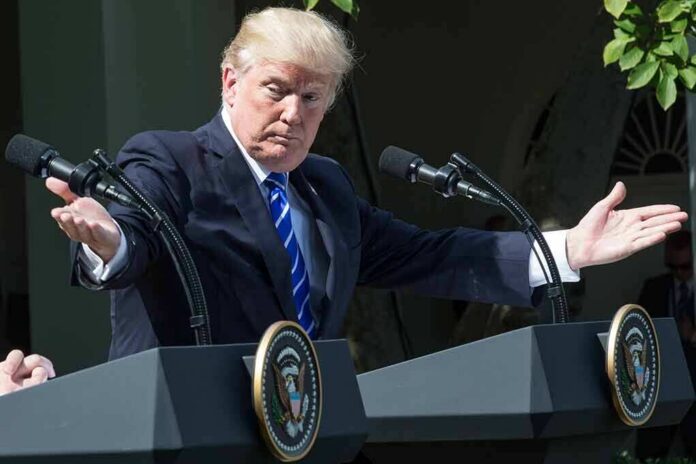
President Trump escalated his feud with the Nobel Peace Prize after losing to Navi Pillay, renewing his disputed claim that he “settled eight wars.”
Story Snapshot
- Trump said his record on conflicts and hostages merits the Nobel Peace Prize.
- The Nobel Committee honored Navi Pillay for expanding international law and war-crimes accountability.
- Reporting disputes Trump’s “eight wars” claim, citing conflicts that never were wars or remain unresolved.
- The clash spotlights a broader question: ceasefire credit versus lasting peace.
What Trump Claimed And Why It Sparked Pushback
President Trump argued that his team ended or cooled eight conflicts, helped free hostages, and kept Iran from getting a nuclear weapon. He said that record should have won him the Nobel Peace Prize. Trump repeated the “settled eight wars” line after the 2026 award went to Navi Pillay, a South African jurist and human rights figure. Reporters and analysts challenged parts of his list, saying several items were not wars or were not yet ended.
CNN’s review highlighted disputes on his list where shooting wars did not occur, like the Egypt–Ethiopia standoff over a dam, and cases where violence or strikes continued after a ceasefire, including Gaza after October 2025. The review also said the Rwanda–Democratic Republic of the Congo conflict remained unsettled due to a key rebel group not signing a deal. Those points undercut the idea of eight clear war endings.
Why The Nobel Committee Chose Navi Pillay
The Norwegian Nobel Committee said it awarded Pillay for enlarging the reach and strength of international law. The committee cited her work advancing accountability for war crimes, crimes against humanity, and genocide. That rationale focused on institutions and law, not on a list of specific wars stopped by a single leader. The explanation set a clear basis for the award that was separate from Trump’s claims.
Pillay’s work includes leadership in bodies that push states and armed groups to face legal consequences for grave abuses. The committee’s framing pointed to long-term systems that can curb violence by raising costs for breaking the rules of war. That choice signals a preference for durable legal norms over short-run diplomatic wins. It also reflects a view that peace needs enforcement tools, not just announcements.
The Real Tension: Ceasefires Versus Durable Peace
This fight reflects a common gap in how we judge peacemaking. Leaders often claim credit for ceasefires or de-escalations. But researchers find many agreements fall apart within a few years if they lack follow-through, monitoring, and buy-in. Studies show mediation can stop violence and open talks, yet deals made under pressure can be fragile and short-lived without strong institutions to back them.
Evidence also shows mediation and peacekeeping can work together, and that design matters. Inclusive processes and clear enforcement can improve the odds that peace holds. In short, ending gunfire for now is not the same as fixing why fighting started. That is the heart of the debate here: how to measure success, and when a claim crosses from involvement into a proved, lasting settlement.
Why This Matters For Voters Tired Of Spin
Americans across the aisle see a pattern: big claims, weak results, and leaders who market wins while problems drag on. Trump’s base hears about bold deals and hostages home. His critics hear hype that does not match events on the ground. Both groups worry that awards and institutions sometimes reward insiders while missing real-world peace. That shared doubt grows when facts and language do not line up cleanly with outcomes.
President Trump is pushing back after being passed over for the Nobel Peace Prize, saying leaders from countries where he helped resolve conflicts personally appealed to the committee on his behalf.
"So I settled eight wars with letters being sent from every president and prime… pic.twitter.com/fSovHOcxeT
— Fox News (@FoxNews) October 10, 2026
Clear standards would help. Count real war endings only when the guns stay silent and the terms stick. Credit de-escalation when it stops deaths, but name it as a step, not a finish line. Reward legal work when it raises real costs for abuse. Citizens deserve straight talk that matches the record. That honesty is the first step to rebuilding trust in leaders, awards, and the idea that peace is more than a press event.
Sources:
facebook.com, cnn.com, thehill.com, yahoo.com, independent.co.uk, tbsnews.net