Anthropic quietly built a Bay Area biology lab where its Claude AI directs robots to run real experiments.
Story Snapshot
- Reuters reported Anthropic set up a wet lab in the San Francisco Bay Area.
- The company’s life sciences lead confirmed the lab exists and is active.
- Anthropic says the site is not specifically for drug discovery.
- The lab tests whether Claude can instruct robots with minimal human help.
What Anthropic Built and Why It Matters
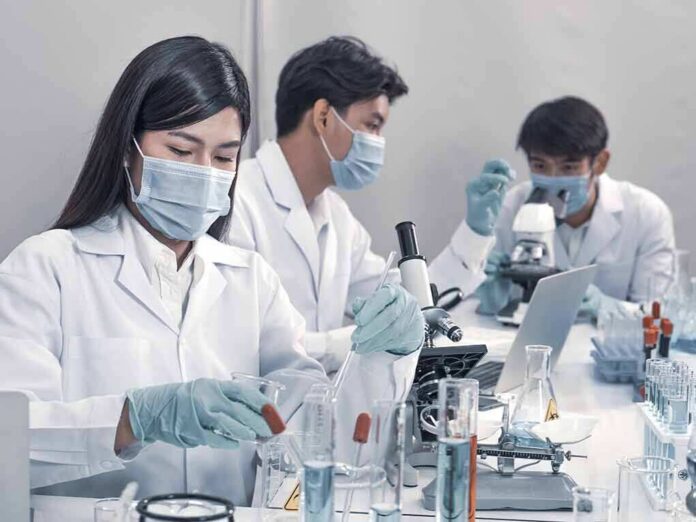
Reuters reported that Anthropic has built a wet lab in the San Francisco Bay Area to move its biology work from screens into physical tests. The company’s head of life sciences, Eric Kauderer-Abrams, confirmed the lab’s existence in that coverage, signaling more than a pilot idea. Reporting says the lab lets Claude direct robotic systems to run experiments with limited staff on site. That shift aligns with a wider push to link large models with automated tools in real labs.
An Anthropic spokesperson told reporters the site is not for drug discovery specifically, pushing back on headlines that framed it as a drug shop. Still, Reuters and syndicated summaries say the goal is to test whether Claude can plan and operate lab steps through robots with minimal human input. That blend—AI plans, robots execute, humans oversee—reflects how several research groups now pair code with benches to speed biology work inside secure labs.
How This Fits a Bigger Trend in AI and Biology
Academic reviews say artificial intelligence can speed early research but hits a wall without physical validation. Wet labs remain the bottleneck where ideas must be tested in cells, tissues, and animals before any real-world use. That is why firms are wiring models into automated benches. The aim is not magic cures. It is faster loops: design, run, measure, and learn again. Anthropic’s lab matches that pattern by bringing Claude closer to the bench work itself.
Other coverage shows this approach spreading across industry and labs. Reviews describe “agentic” systems that draft protocols, control instruments, and analyze results across dry and wet labs. The promise is tighter cycles and fewer dead ends. The risk is sloppy or unsafe use if oversight lags. Ethics groups urge clear logs, human review, and approved data handling when artificial intelligence touches biology workflows, especially in sensitive areas.
Security, Oversight, and the Public Stakes
Fears about dual-use risks rise whenever artificial intelligence moves from code to chemicals and cells. Policy briefs warn that powerful tools can lower cost and skill barriers, which demands strong safeguards and access controls. Responsible teams document steps, gate dangerous actions, and keep humans in charge of key decisions. Anthropic has not detailed the exact organisms or experiments in the Bay Area site, and the reporting does not list permits or addresses. That limits public detail about scope and safeguards.
ANTHROPIC BUILDS BIOLOGY LAB TO PUSH AI INTO DRUG DEVELOPMENT
Anthropic has quietly established a Bay Area wet lab, moving its life-sciences ambitions beyond computer simulations and into physical biological experiments.
The company wants Claude to direct laboratory robots with… pic.twitter.com/gXcuezA7oz
— UnderCoverAgent (@0utdated_) September 18, 2026
For readers across the political spectrum, the core issue is trust and competence. People want breakthroughs that cut disease and cost, not vague projects run behind closed doors. Clear guardrails and plain updates build trust. Concrete facts here are solid but narrow: the lab exists, Claude helps guide robots, and the company says it is not a drug-discovery shop. The open question for impact is operational: what problems the lab tackles, how humans oversee it, and how results will be shared or audited.
Sources:
insiderpaper.com, reuters.com, qz.com, wtvbam.com, today.line.me, noah.bio, straitstimes.com, biosecurityhandbook.com