President Trump said he would “love” to see a united Ireland during a two-day visit that mixed diplomacy in Dublin with a high-profile stop at his Doonbeg golf resort hosting the Irish Open.
Story Snapshot
- Trump met Ireland’s leaders in Dublin, then headed to the Irish Open at his Doonbeg resort.
- He voiced support for Irish unity, drawing fresh attention to politics around the trip.
- Security restrictions tightened across County Clare during the visit.
- The stop at a business he owns renewed conflict-of-interest questions from past coverage.
Diplomatic Meetings In Dublin Set The Tone
On September 12, the Government of Ireland confirmed President Trump’s two-day visit with meetings in Dublin before travel to Doonbeg for the Irish Open. The schedule included talks with Irish President Catherine Connolly and Taoiseach Micheál Martin, underscoring the formal nature of the trip. Reporters on the ground described bilateral discussions in the capital, followed by movement toward the west coast as the golf tournament reached its final days. These set-piece meetings framed the visit as both official and ceremonial.
During public remarks, Trump said he would “love” a unified Ireland, aligning his comment with long-running hopes among nationalists. Irish unity remains a sensitive, generational question shaped by the Good Friday Agreement and post-Brexit shifts. The comment landed amid warm protocol and visible protest energy, the familiar mix for visits by United States presidents. The statement sparked interest because it touched a core national issue while the trip also highlighted Trump’s attention to his Doonbeg property and the Irish Open.
Doonbeg Stop Blends State Optics And Private Venue
After Dublin meetings, Trump traveled to County Clare to be present at the Amgen Irish Open held at Trump International Golf Links in Doonbeg, a plan telegraphed for weeks by Irish and United States outlets. The tournament schedule and resort promotions had already centered attention on the venue and its host role. Local police announced significant restrictions on access in and around Doonbeg, confirming a large security footprint for the presidential stop and the concluding tournament rounds. The setting ensured heavy media coverage far beyond golf.
The visit again raised a familiar ethics debate: when official travel intersects with a property that can benefit from attention. Watchdog reporting in recent years has tallied Trump Organization income from holdings in the United Kingdom and Ireland during Trump’s earlier term, citing millions tied to golf properties including Doonbeg. Supporters see a popular leader showcasing a major Irish event. Critics see the “public duty and private gain” overlap that has dogged modern politics. Both views stem from the same visible venue choice.
Security, Costs, And A Crowded Spotlight
Irish authorities prepared for the influx with traffic limits, pass systems, and controlled zones around the village, the resort, and key routes, mirroring operations seen during past high-level visits. These steps aim to keep crowds moving, stop disruptions, and protect players and guests. They also come with costs. Police overtime, transport changes, and air operations add up fast during short, packed schedules. For locals, that means detours and delays; for taxpayers, it means another bill tied to global politics and sport.
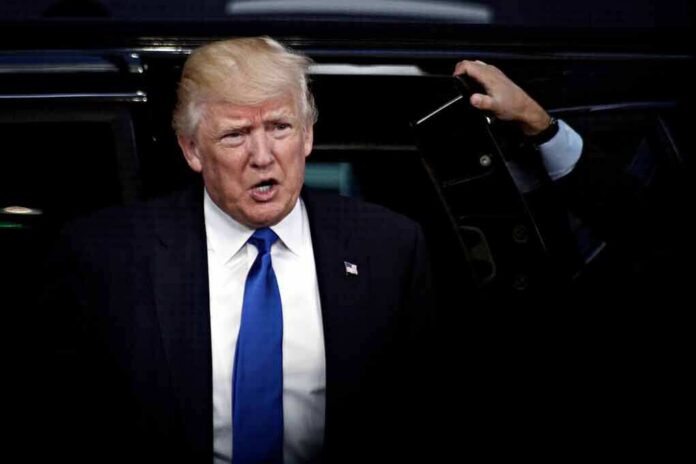
🚨 WOW! The Irish President just rolled out the red carpet treatment for President Trump upon the arrival of THE BEAST and the motorcade
Everywhere he goes, 47 gets absolutely massive respect 👏🏻
Trump has had a packed day of meetings in Ireland ahead of the Irish Open,… pic.twitter.com/L0AyYdYt2m
— Maga Signal (@MagaSignalNews) September 12, 2026
For many Americans, the trip hits two nerves at once. People on the right and left say the system too often serves leaders and brands before citizens. When a sitting president visits a property with his name on the gate, that worry feels obvious. Yet the diplomatic side also matters. Ireland is a close ally with deep cultural and economic ties to the United States. Leaders meet, talk trade and security, and keep channels open. Both truths can be real at the same time.
Why Trump’s Unity Remark Matters Now
Trump’s support for Irish unity came as Northern Ireland’s politics continue to shift under post-Brexit trade rules and demographic change. United States leaders have long backed peace under the Good Friday framework. Trump’s words add a headline to that history. The line will cheer some and alarm others. But it underscores a point: presidential comments can move debate abroad, even if policy does not change overnight. In Dublin and Doonbeg, words and images carried together, and each will have a life after the motorcade leaves.
Sources:
cbsnews.com, bbc.com, irishtimes.com, rte.ie, gov.ie, citizensforethics.org