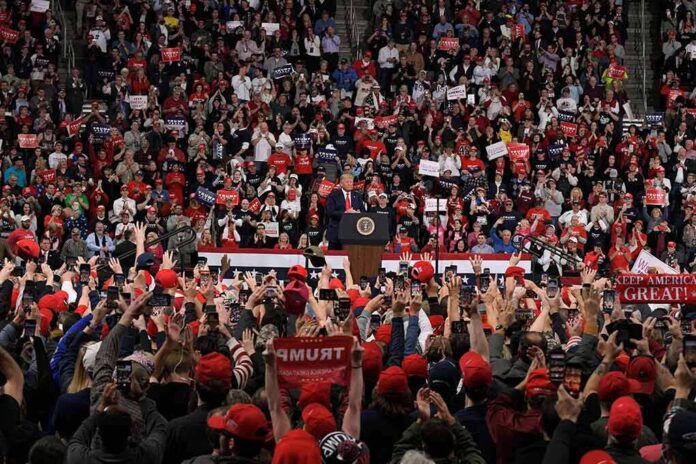
A Republican crowd loudly booed Senate Majority Leader John Thune as President Trump praised him at the party’s midterm convention in Dallas.
Story Highlights
- Convention attendees booed when President Trump mentioned John Thune by name.
- Trump urged the crowd to stop and insisted Thune is “working hard” despite opposition.
- Reports link the backlash to anger over the stalled Safeguard American Voter Eligibility bill.
- The moment shows the gap between party leaders and an energized base in an election year.
What Happened On Stage In Dallas
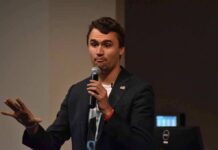
President Trump recognized Senate Majority Leader John Thune during his keynote, prompting immediate boos from parts of the arena. Trump pushed back on the crowd, saying, “No, no. John is working hard,” and noting Thune faces tough opposition from Democrats in the Senate. National outlets described the reaction as the loudest negative moment of the night, even as Trump tried to reset the room in support of his Senate partner.
Video clips shared by major outlets show Trump repeating his defense while the jeers continued for several seconds. The reaction stood out because Trump’s speech otherwise drew cheers and applause lines. The exchange underscored a complicated dynamic: a president praising a key Republican leader while parts of his own party’s crowd signaled discontent in real time. Live blogs and write-ups noted the awkward contrast on a night aimed at unity and message discipline.
Why Thune Drew Heat From The Base
Coverage tied the booing to frustration over the Safeguard American Voter Eligibility bill, a priority for many activists. Reports say the bill has stalled in the Senate, feeding anger at leadership for not pushing it through. Commentators noted that some conservatives want harder tactics to overcome Senate hurdles. That pressure has focused on Thune as the face of the chamber’s strategy during a tense midterm cycle where turnout energy could prove decisive.
Earlier reporting described a broader rift between the most hard-charging conservatives and Senate leaders over pace and tactics. Some lawmakers and activists argue leadership should force more floor fights, even when votes are uncertain. Others warn that losing repeated votes or breaking rules can backfire. That intraparty split often surfaces at high-energy events, where attendees reward sharp contrasts and fast wins, not incremental steps or inside-game patience.
What The Moment Says About Party Priorities
The booing showed that many grassroots Republicans want quick results on election security, spending, and border enforcement. Supporters on the right see delays as proof that Washington protects itself first. Skeptics on the left see the scene as one more sign of a party pulled by loud factions. Both sides share a complaint heard nationwide: leaders talk big but struggle to deliver on promises that hit pocketbooks and protect basic civic trust.
REP. JIM JORDAN ON THUNE GETTING BOOED: "WE NEED TO PASS THE SAVE AMERICA ACT."
LindellTV's @alisonintheknow asked Congressman @Jim_Jordan for his reaction to @LeaderJohnThune getting booed during @POTUS's speech at the GOP midterm convention in Dallas.
"All I know is we need… pic.twitter.com/3OLaenULbB
— LindellTV (@RealLindellTV) September 10, 2026
Conventions are not a random slice of voters, but they do reveal activist mood. Scholars and past examples show how cheers and jeers help set boundaries, name heroes, and mark outlier views. That feedback loop can shape policy focus after the lights go down. If leaders read Dallas as a warning, expect more floor time for voting rules, immigration enforcement, and budget restraint to reassure the party’s most engaged voters before November.
What To Watch Next
Watch whether Senate leaders schedule fresh votes or hearings tied to voter eligibility and election safeguards. Track if the House and Senate coordinate timelines to frame a unified push. Note whether Trump keeps vouching for Thune, which could cool tensions or inflame them if base frustration grows. Finally, watch fundraising and small-dollar trends this week; money usually follows moments that channel anger, hope, or both inside a party.
Why This Resonates Beyond One Night
Voters across the spectrum feel the system favors insiders. Conservatives cite border failures, rising costs, and culture fights. Liberals cite inequality, cuts to the safety net, and fear of discrimination. The Dallas moment taps that shared frustration: a belief that powerful people in Washington protect their own lane first. Whether you cheer or boo, the core demand is the same—prove results, not speeches, and put citizens ahead of the permanent class.
Sources:
youtube.com, apnews.com, washingtonexaminer.com, reuters.com