

In modern campaigns, a single lifestyle cue can eclipse policy: the label becomes the story, not the evidence. The “vegan in Texas” line pinned to James Talarico shows how a repeatable jab, even when contradicted by facts, can define a candidate’s authenticity in voters’ minds.
The Short Version
- President Trump and leading Texas Republicans repeatedly branded James Talarico a “vegan,” turning diet into a proxy for electability and identity.
- Available records show Talarico denied being vegan and has been documented eating animal products; fact-checks call the claim false.
- The attack traces to a 2022 clip where Talarico said his campaign bought “only vegan products” for events—rhetoric later weaponized into a personal label.
- This is a case study in political messaging mechanics: repetition, meme-ability, and cultural shorthand overpowering nuance, under robust First Amendment protections.
What actually happened: the attack line and the record
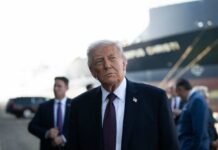
President Trump adopted and repeated a clean, crowd-pleasing line: Talarico is “a vegan in Texas,” and you can’t get elected on that identity. The message traveled fast through conservative media and GOP surrogates, from Ken Paxton’s “Tofu Talarico” riffs to gubernatorial amplification, becoming a staple in stump rhetoric and social posts. The origin point was not a personal declaration of veganism; it was a 2022 advocacy video line in which Talarico said his campaign had “become a non-meat campaign” and was “only buying vegan products” for events—a choices-and-procurement framing later collapsed into a personal dietary label. Multiple outlets documented Trump using the quip; Fox News, for instance, framed it as a political liability in Texas’s beef-and-barbecue culture.
The factual counterweight is straightforward. Talarico and his campaign have repeatedly denied that he is vegan, on camera and in print. PolitiFact and AFP reviewed publicly available photos and videos showing him eating eggs, dairy, chicken, steak, and even posting a turkey-leg “official statement,” and concluded the vegan claim is false. CNN likewise reported the mockery but characterized the underlying assertion as inaccurate, placing the episode in the theater of campaign taunting rather than biography. On the evidentiary ledger, the personal-label claim does not hold up; what does hold up is the existence and persistence of the attack itself.
Mechanism: how a one-liner becomes an identity frame
The durability of a jab like “the vegan in Texas” has little to do with nutritional truth and everything to do with political cognition. Campaigns thrive on sticky, legible heuristics—memes in the broad sense—that bundle complex inferences about tribe, class, and authenticity into a single, repeatable image or phrase. Scholarship on political memes and rhetorical hyperbole explains why such claims spread: they are simple, emotionally evocative, cheap to circulate, and often insulated from legal challenge because they straddle opinion, jest, and loose factual inference. In high-salience environments, repetition alone can manufacture familiarity, and familiarity can be mistaken for plausibility; that dynamic is amplified when influential figures echo the same label across platforms.
Legally, the line also lives in a protected zone. U.S. doctrine affords wide latitude to political speech, including many false statements; public-figure defamation requires proof of “actual malice”—knowledge of falsity or reckless disregard—which is a deliberately high bar. As a result, ridicule, caricature, and identity-signaling remain structurally favored in campaign discourse, even when fact-checks debunk the literal claim. The upshot: once a label is meme-ified, factual rebuttal may correct the record but rarely erases the imprint.
Where the disagreement really lies
There is no real evidentiary dispute over Talarico’s diet; denials and photographic record outweigh the accusation. The live disagreement is rhetorical: whether the 2022 “non-meat campaign” procurement line reasonably implies a vegan identity, and whether that implication matters more than the literal truth in a race where cultural shorthand can tilt perceptions of fit. Proponents of the attack treat the phrase as a tell about values—ascetic, coastal, not-like-us—rendered comic by Texas’s culinary culture. Opponents emphasize factual inaccuracy and the tactic’s cynicism: turning a day’s event-catering choice into a character verdict. Viewed against the history of American campaign branding, this is meat-versus-meaning: cuisine as code for authenticity.
Two things can be true at once. First, as a factual proposition about personal diet, the “vegan” tag fails. Second, as a political instrument, it succeeds at reframing a candidate in culturally resonant shorthand. That tension—between what is true and what is transmissible—is the operative feature of twenty-first-century campaign messaging, not a bug.
How we got here: the clip, the culture, the cascade
Begin with a clip tailored to an advocacy audience. Saying “we are only buying vegan products” in a humane-legislation context telegraphed solidarity with animal-welfare constituencies and local vegan businesses. Such single-venue positioning is common: campaigns frequently localize or segment their appeals. But segmentation creates exploitable asymmetries. Once that sentence left its native context, adversaries repackaged it as a personal-identity claim, then loaded it with state-specific cultural freight. The attack gained velocity when President Trump and statewide figures repeated it, because repetition from high-status sources pushes a message from niche to mainstream in a single cycle.
Fact-checks arrived, as they do, with receipts of turkey legs and brisket. Yet corrections often trail the joke; they are less fun to share and feel defensive by design. What remains is a durable frame: “vegan in Texas” as a capsule for electability doubt. In strategic terms, the episode illustrates a perennial lesson: every micro-signal—food, wardrobe, brands—can and will be abstracted into identity, particularly in states where cultural markers double as political litmus tests.
What it means for campaigns and voters
For campaigns, the operational takeaway is practical. Vet audience-specific lines for meme risk; assume any segment message will be nationalized; and invest in rapid context—full clips and transcripts—before an opponent clips them for you. Establish a content ledger that makes your own receipts as shareable as the punchline. For voters, the discipline is cognitive: separate label from evidence, surface the source material, and resist the seduction of cultural shorthand when evaluating competence and program. The marketplace of political speech is designed to privilege punch, not precision; meeting it with calm evidentiary habits is the only reliable counter.
Sources:
newsweek.com, factcheck.afp.com, reddit.com, people.com, theconversation.com, academic.oup.com, greaterdiversity.com, redfame.com