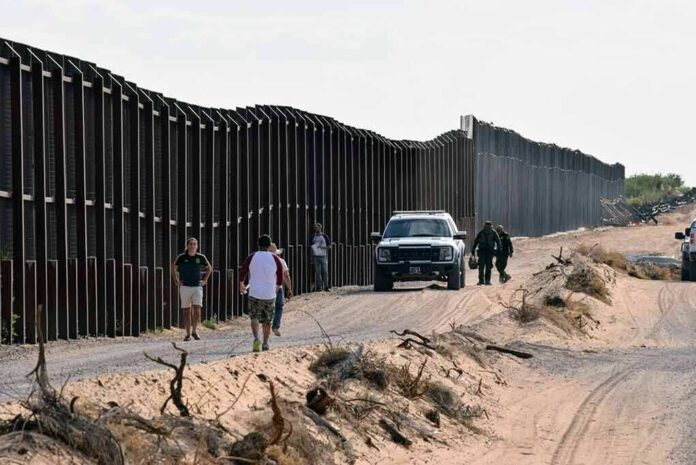
A federal judge cleared the way for 62 miles of new border wall along a tribal reservation, despite the tribe’s claims that the project invades its land and sovereignty.
Story Snapshot
- A judge denied the tribe’s request to halt wall construction along its reservation.
- The court said the tribe did not show the wall would change reservation boundaries.
- The tribe argues federal law bars altering reservation borders without Congress.
- The ruling highlights a wider struggle between border security and tribal rights.
What the Court Decided and Why It Matters
U.S. District Judge Richard Leon refused to issue a preliminary injunction that would have paused the Trump administration’s plan to build 62 miles of border wall along the Tohono O’odham Nation’s reservation in southern Arizona. Leon wrote that the tribe had not shown the wall would change reservation boundaries without Congress or that the plan amounted to trespass on tribal land at this stage. The decision allows planning and initial steps to proceed while the lawsuit continues on the merits.
The court’s ruling rested on emergency-relief standards, which are hard to meet. Judges grant quick injunctions only when evidence shows likely success, likely harm, and a need to act now. Leon found those showings fell short on boundary change and trespass claims for now. The government’s reliance on long-standing federal control of border-adjacent strips, often called the Roosevelt Reservation, also factored into the analysis reported by outlets covering the order.
What the Tribe Says Is at Stake
The Tohono O’odham Nation sued the Department of Homeland Security and senior officials, arguing the plan is illegal because only Congress can reduce reservation land or shift its borders. The complaint cites 25 United States Code section 398d and seeks a court declaration that building across the reservation is beyond the government’s legal power. The tribe also raised trespass and the risk to cultural sites and resources, saying federal planners pushed ahead without consent on their homelands.
Tribal leaders and allies frame the dispute as a sovereignty test and a warning about how fast emergency powers can override local voices. They argue that true border security should center on ports of entry and coordinated policing, not new walls over sacred lands. Supporters of the tribe say the pattern is familiar: the federal government prioritizes speed and optics over consent and preservation, then asks communities to live with the damage.
How the Government Defends the Project
The administration says the wall is a border security need and that agencies will coordinate to reduce harm during planning and construction. Officials emphasize ongoing communication with tribes and say they respect sovereignty even while moving forward with federal infrastructure near the line. Justice Department lawyers argued in court that the tribe does not have a veto over national border defenses, especially on lands the government controls along the boundary.
Judge Leon’s order echoed parts of that stance by noting the tribe had not proven a legal boundary change or trespass at this time. Reporting indicates the court credited the government’s authority to build on border-adjacent public lands, a power traced to early twentieth-century reservations of a narrow strip along the international boundary. That history, disputed in scope by the tribe, gave the government leverage against an immediate halt.
Why This Fight Resonates Beyond Arizona
This case fits a broader clash over who decides what happens at the border, and at what cost. Tribes and local communities often see walls as a direct hit on culture, land, and autonomy. Federal agencies see them as part of a national security toolkit that must move quickly against cartels and smuggling. Courts usually demand detailed proof to stop projects fast, which makes early wins rare for local challengers. The gap between urgent enforcement and earned consent keeps widening.
For many Americans, the message is familiar and troubling. People on the right and left fear a government that acts first, asks later, and shrugs off those who live with the results. Supporters of stronger borders want tools that actually work, not costly symbols. Supporters of tribal rights want respect for law, land, and history. Both sides ask why leaders in Washington keep forcing zero-sum choices instead of building trust, proof, and practical fixes that match life on the ground.
Sources:
washingtontimes.com, azcentral.com, abcnews.com, tonation-nsn.gov, tucson.com, kjzz.org, grijalva.house.gov, theatlantic.com, archaeologysouthwest.org, cdn.ca9.uscourts.gov