A nationwide web of Flock cameras is quietly letting the government track drivers without warrants, and now Congress is finally moving to pull that power back under the Fourth Amendment.
Story Snapshot
- Rep. Keith Self has introduced the PRIVACY Act to force federal agencies to get a warrant before tapping Flock and other local surveillance data.
- Federal immigration and homeland security agencies have already accessed local Flock camera networks through “side doors” and “back doors,” often without local consent.
- Cities across the country are canceling Flock contracts after discovering how easily their residents’ movements can be tracked and shared.
- Courts and experts are split on whether mass license plate tracking is a Fourth Amendment “search,” but new rulings are putting Flock under legal fire.
Rep. Keith Self’s Bill Targets Warrantless Federal Access
Republican Congressman Keith Self of Texas has introduced the Protecting Rights in Video and Equipment Acquired Discovery, or PRIVACY, Act in the U.S. House of Representatives. The bill would require federal law enforcement to obtain a warrant before accessing or querying surveillance data from state and local systems, including Flock automated license plate readers and similar tools. Self argues that Americans have a constitutional right to be secure against government searches, and that “this bill simply restores that protection” by forcing agencies to “get a warrant.” His proposal would also limit how long data obtained under a warrant can be kept, generally to 30 days unless a court allows a longer retention tied to a prosecution. The bill further bars using federal funds to buy or install these surveillance systems, signaling concern that Washington is bankrolling tools that can be turned against ordinary citizens.
Self’s move comes as anger grows across the political spectrum about how federal agencies reach into local camera systems without clear oversight. The University of Washington Center for Human Rights found that United States Border Patrol had “back door” access to Flock license plate data from at least ten Washington police departments that had not explicitly agreed to share their networks. Researchers also documented “side door” searches, where local officers with proper logins ran Flock queries on behalf of Immigration and Customs Enforcement or Border Patrol, effectively giving those agencies warrantless access they were not supposed to have. Separate reporting shows that Immigration and Customs Enforcement, Customs and Border Protection, the Drug Enforcement Administration, and other federal units can pull local Flock data by several legal and deceptive means, often far beyond what residents were told when the cameras went up.
How Flock Cameras Turn Driving Into a Trackable Record
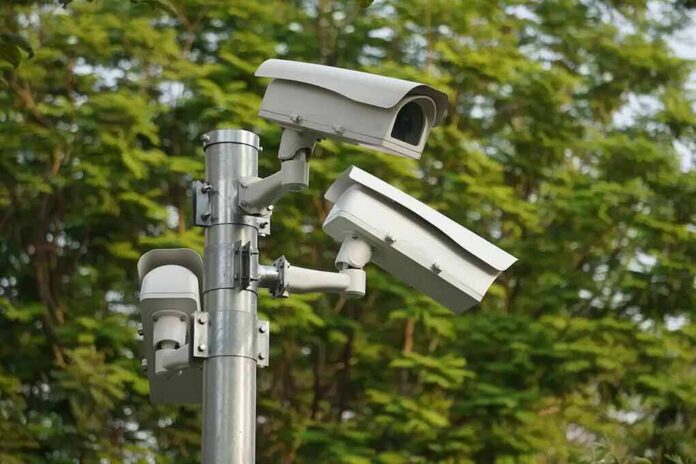
Flock Safety builds automated license plate reader cameras that sit along roads and parking lots, snapping pictures of passing vehicles and logging plates, times, and locations into a searchable database. In many cities, these cameras run constantly, feeding tens of thousands of scans per day into systems that police can query later to see where a particular car has been over time. Civil liberties groups warn that this “vehicle fingerprinting” lets the government reconstruct a person’s long-term movements, revealing visits to churches, clinics, political meetings, or protests in ways most people assume are private. In 2018, the Supreme Court’s Carpenter decision held that long-term cell phone location tracking is a search that needs a warrant, and critics argue that pulling weeks of Flock records to map someone’s travel pattern raises the same constitutional issues. The concern is not one photo of a plate on a public road but the power to stitch thousands of data points into a detailed profile of a citizen’s life without a judge ever signing off.
Evidence from watchdog groups shows how easily this kind of tracking can be misused. The Electronic Frontier Foundation reported that Flock’s network has helped law enforcement track protesters, target Romani communities, and monitor women seeking reproductive health care, chilling speech and movement protected by the Constitution. Other investigations have uncovered officers abusing Flock and similar systems to stalk former romantic partners, turning public safety tools into personal surveillance weapons. These cases feed a narrative familiar to both conservatives and liberals: powerful institutions promise “security” but use high-tech tools to watch regular people while insiders and elites face few consequences. For many, Flock cameras look less like a crime-fighting victory and more like another way the government can watch without asking permission or respecting basic rights.
Courts and Lawmakers Clash Over What Counts as a Search
Judges and legal experts are deeply divided over whether using Flock cameras and databases is a Fourth Amendment “search” that requires a warrant. In one federal case from Kansas, the court held that a driver has no reasonable expectation of privacy in a license plate or movements on public roads, and allowed the government to use Flock to capture and track a specific plate without a warrant. A detailed analysis of Flock’s use in Cleveland noted that some courts see Flock as providing fewer data points than cell phone tracking, and therefore not triggering the same concern about monitoring a person’s “whole of movements.” By contrast, a judge in Norfolk, Virginia, ruled that collecting location data from the city’s 172 Flock cameras did amount to a search under the Fourth Amendment, meaning such data cannot be used in a criminal case when collected without a warrant. That ruling relied on Carpenter’s logic that long-term movement tracking, even in public spaces, reveals so much about a person’s life that it should not happen without judicial approval.
Recent Supreme Court decisions are pushing this debate closer to Flock. In June, the Court found that “geofence” warrants—broad demands for cell phone location data from everyone in a certain area during a certain time—are government searches that require a warrant supported by probable cause. Attorneys now argue that mass queries of Flock’s nationwide license plate database look a lot like dragnet location tracking and should face the same warrant rule. At the same time, some courts and police departments still treat fixed road cameras as simple observations in public, not as a search, leaving a patchwork of rules that vary from city to city. This confusion fuels fears that the law bends to technology companies and government agencies first, and only later, slowly, starts to protect ordinary people when abuses become too obvious to ignore.
Cities Push Back as Trust in Government Erodes
Local governments across the country are starting to walk away from Flock as they learn how little control they have over who sees their data. Public records from several cities showed that license plate information had been shared more widely than officials believed, including with United States Border Patrol and other federal agencies. Santa Cruz and other communities discovered that their camera feeds were plugged into Flock’s national network without clear consent, making it easier for outside agencies to search their residents’ driving history. In Washington state, a trial court ruled that Flock camera images are public records that can be requested by anyone under the state’s Public Records Act, underscoring that once data is collected by government, it belongs in a public system rather than a private black box. For many Americans, these stories confirm a long-held suspicion: the government and its corporate partners are building systems that watch regular people first and ask legal questions later.
What the Flock? Camera data not secured. Rep. Keith Self is doing something about it.
Watch David Pollack Primetime on OAN Live pic.twitter.com/AC0Tk70cIW
— One America News (@OANN) July 22, 2026
Rep. Self’s PRIVACY Act taps into this shared frustration from both right and left by aiming at a narrow but important part of the problem: warrantless federal access. His bill would not shut down local Flock programs or settle every Fourth Amendment dispute, but it would force federal agencies to get a judge’s approval before dipping into local surveillance databases and would stop Washington from paying to expand those systems. Supporters see that as one small step toward rebalancing power between citizens and a growing surveillance state, while critics argue that deeper reforms or outright bans are needed to protect privacy and civil liberties. In a time when many Americans feel the “deep state” and big tech work together above the law, this fight over Flock cameras has become a test of whether Congress is willing to put real limits on how government watches the people it is supposed to serve.
Sources:
keithself.house.gov, facebook.com, instagram.com, youtube.com, cleveland.com, coloradosun.com, denverite.com, journals.law.unc.edu, texasscorecard.com, business-humanrights.org, abc7news.com