A young American soldier died disarming an Iranian attack drone in Iraq, raising fresh questions about why U.S. troops are still paying with their lives in a war most citizens barely understand.
Story Snapshot
- Sgt. Michael Emmanuel Swinton, 30, was killed during a controlled detonation of a downed Iranian drone at Erbil Air Base in Iraq.
- The Department of War says the mission aimed to protect other service members from unexploded ordnance, and the incident is under investigation.
- His death highlights how cheap one-way attack drones have become a deadly, daily threat to U.S. forces across Iraq and Iraqi Kurdistan.
- The growing drone war deepens public frustration that American troops are still in harm’s way while Washington’s leaders argue and posture.
Fallen soldier identified in Iraq drone detonation
The Department of War has formally identified Sgt. Michael Emmanuel Swinton, 30, of Fayetteville, North Carolina, as the U.S. service member killed at Erbil Air Base in northern Iraq during a mission to destroy a downed Iranian one-way attack drone. Officials say he was “killed in action during a controlled detonation” of the unmanned aerial system on July 19, 2026, and that the incident remains under investigation. A second American service member reportedly suffered minor injuries during the same operation.
Department of War records show Swinton served with D Battery, 2nd Battalion, 55th Air Defense Artillery Regiment, 108th Air Defense Artillery Brigade, part of the Army’s air and missile defense command based at Fort Bragg, North Carolina. He first enlisted in 2017 as an air defense early warning operator and later retrained as a Patriot missile fire control specialist, a role built around tracking and defeating incoming threats from the air. His commanders say the drone disposal mission was meant to safeguard other soldiers on the base from the explosives still loaded on the aircraft.
Drone war in Iraqi Kurdistan and growing risks
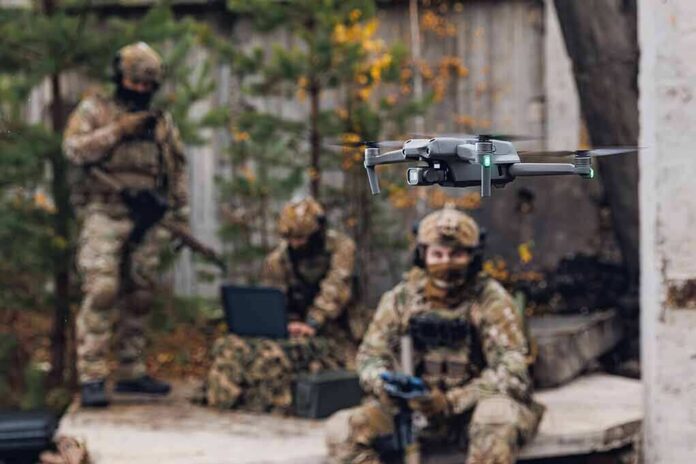
Swinton’s death did not come from a drone strike hitting its target but from the dangerous work of clearing the explosives afterward, a pattern that mirrors other recent casualties in the region. Iraqi and international reports describe a “drone nightmare” across Iraq and Iraqi Kurdistan, with explosive-laden one-way drones used by Iranian-linked groups to target bases, radar sites, and even parked U.S. helicopters. These systems are cheap, hard to trace, and often built from commercial parts, which makes them hard to stop and even harder to safely destroy once they crash.
Local reporting from Iraq details how drones have hit military sites, damaged radar systems, and forced emergency investigations by Iraqi leaders, who still struggle to pin down the exact launch points and sponsors behind each attack. A series of drone strikes across 14 Iraqi provinces has turned the skies into a constant source of danger for Iraqi forces and foreign troops alike. When Iraqi air defenses or U.S. units manage to bring down a drone before impact, they are still left with a flying bomb on the ground, which specialized teams must approach and neutralize, sometimes at great personal risk.
From Tower 22 to Erbil: a wider war with distant oversight
For many Americans, Swinton’s death is another entry in a growing list of casualties tied to an Iran-related war that often feels far away and vaguely explained. Since the Tower 22 drone attack in Jordan in January 2024, which killed three U.S. soldiers and injured dozens more, one-way drones have become a main weapon for Iranian-backed militias across the region. These groups use drones to harass U.S. positions, test defenses, and send political messages, while Washington responds with patrols, limited strikes, and more deployments that keep troops on the ground and under fire.
🇺🇸 — UPDATE: The Pentagon announced today that Sgt. Michael Emmanuel Swinton, 30, was killed in action Sunday while conducting a controlled detonation of a downed one-way attack drone at Erbil Air Base in Iraq. pic.twitter.com/gutGL4BhCw
— Belaaz News (@TheBelaaz) July 21, 2026
Citizens on both the right and the left see stories like Swinton’s and ask the same basic questions: Why are Americans still dying in Iraq more than twenty years after the first invasion, and who in Washington is truly accountable for the mission’s goals and limits? Many conservatives blame years of “forever wars” and globalist thinking that send young Americans into danger while problems at home go unsolved. Many liberals see a military-first approach that deepens regional tensions while ordinary people, both American and Iraqi, pay the price.
Service, sacrifice, and anger at a distant elite
The Department of War notes that Swinton had earned commendations, expeditionary medals, and a Combat Action Badge, and will be posthumously awarded the Bronze Star and Purple Heart. His record reflects real courage and dedication, yet his loss also feeds a broader anger that spans party lines. People see highly decorated soldiers dying to manage drone threats in far-off bases while leaders in Washington seem more focused on election cycles, talking points, and blame games than on clearly explaining or changing the mission.
For families watching this war from home, the idea of a “controlled detonation” that still kills an American soldier feels both tragic and deeply unsettling. It highlights how advanced technology and cheap attack drones can turn even safety operations into life-or-death moments. It also sharpens a shared fear that the federal government and its permanent national security class—the “deep state” in many people’s minds—keep U.S. forces locked into open-ended conflicts that no longer match the country’s founding promises of accountable power and clear, limited wars.
Sources:
facebook.com, war.gov, fayobserver.com, anews.com.tr, youtube.com, en.wikipedia.org, forbes.com, twz.com, bbc.com, aljazeera.com