President Trump’s plan to turn the National Mall into a high-speed IndyCar track for America’s 250th birthday shows both the thrill — and the risks — of a government that now treats a historic park like a political stage and a construction zone.
Story Snapshot
- President Trump signed Executive Order 14381 creating the Freedom 250 Grand Prix, the first motor race near the National Mall.
- The August 21–23 race is part of the America 250 celebration and will count toward the official IndyCar championship.
- The event is promised as free to attend and widely broadcast, while agencies are ordered to fast-track permits and planning.
- Critics point to past failed Trump renovations and diverted park funds as warning signs for safety, fairness, and “deep state”-style favoritism.
Trump’s Race Order: What Exactly Was Approved?
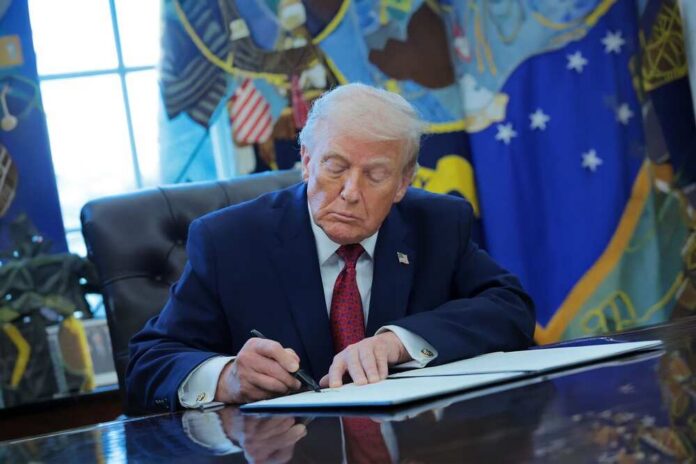
On January 30, 2026, President Donald Trump signed Executive Order 14381 to launch the Freedom 250 Grand Prix in Washington, D.C. The order calls the race “the first motor race ever held in our Nation’s capital near the National Mall,” tying it directly to America’s 250th birthday celebration. It describes cars racing on a street course that lets drivers move around “our iconic national monuments,” turning a symbolic public space into a temporary speedway and national television backdrop.
IndyCar coverage confirms the Freedom 250 will be part of the official 2026 IndyCar Series. It is slated as the 18th race on the schedule, between events in Canada and Wisconsin, and will award full championship points like any other major race. Reporting says the race weekend will run August 21–23, with the main event on August 23, placing the spectacle at the peak of Trump’s America 250 summer push in the capital.
Free Access, Fast Permits, and Big-Money Promises
Trump and race backers are selling the Freedom 250 as a gift to the public. Coverage of the announcement states that access to the race around the National Mall will be free of charge and that the event will be streamed live on a major sports network, FOX Sports, to reach viewers across the country. An IndyCar spokesperson has floated a projection of up to $100 million in economic benefit for the Washington region, but no independent study has been released to back that number.
The executive order pushes federal agencies to move at top speed. It directs the Department of the Interior and the Department of Transportation to issue “all permits, approvals, and other authorizations” as quickly as possible and gives them only 14 days to select a race route in the city. That compressed timeline cuts down chances for extended public comment and detailed environmental review, which worries people who already see Washington’s bureaucracy as captured by powerful insiders.
Race Track Around Monuments: Excitement Meets Preservation Fears
Early descriptions and later guides agree the race will use a temporary street circuit around the National Mall. Officials and promoters talk about showing off landmarks like the Capitol, the Washington Monument, and nearby memorials as cars run laps on a roughly 1.7‑mile course. For fans, this feels like a once‑in‑a‑lifetime mix of patriotism and horsepower. For many residents and park advocates, it raises hard questions about noise, wear and tear, and emergency access in one of the country’s most sensitive public spaces.
As of the order’s signing, the exact route was not yet public, and even now, most details outside press materials remain hard to review. That lack of transparency, paired with the speed of the planning, feeds a deeper worry that monuments and grounds are being used as props first and protected second. This pattern matches Trump’s broader America 250 approach, where rallies, flyovers, and now car races turn the Mall into a stage for power as much as a national commons.
History of Failed Projects and Park Money Diversions
Critics point to Trump’s recent record on Washington projects as a warning sign for the Freedom 250. A renovation of the Lincoln Memorial Reflecting Pool, costing more than $15 million, failed almost immediately: waterproof coating peeled, algae turned the water green, and the pool had to be drained multiple times. Reports link that job to a no‑bid contract for Atlantic Industrial Coatings, a firm tied to a Trump donor, raising concerns about favoritism over competence.
🔥 AWESOME! President Trump just revealed race cars will be racing down Pennsylvania Avenue at 190 MILES PER HOUR+ in the Freedom 250 Grand Prix
They will be surging around the National Mallpic.twitter.com/VnBiZ5J0WV
— Gramcari (@THTuBe2) July 13, 2026
Investigations also show at least $90 million in National Park Service entrance fees from parks across the country were redirected to pay for Trump’s D.C. “beautification” and America 250 projects. Former National Park Service Director Jonathan Jarvis called this diversion “unprecedented” and a “major mistake,” noting that law normally requires most fee money to stay in the park where it was collected. With hundreds of maintenance projects delayed nationwide, many Americans see the Freedom 250 as one more example of leaders in Washington serving big events and donors first, and everyday communities last.
Security Clampdown and the Sense of a Government on Edge
While Trump’s motor racing order itself says little about security, separate briefings for Freedom 250 events around the Mall paint a picture of heavy control. Local and federal officials describe airport‑style screening, metal detectors, and strict rules on bags and personal items for people attending the celebration’s rallies, fights, and fireworks. Drone use is banned in the capital region, despite some early chatter online about aerial footage, showing how nervous authorities are about any airborne threats or accidents.
For conservatives tired of “woke” spending and weak borders, and liberals angry about inequality and fossil fuel use, this mix of patriotic branding, heavy security, and questionable contracting feels familiar. It feeds a shared belief that a distant political class — whether you call it “elites” or “the deep state” — can move money, bend rules, and reshape public spaces without real input from the people those spaces belong to. The Freedom 250 may deliver a spectacular race, but it also spotlights a federal government that many Americans now see as serving itself first and the public only when it makes good television.
Sources:
facebook.com, whitehouse.gov, indystar.com, tennessean.com, nytimes.com, en.wikipedia.org, usnews.com, sports.yahoo.com, youtube.com, washingtonpost.com, nbcwashington.com, thehotelwashington.com, freedom250gp.com, blog.spothero.com