
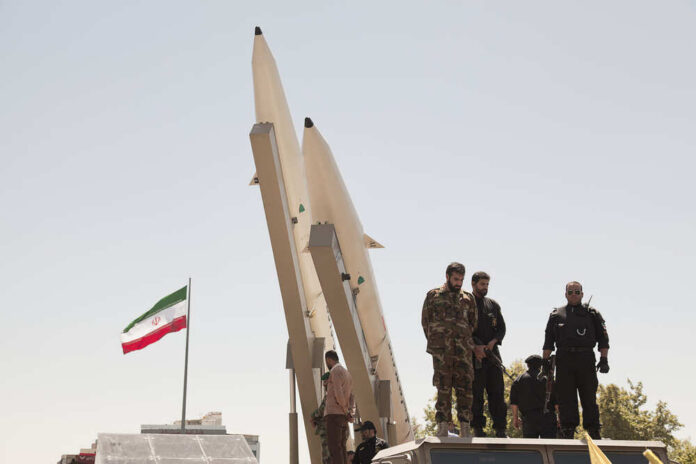
Iran’s Revolutionary Guard has openly tied new threats against 18 major U.S. tech companies to a campaign of revenge against American leaders, raising the stakes in a war many Americans already feel their own government is losing control of.
Story Snapshot
- Iran’s Islamic Revolutionary Guard Corps (IRGC) says 18 U.S. tech firms are now “legitimate targets” across the Middle East.
- The IRGC links these threats to assassinations of Iranian leaders and vows to destroy an American company for each future killing.
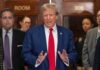
- U.S. officials say they killed an IRGC-connected operative tied to a 2024 plot to assassinate Donald Trump, and have charged suspects in a related murder-for-hire case.
- Both sides frame their actions as “self-defense,” deepening a cycle where American leaders and everyday workers are placed in growing danger.
IRGC Threatens 18 U.S. Tech Companies as “Legitimate Targets”
On Tuesday, Iran’s Islamic Revolutionary Guard Corps used its official media channels to warn that 18 American technology and defense-related companies with operations in the Middle East are now “legitimate targets.” The Guard’s statement named firms such as Apple, Microsoft, Google, Nvidia, Cisco, Meta, IBM, Dell, Tesla, General Electric, and Boeing, along with the bank JPMorgan and security companies Spire Solutions and G42. Employees were urged to leave offices, and nearby residents were told to clear the area before planned attacks.
In the same message, the IRGC said attacks could begin as early as the following night if Iranian senior commanders continued to be killed. A Telegram channel linked to the Guard also warned that “from this point forward, for each assassination, an American corporation will face destruction,” and set a start time of 8 p.m. Tehran time on April 1 for possible strikes. This marked a direct attempt to connect military deaths to corporate destruction, placing civilian workers in the crosshairs of a state-backed conflict.
Threats Framed as Revenge for U.S. Killings of Iranian Operatives
Iran’s messaging ties these threats to what it calls “targeted assassinations” of its leaders by the United States and Israel, and claims such killings began on April 1. While open-source reporting does not confirm assassinations on that specific date, there is clear evidence of recent U.S. strikes on Iranian figures. In March 2026, U.S. officials confirmed killing the leader of a covert Iranian unit that had allegedly planned to assassinate Donald Trump in 2024, describing him as linked to the Revolutionary Guard. This strike followed long-running U.S. concerns about Iranian plots against American political leaders.
Back in late 2024, the U.S. Department of Justice charged several individuals in a murder-for-hire scheme that prosecutors say was directed by an operative connected to the Revolutionary Guard and aimed at killing Trump. Iran denied involvement in that plot, but the case helped shape Washington’s view of the regime as actively pursuing attacks on U.S. officials. Around the same time, media tied to the Revolutionary Guard circulated bounties and calls for Trump’s assassination, casting revenge on Trump and Israeli Prime Minister Benjamin Netanyahu as revolutionary goals. These steps laid the groundwork for today’s cycle of retaliatory claims and threats.
Long History of IRGC Militancy and U.S. “Maximum Pressure” Policy
The Revolutionary Guard did not appear overnight. A detailed report from the Council on Foreign Relations describes how the Guard has, for years, supported armed groups in Iraq, Lebanon, the Palestinian territories, Syria, and Yemen in what it calls an “axis of resistance” against Western and Israeli influence. The White House has formally labeled Iran “the world’s leading state sponsor of terrorism” and says Iranian forces and proxies have killed and injured Americans for nearly half a century. These designations make most U.S. media and officials treat new Iranian threats as more proof of ongoing terrorism, not as any kind of justified response.
On the American side, presidents from both parties have leaned on sanctions and military strikes instead of open diplomacy. Congress and the Trump administration built on earlier sanctions to impose what they called “maximum pressure” on Iran’s economy, including revoking oil waivers and expanding executive orders that target Iranian government-linked sectors. Legal statements from the U.S. State Department about operations like the killing of Revolutionary Guard commander Qasem Soleimani describe such strikes as lawful acts of self-defense, citing prior Iranian attacks. To frustrated citizens at home, this looks like a steady march toward bigger wars, while basic problems at home go unsolved.
Escalation Pattern: Each Side Claims Self-Defense, Civilians Pay the Price
Experts note that these latest threats fit a familiar pattern in U.S.–Iran clashes since at least 2019. When the United States or Israel carries out major strikes on Iranian leaders or infrastructure, Iranian state outlets respond within days with new vows of retaliation against American leaders, regional bases, or now corporate targets. In turn, U.S. leaders frame every Iranian response as unprovoked terrorism and use that image to justify more sanctions, more covert action, and more deployments. Each side says it is only reacting, yet the result is a ladder of escalation that keeps rising.
This cycle now pulls regular American workers into the danger zone. Iranian communiqués do not only mention political figures; they tell staff at companies like Apple, Google, and Microsoft to get out of their offices or risk being caught in missile or drone strikes. At the same time, Americans see tech giants that helped build modern life turned into targets because of alleged ties to intelligence and military programs. For citizens on the left and right who already distrust “deep state” elites, these events reinforce a fear that powerful governments and corporations are playing a deadly game, while ordinary people are asked to accept the risk without a real voice.
Sources:
youtube.com, ajc.org, facebook.com, ctc.westpoint.edu, fbi.gov, cfr.org, brookings.edu, whitehouse.gov, 2021-2025.state.gov, atlanticcouncil.org