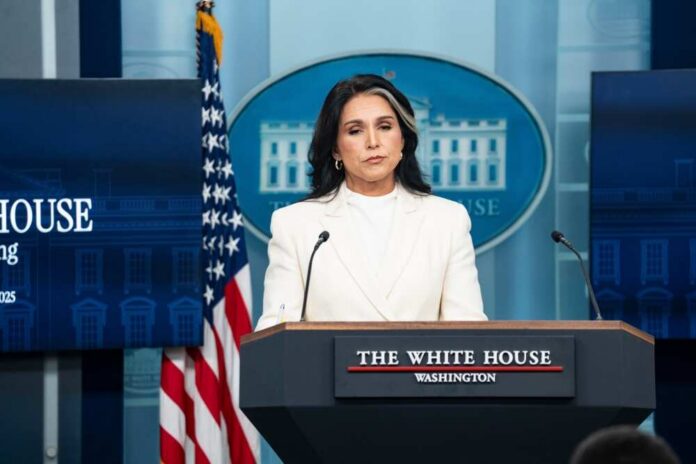
Tulsi Gabbard’s sudden resignation as Director of National Intelligence raises urgent questions about leadership continuity and political crossfire at the top of America’s intelligence community.
Story Snapshot
- Gabbard cites her husband’s rare bone cancer as the reason for stepping down [1].
- Advocacy and partisan groups had recently called for her ouster [2][6].
- Reports indicate President Trump privately weighed possible replacements [3].
- Official biography underscores her national security focus as DNI [4].
Resignation Framed Around Family Health
Multiple broadcasts report Tulsi Gabbard will leave her post to support her husband through treatment for a rare bone cancer, citing senior administration sources for the personal rationale and timing [1]. Family health is a legitimate and sobering reason to depart any role, especially a post with relentless demands and classified burdens. Conservatives understand duty begins at home; caring for a spouse battling cancer is not politics — it is principle. The public record to date centers on that explanation, pending any released resignation letter.
Administration sources featured in coverage characterize the move as compassionate, not ideological, and connected to immediate medical needs rather than a dispute over national security policy [1]. While the pace of Washington rumor is swift, the near-term fact pattern remains anchored to her husband’s diagnosis. As with earlier high-level departures across administrations, early reporting often reflects the first verifiable motive, with more documents and on-the-record statements clarifying the record later.
Pressure Campaigns And Partisan Crosswinds
Even as the health narrative dominates, Gabbard had been a lightning rod. A Congressional Black Caucus news release urged her resignation in recent months, signaling organized political pressure from the left flank in Congress [2]. Progressive activist networks also circulated petitions portraying her leadership as a threat, rhetoric designed to force a personnel outcome rather than foster serious oversight [6]. Such campaigns are familiar to readers: coordinated pressure, amplified online, meant to kneecap officials who challenge legacy narratives in the security bureaucracy.
Reports also say President Donald Trump privately asked advisers about potential successors for the intelligence post, a normal exercise for a commander in chief managing contingency planning and performance reviews [3]. The presidency demands readiness; discussing bench strength does not prove a firing is imminent. Without an official directive or dismissal notice, that background reporting functions as context — not a definitive alternative cause. Still, it underscores the overlapping currents surrounding any cabinet-level change.
Record Of Service And Mission Priorities
Gabbard’s official biography highlights a focus on safeguarding Americans’ safety, security, and freedom, the appropriate north star for the Director of National Intelligence role [4]. That mission matters most to our readers: protect the homeland, confront foreign adversaries, cut through bureaucratic gamesmanship, and deliver clear-eyed assessments to the president. Conservatives expect results rooted in the Constitution, not in fashionable groupthink or international pressure that dilutes American sovereignty and strength.
The next appointee must maintain those priorities while tightening accountability across the intelligence community. The job demands resisting political vendettas, ending leaks that weaponize classified information, and ensuring that intelligence is never twisted to smear citizens, chill speech, or erode due process. The Senate and the public should insist on a leader who rejects surveillance creep and bias that previously undermined trust in institutions that must be apolitical to be effective.
How To Read The Conflicting Narratives
Early resignations often spawn competing explanations: personal duty, internal friction, or outside campaigns. In this case, the on-the-record frame remains family health, while outside actors trumpet unrelated grievances to claim a win. Readers should separate verifiable facts from opportunistic spin. The cleanest evidence so far points to a family-driven timeline [1], even as advocacy releases and petitions claim credit for pressure that had been building in public view [2][6]. Until a letter or transcript adds new facts, restraint is the responsible stance.
Breaking: DNI Tulsi Gabbard has announced her resignation, effective June 30, 2026. In a heartfelt letter to the President, she cites the need to support her husband, Abraham, following his recent diagnosis with a rare form of bone cancer. pic.twitter.com/brjaDtZyTJ
— Abhinav singh (@its_abhinav19) May 22, 2026
The administration now faces a critical personnel decision. The successor must be ready on day one to deter foreign threats, strengthen border and cyber defenses, and ensure intelligence serves elected leadership, not permanent Washington. Conservatives will judge the next nominee by clear standards: defend constitutional liberties while confronting adversaries, reject politicization within the agencies, prioritize transparency with Congress, and deliver results. America needs an intelligence chief who answers to the people’s president — and never to the mob.
Sources:
[1] YouTube – DNI Director Tulsi Gabbard is resigning, citing husband’s health
[2] Web – Kamlager-Dove Leads Members of the CBC in Calling for DNI Tulsi …
[3] Web – Trump privately asked advisors about replacing DNI Tulsi Gabbard
[4] Web – Director of National Intelligence – ODNI
[6] Web – Tell Congress to demand Director of National Intelligence Tulsi …