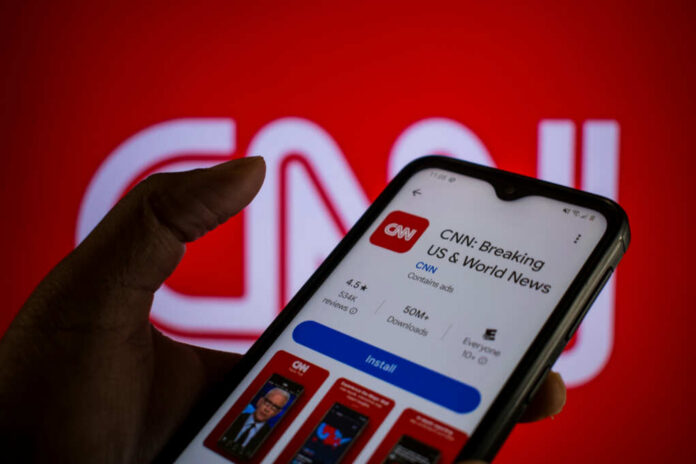
CNN’s own numbers guy is warning that a growing share of Americans believe Trump’s second-term policies are making their finances worse—an alarm bell for Republicans heading into 2026.
Quick Take
- A CBS News/YouGov poll cited on CNN found 53% of Americans say they are financially worse off under Trump’s second-term policies, up from 38% before the 2024 election.
- Independents are the sharpest problem: 60% say “worse off,” versus 13% “better off,” a dramatic swing from the pre-election baseline.
- Harry Enten highlighted a long stretch of net-negative readings since March 2025, framing it as historically weak compared with recent presidents.
- Inflation and cost-of-living perceptions are driving the political risk as midterms approach, even with Republicans controlling Washington.
What the CNN segment said—and why the “worse off” measure matters
Harry Enten, CNN’s chief data analyst, used a CBS News/YouGov poll to spotlight a stark voter perception: 53% of Americans say Trump’s second-term policies have made them financially worse off, compared with 38% who said that in October 2024. Enten emphasized the net-negative margin and treated the shift as a major warning sign because it reflects lived experience—prices, bills, and paychecks—more than abstract macroeconomic stats.
That “am I better off?” question has always been politically powerful, but it becomes especially volatile when the party in power also controls Congress. With Republicans holding the House and Senate, voters have fewer places to direct blame inside Washington. Conservatives who expected a rapid cost-of-living reset may see the polling as proof that institutional inertia is real, while skeptical independents may read it as a verdict on competence.
Independents are flashing red, and that’s where elections are won
Enten’s most damaging data point wasn’t about Democrats or the Republican base—it was independents. In the poll he cited, 60% of independents said they are worse off financially under Trump’s second term, while only 13% said better off. Enten compared that to an October 2024 baseline in which independents were not nearly as negative, describing the change as a near 50-point swing.
The practical takeaway is straightforward: independents decide close midterms, and their judgments often follow grocery, rent, and gasoline trends more than ideology. If independents are telling pollsters they feel poorer, Democrats don’t need to persuade them on culture-war issues to make gains; they simply have to keep attention on costs. For Republicans, the pressure is to show measurable progress rather than messaging that sounds like spin.
Inflation and energy costs keep pulling politics back to household math
Enten also pointed to inflation approval readings that have sunk across multiple surveys, describing Trump as in a historically weak position on what voters consistently rate as the top issue. The research summary cites net-negative figures across several polling outlets, reinforcing the idea that this is not a single-survey glitch. The problem for any administration is that inflation expectations can linger even after headline numbers ease.
For conservatives, that dynamic collides with years of anger about federal overspending and energy policies that raised costs. For liberals, inflation pain collides with fears that reduced social spending leaves families exposed. The overlap is what makes the moment politically combustible: both sides can agree the system feels rigged and unresponsive, even if they disagree about the causes and fixes.
Foreign-policy shocks can spill into economic confidence
The broader research set also notes a separate polling shock tied to the February 28, 2026 U.S.-Israel strikes on Iran, including a severe net-negative among independents on that issue. Even when voters separate war and peace from pocketbook matters, foreign-policy turmoil often shows up indirectly through oil prices, market volatility, and general confidence. If voters feel instability abroad and pressure at home, they tend to punish incumbents.
Because Republicans run Washington, the normal excuse of “gridlock” has less force—yet so does the opposition’s claim that it can fix everything without governing responsibility. That shared frustration is part of why “deep state” and “elite” narratives retain traction across the spectrum: people see big promises, then slow results, while costs remain high. The polling Enten highlighted captures that mood more than it proves a single cause.
What to watch as the midterms near
Enten underscored that net-negative readings have persisted for an extended stretch since early 2025, and he framed the trend as historically poor versus other 21st-century presidents on similar measures. Still, the available research is mostly polling-based and does not include a detailed breakdown of which specific policies respondents blame. That limitation matters, because “worse off” can reflect inflation, housing, gas, interest rates, or plain pessimism.
VIDEO – ‘Negative 55 Points?!’ CNN’s Harry Enten Can’t Believe Trump’s Latest Polling Data https://t.co/fbrsURfAwE
— Grabien (@GrabienMedia) April 24, 2026
The political significance is that perceptions can harden quickly—and reverse slowly. If the administration and Congress can deliver visible relief on the everyday cost drivers voters talk about most, Republicans can blunt the damage. If not, Democrats will keep pressing the simple argument that one-party GOP control hasn’t improved family finances. Either way, Enten’s blunt on-air reaction shows the numbers are now hard for even adversarial media to ignore.
Sources:
CNN Data Guru Harry Enten Is Stunned at Trump’s Economic Approval
CNN Data Guru Blown Away by Scathing Polling on Trump’s Iran War