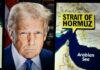
Trump’s Iran-port blockade is so tight that CENTCOM says not a single ship has made it through—raising the stakes for global oil, U.S. deterrence, and China’s energy lifeline.
Quick Take
- CENTCOM says enforcement of the Strait of Hormuz blockade began April 14 at 10 a.m. ET and applies to ships entering or exiting Iranian ports.
- U.S. officials stress the action is designed to preserve freedom of navigation for traffic tied to non-Iranian Gulf ports such as the UAE, Qatar, and Saudi Arabia.
- Mine-clearance efforts and the presence of U.S. guided-missile destroyers signal a high-readiness posture aimed at preventing miscalculation in a crowded waterway.
- The biggest geopolitical pressure point is China, described in reporting as the primary consumer of Iranian crude oil and therefore the most exposed to the blockade’s economic effects.
What CENTCOM Says the Blockade Does—and Does Not—Target
U.S. Central Command’s stated framework draws a sharp line: the blockade is aimed at vessels connected to Iranian ports and coastal areas, not at shutting the Strait of Hormuz to everyone. Reporting on CENTCOM’s notice to mariners describes guidance for ships operating near the Gulf of Oman approaches, including communications procedures intended to reduce misunderstandings during enforcement. That distinction matters because Hormuz is a global chokepoint, and credibility hinges on consistent, predictable rules.
The headline claim—“zero ships have made it through”—is attributed to CENTCOM in multiple reports, but the available summaries do not provide detailed interception logs or a verbatim, time-stamped CENTCOM quote using that exact phrasing. What is clearer is the timeline: an announcement Sunday that enforcement would start Monday, followed by the start time of 10 a.m. ET on April 14. Until more primary data is released, observers should treat “zero” as an official characterization rather than a fully documented statistic.
Military Mechanics: Mine Clearance, Destroyers, and a Narrow Margin for Error
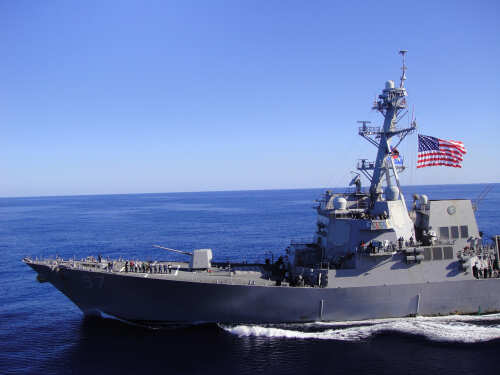
CENTCOM’s enforcement posture is backed by mine-clearance operations and the deployment of guided-missile destroyers, including USS Frank E. Peterson and USS Michael Murphy, according to reporting on regional naval activity. In practice, this combination is about more than stopping prohibited traffic—it is also about preventing Iran or proxy actors from turning the Strait into a hazard to all shipping. The clearer the channels, escorts, and rules of engagement, the lower the risk of a spiraling incident.
President Trump’s public warning that any Iranian naval vessels approaching the blockade would be “immediately ELIMINATED” underscores the administration’s willingness to rely on overt deterrence rather than quiet diplomacy. Supporters see that posture as a corrective to years of mixed signals that encouraged adversaries to test U.S. red lines. Critics warn that blunt language can reduce off-ramps. The facts available show heightened readiness; they do not yet show how Iran will probe—or avoid—those boundaries.
Why China Sits at the Center of the Economic Pressure Campaign
The reporting highlights China as the most affected major power because it is described as the primary consumer of Iranian crude oil. That detail helps explain why a blockade “targeting Iran” can quickly become a broader stress test of U.S.-China competition. If Iranian exports are curtailed, buyers must replace supply, shippers must adjust routes and insurance, and prices can respond—even if the U.S. insists traffic to allied Gulf ports remains protected. Energy markets typically move on perceived risk as much as physical disruption.
The Big Question: Can a “Targeted” Blockade Stay Targeted?
One analysis quoted in the research warns that, although the policy is theoretically limited to Iranian-port traffic, the distinction may be difficult to maintain in real-world conditions. The Strait is crowded, paperwork can be opaque, flags of convenience blur ownership, and Iran has incentives to create uncertainty. From a limited-government perspective, Americans should watch for mission creep: enforcement that starts narrowly can expand under pressure, increasing costs and risks without a clear congressional debate or defined end state.
Zero ships have made it through US blockade in Strait of Hormuz: CENTCOMhttps://t.co/8ULuP7gvxL
— Human Events (@HumanEvents) April 14, 2026
For U.S. Gulf partners, the administration’s message is that commerce tied to non-Iranian ports should continue under the umbrella of freedom of navigation. For domestic audiences frustrated by “forever conflicts,” the more immediate concern is whether this enforcement remains a disciplined maritime action or drifts toward open-ended escalation. The current public record confirms the start time, the intended scope, and the U.S. naval posture; it remains thin on measurable results, compliance rates, and the blockade’s durability.
Sources:
CENTCOM announces Hormuz blockade targeting ships entering or exiting Iranian ports
U.S. To Blockade Ships Entering Or Exiting Iranian Ports