A new U.S. operation in Venezuela has sparked tensions, as President Bukele of El Salvador uses it to criticize both foreign and domestic opponents.
Story Summary
- U.S. military captures Venezuelan President Nicolás Maduro, escalating regional tensions.
- El Salvador’s President Nayib Bukele mocks Maduro and criticizes U.S. Senator Van Hollen.
- Bukele highlights the FMLN’s historical support for Maduro, stirring domestic politics.
- The event underlines the divisive regional politics between leftist and conservative leaders.
U.S. Military Captures Nicolás Maduro
In a bold move that has captured international attention, the U.S. military successfully executed an operation leading to the capture of Venezuelan President Nicolás Maduro. This operation, carried out on Venezuelan soil, marks a significant escalation in the ongoing tensions between the United States and Venezuela. The move has been criticized by some as an aggressive act, but seen by others as a necessary step to counter Maduro’s regime.
Venezuela’s President Maduro Captured by U.S.
Trump warns Colombia, Cuba, Mexico… How far will this go?
Watch as @Naina_2892 breaks down the details. pic.twitter.com/5oEDCeVUDb
— TIMES NOW (@TimesNow) January 5, 2026
Bukele’s Strategic Response
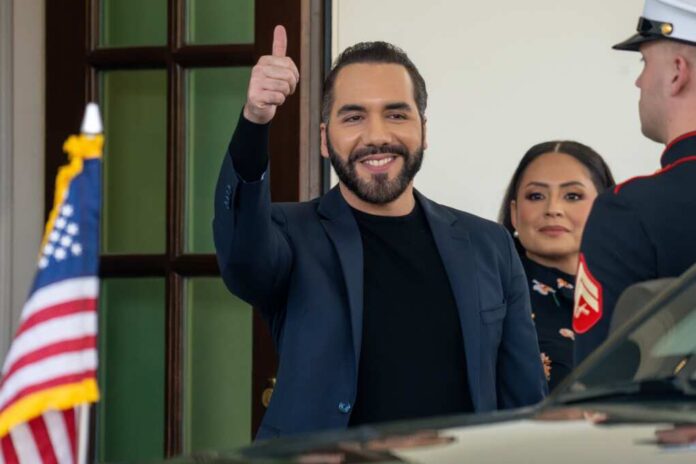
Following the capture, El Salvador President Nayib Bukele took to social media, releasing a video that criticized both the Venezuelan regime and domestic opponents. Bukele’s video condemned Maduro’s threats and highlighted the historical ties between Maduro and El Salvador’s FMLN party. This strategic move not only bolstered Bukele’s domestic standing but also served as a political attack on the FMLN, which has historically supported Maduro’s government.
Senator Chris Van Hollen from Maryland criticized the capture, labeling it an “illegal act of war” aimed at seizing Venezuelan oil. In response, Bukele directly accused Van Hollen of defending authoritarian regimes, further politicizing the situation.
Implications for Regional Politics
The capture of Maduro and Bukele’s subsequent actions have far-reaching implications for regional politics. By aligning himself with U.S. anti-gang and anti-authoritarian efforts, Bukele strengthens his position as a conservative leader committed to combating leftist influences. This incident also underscores the complex dynamics in Latin America, where political alliances and historical ties play a critical role in shaping current events.
Bukele’s use of social media to mock and challenge both domestic and international critics demonstrates a modern approach to political discourse, one that resonates with his conservative base. It highlights the ongoing struggle between traditional values and progressive agendas in the region.
https://youtu.be/-0GPWaMBiy0?si=QQJcaeZ0BEp-13-J
Sources: