What started as a protest outside New York City’s mayoral residence turned into an IED scare that forced the FBI to treat street politics like a potential terrorism scene.
Story Snapshot
- Dueling protests outside Gracie Mansion escalated when two suspicious, smoke-and-flame devices were ignited near police lines.
- NYPD made six arrests, including two Pennsylvania men accused of lighting and throwing/dropping the devices.
- The FBI Joint Terrorism Task Force opened an investigation, with items sent for technical analysis and terrorism charges possible.
- Later reporting described the devices as improvised explosive devices with fragmentation materials, not mere “smoke bombs.”
Gracie Mansion Protest Turns Dangerous Within Minutes
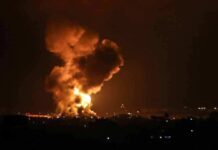
New York police say tensions spiked around midday March 7, 2026, when a small anti-Muslim rally gathered outside Gracie Mansion and a much larger counterprotest formed across the street. Officers separated groups with barricades, but confrontations broke out anyway. Police reported an anti-Muslim protester used pepper spray, prompting an arrest. Moments later, officers say an 18-year-old counterprotester lit a device and threw it toward police, where it produced smoke and flames near the barrier.
Police said the first device hit near the barricade line and went out, but the situation did not calm. Investigators allege the same suspect then retrieved a second device from a 19-year-old companion, lit it, ran, and dropped it before fleeing. The NYPD bomb squad responded, police dispersed the crowd, and officials said a total of six people were arrested for a mix of offenses tied to the devices, pepper spray, and disorderly conduct, including blocking traffic.
What Authorities Say About the Devices and Federal Involvement
Early descriptions characterized the items as “suspicious” and smoke-generating, but the federal response quickly signaled higher concern. The FBI’s Joint Terrorism Task Force announced it was investigating, and recovered items were routed for analysis. Subsequent reporting indicated the devices were treated as improvised explosive devices, described as capable of causing injury or death due to explosive material and fragmentation elements. Investigators also focused on whether the components were designed to maximize harm rather than simply create a visual disturbance.
Mayor’s Home as a Political Flashpoint—and a Security Test
Gracie Mansion has long been a natural protest target because it is both symbolic and residential, raising stakes for security and public order. Officials said Mayor Zohran Mamdani and his wife were inside and safe during the incident. The protests were tied to Mamdani’s identity and politics, with organizers of the anti-Muslim rally publicly targeting him. At the same time, the most dangerous acts described in police accounts came from individuals in the counterprotest crowd, underscoring how fast a volatile street confrontation can turn into a serious security threat.
What the Case Suggests About Public Disorder, Extremism, and Law Enforcement
NYPD Commissioner Jessica Tisch credited officers’ quick reaction and emphasized the seriousness of what was thrown and ignited near police. The investigation’s terrorism track matters because it raises the potential for heavier federal charges and broader investigative tools. Reporting also noted investigators were exploring whether the suspects were influenced by extremist messaging, though that angle remained an investigative question rather than a settled conclusion. The key confirmed point is that law enforcement treated the devices as potentially lethal, not as protest theatrics.
The Bottom Line for New Yorkers—and for the National Debate
No injuries were reported, but the outcome still points to a deeper problem: political confrontation in public spaces is increasingly colliding with real-world violence risks. When demonstrations move from speech to chemical sprays and explosive-style devices, the constitutional right to protest stops looking like civic engagement and starts looking like coercion. Federal-local coordination will likely intensify around future high-profile protests, especially when officials’ residences are involved, because the margin for error is too small to tolerate “chaos” as normal.
Investigators have not publicly released final lab conclusions on the exact energetic material or full device construction details beyond what was described by law enforcement reporting. That limitation matters because final charging decisions often depend on technical findings. Even so, the sequence of arrests, the bomb squad response, and the FBI’s involvement show authorities are approaching the incident as more than a disorderly protest—and as a warning that political street clashes can escalate into national-security territory with little notice.
Sources:
4 arrested after ‘suspicious device’ thrown during protest outside NYC mayor’s home
FBI terrorism task force investigates after explosive devices thrown near NYC mayor’s home