

A newly detected interstellar object emits mysterious metals, possibly indicating a technological origin, prompting debate among scientists.
Story Highlights
- An interstellar object, 3I/ATLAS, shows unusual metal emissions, sparking theories of artificial origins.
- The object contains nickel but lacks iron, an unprecedented chemical signature in natural solar system objects.
- Current research is inconclusive, prompting further scientific investigation.
- Debates arise over the object’s natural versus artificial origins.
Interstellar Object 3I/ATLAS: An Anomaly in Space
In July 2025, the ATLAS telescope in Chile detected an interstellar object labeled 3I/ATLAS. Unlike previous interstellar visitors, 3I/ATLAS exhibited a unique chemical signature, specifically an abundance of nickel without iron. Such a composition has not been observed in natural solar system objects, leading to speculation about its possible technological origin. This intriguing discovery has caught the attention of astronomers worldwide, prompting further investigation into its nature and composition.
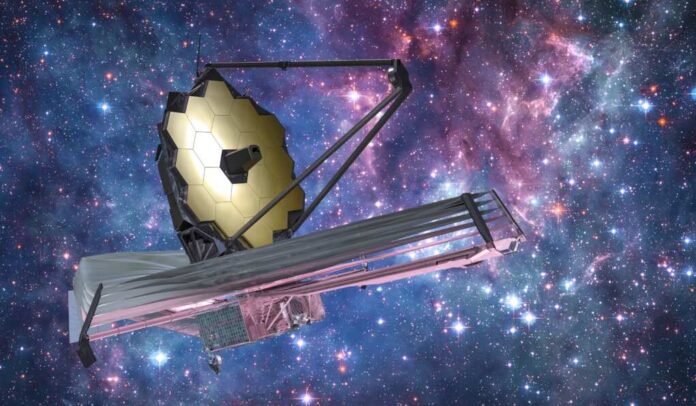
The James Webb Space Telescope (JWST) and several global observatories conducted follow-up observations from July to August 2025. These efforts revealed another anomaly: the object’s coma displayed an unusually high carbon dioxide to water ratio, further complicating the understanding of its origins. Scientists are cautiously considering the possibility of an artificial origin, although the majority remain committed to finding a natural explanation for these findings.
Watch: New Interstellar Object 3I/ATLAS: The Latest Object from Beyond Our Solar System
Scientific Debates and Theories
The interstellar object 3I/ATLAS marks the third confirmed visitor from beyond our solar system, following 1I/ʻOumuamua in 2017 and 2I/Borisov in 2019. Unlike its predecessors, 3I/ATLAS shows unprecedented chemical characteristics that challenge our current understanding of interstellar chemistry. While 1I/ʻOumuamua sparked discussions about potential artificial origins due to its unusual shape and acceleration, 3I/ATLAS’s nickel-rich composition now adds a new layer of mystery to the ongoing debate.
The possibility of a technological origin, while speculative, has not been completely dismissed. Avi Loeb, a prominent theorist, advocates for an open-minded approach, suggesting that such anomalies might hint at advanced extraterrestrial technology. However, the scientific community urges caution, emphasizing the need to exhaust natural explanations before considering artificial possibilities.
Implications for Future Research
The discovery of 3I/ATLAS has significant implications for the field of astronomy and our understanding of interstellar objects. In the short term, it has generated intense scientific interest and media coverage, leading to increased allocation of telescope time for follow-up studies. In the long term, this discovery could potentially revise existing models of interstellar object formation and influence future survey strategies.
As the scientific community continues its analysis, the findings could impact the search for extraterrestrial intelligence (SETI) and further our understanding of planetary formation and astrobiology. Whether 3I/ATLAS is of natural or artificial origin, its unique characteristics are likely to drive innovation in astronomical instrumentation and data analysis, marking a new chapter in the study of interstellar phenomena.
Sources:
Smithsonian Magazine: Telescopes Reveal Surprising Chemistry of a Rare Interstellar Object
Planetary Society: 2025 3I/ATLAS
Space.com: James Webb Space Telescope Takes First Look at Interstellar Comet 3I/ATLAS