
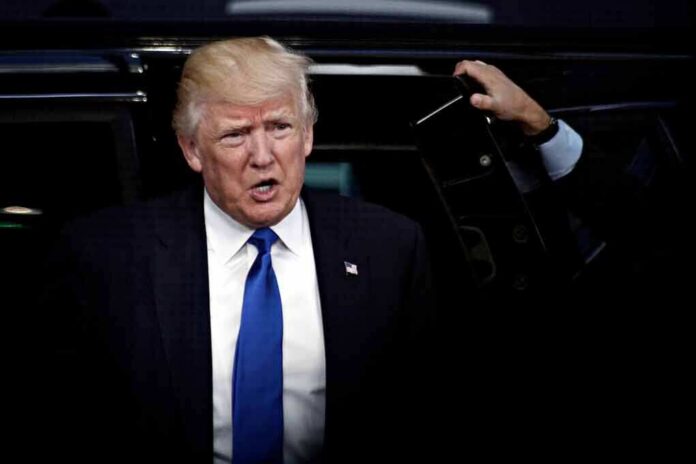
President Trump used a Labor Day greeting to attack Democrats and rally Republicans for the midterms, fusing a national holiday with campaign combat.
Story Snapshot
- Trump’s Labor Day post insulted Democrats and vowed a big midterm win.
- The message tied a holiday salute to direct electioneering language.
- Coverage placed the post within a broader Republican midterm push.
- Scholarly work shows Trump often uses attack-heavy social media framing.
What Trump Said And When He Said It
On Monday, September 7, 2026, President Trump posted a Labor Day message that mixed a holiday greeting with sharp attacks. The post referred to opponents as “Radical Left Lunatics, Communists, and Dumocrats,” and promised, “We’re going to win the Midterms, BIG, and SAVE AMERICA!” Multiple outlets reported the timing and language, linking the greeting to clear election talk. The message used Trump’s familiar first-person branding as he wrote that “your Favorite President (ME!)” knows how to win.
Published reports described the post as a holiday-timed partisan shot that also served as a rallying cry. The Hill and USA Today highlighted both the insults and the promise of a midterm victory, presenting the message as part of a visible, ongoing push by Republicans during Labor Day week. A Spanish-language outlet likewise quoted the “We will win the midterms” line and noted the focus on Democrats in the greeting.
How The Message Fits The GOP’s Midterm Push
USA Today reported that Republicans used Labor Day to tout jobs and sharpen election themes, while Democrats lifted up union workers and labor issues. Trump’s post aligned with that partisan split by pairing a national workers’ holiday with campaign-style language. The framing aimed squarely at energizing supporters with us-versus-them lines. That linkage of civic moments to election goals is a familiar feature of modern campaigning and of Trump’s own political style, according to prior reporting.
Labor Day has often doubled as a political marker, signaling the sprint to November. Trump’s choice of tone and targets echoed his long-standing approach: attack opponents, claim momentum, and center the message on winning. The immediate effect on voters, donations, or turnout is not measured in these reports. But the content itself is not in doubt: the greeting and the midterm vow appeared together and drew broad press attention on the holiday.
Why The Style Matters Beyond One Post
Academic studies of Trump’s social media show frequent use of attack frames against Democrats, the press, and other targets. One analysis of thousands of messages found that many posts contained attacks or conflict-laden themes that drive engagement and polarization. This track record helps explain why a holiday message would also escalate partisan conflict. The tactic gains attention quickly, rallies core supporters, and keeps Trump at the center of the political conversation.
Trump marked Labor Day, a holiday honoring American workers, by calling Democrats "Radical Left Lunatics, Communists, and Dumocrats." Real inspiring stuff for the working class, I guess. It proves once again he can't get through a national holiday without turning it into a…
— frakmaga2025 (@FrakMAGA2022) September 7, 2026
For many Americans, both on the right and the left, this blend of celebration and combat highlights a deeper concern. People see leaders using every civic moment to score political points while core problems linger. Workers still face high costs, unstable schedules, and fears about retirement security. Trump’s message spoke to loyalists who want a fight. It also reminded others that national unity is rare, even on a day meant to honor shared work and common purpose.
What To Watch Next
Watch whether Republican leaders echo Trump’s Labor Day tone at upcoming events and whether Democrats answer with tougher language on wages, unions, and prices. Look for shifts in suburban messaging, where sharp attacks can backfire if voters want stability more than heat. Also track whether union endorsements, jobs data, and local economic stories crowd out national name-calling. In close races, ground game and trust on kitchen-table issues often matter more than viral lines.
Sources:
facebook.com, polinews.org, thegatewaypundit.com, dash.harvard.edu