Tenzing-Hillary Airport in Nepal continues to terrorize passengers and pilots alike, earning its notorious reputation as the world’s most dangerous airport where one wrong move means certain death in the Himalayan peaks below.
Story Overview
- Lukla Airport’s 527-meter sloped runway sits at 9,334 feet altitude with no go-around procedures possible
- Fatal crashes in 2008 and 2010 killed 32 people total, highlighting the airport’s deadly operational risks
- Only specialized pilots with extensive training can attempt landings at this Everest gateway airport
- Weather changes instantly without warning, trapping aircraft in dangerous mountain conditions
Death Trap in the Himalayas
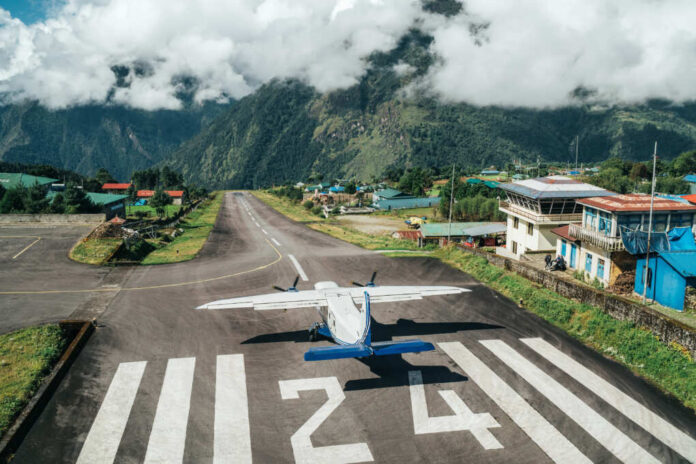
Tenzing-Hillary Airport, known locally as Lukla Airport, sits perched on a mountainside at 9,334 feet above sea level, serving as the primary gateway to Mount Everest Base Camp. The runway measures just 1,729 feet long with a terrifying 12-degree slope that drops off into a sheer cliff on one end and crashes into a mountain wall on the other. Pilots get exactly one chance to land successfully because missed approaches are physically impossible due to the surrounding terrain.
Built in 1964 by Sir Edmund Hillary to support Everest tourism, the airport was never designed to handle modern commercial aviation demands. Weather conditions change within minutes, transforming clear skies into dense fog that leaves aircraft stranded mid-approach with nowhere to go. The combination of extreme altitude, unpredictable weather, and impossible terrain creates a perfect storm of aviation hazards that would shut down any airport in America.
Deadly Track Record Speaks Volumes
The airport’s safety record reads like a disaster report that would trigger immediate federal intervention under any competent aviation authority. In 2008, a Twin Otter aircraft crashed during landing, killing all 18 people aboard when it failed to navigate the treacherous approach. Two years later, another fatal crash claimed 14 lives when bad weather contributed to another deadly accident on the same unforgiving runway.
These major incidents represent just the tip of the iceberg, as regular near-misses and minor accidents occur with alarming frequency. Pilots describe the experience as white-knuckle terror that tests even the most experienced aviators’ skills and nerves. The airport operates under daylight-only visual landing rules, meaning pilots must rely entirely on their eyes and experience rather than modern navigation aids that could save lives.
Tourism Revenue Over Safety Concerns
Despite the documented dangers, Nepal’s Civil Aviation Authority continues operating Lukla Airport because shutting it down would devastate the local economy dependent on Everest tourism dollars. Local airlines like Tara Air and Yeti Airlines profit handsomely from the high-demand route while accepting risks that would be considered criminally negligent in developed nations. The government prioritizes tourism revenue over passenger safety, leaving travelers to assume deadly risks for the privilege of accessing Everest Base Camp.
Aviation experts consistently rank Lukla as the world’s most dangerous airport, yet operations continue with minimal safety improvements or infrastructure investment. The airport serves as a sobering reminder of what happens when economic interests override basic safety standards, creating a death trap that claims lives while generating profits for local operators who benefit from the extreme tourism market.
Sources:
Mental Floss – Scariest Airport Landings
Executive Lounges – 25 Scariest Airports in the World
Love Exploring – Scariest Airport Landings Ranked
The Luxury Travel Expert – Most Dangerous Airports