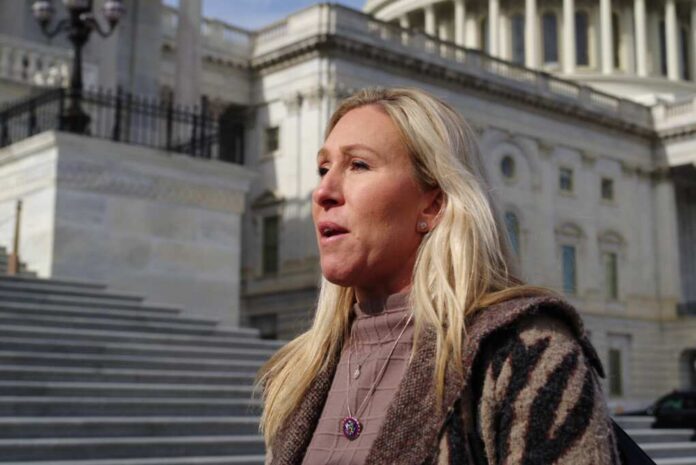
Rep. Marjorie Taylor Greene revealed that President Trump was furious with her for signing a House petition to force the release of all government files on Jeffrey Epstein, exposing potential tensions within the administration over transparency regarding the convicted sex offender’s connections.
Story Highlights
- Trump expressed anger at Greene for supporting Epstein files disclosure petition
- House petition aims to compel release of all government documents on convicted financier
- Greene’s decision reveals potential administration split on transparency issues
- Move highlights ongoing questions about Epstein’s high-profile connections
Trump’s Displeasure Over Transparency Move
Rep. Marjorie Taylor Greene disclosed that President Trump expressed significant anger after she signed a congressional petition demanding the release of all government files related to Jeffrey Epstein. The Georgia representative’s revelation indicates potential friction within Trump’s political circle regarding how to handle the sensitive matter of Epstein-related documents and their potential contents.
BREAKING: 🚨 🇺🇸 🇮🇱 Marjorie Taylor Greene tells 60 Minutes that Trump was FURIOUS she supported releasing the Epstein files.
He said that it was going to “hurt people.”
Trump has been acting like a blackmailed pedo since inauguration.
pic.twitter.com/jcxFAM7VGr— ADAM (@AdameMedia) December 6, 2025
Congressional Push for Document Disclosure
The House petition Greene signed represents a bipartisan effort to compel federal agencies to release classified or restricted documents concerning Jeffrey Epstein’s activities and associations. Epstein, the disgraced financier and convicted sex offender, maintained connections with numerous high-profile political and business figures before his death in federal custody in 2019. The petition reflects growing congressional pressure for transparency.
Administrative Tensions Over Epstein Files
Greene’s decision to support document release despite Trump’s apparent opposition highlights potential disagreements within conservative ranks about government transparency versus protecting potentially sensitive information. The tension suggests differing strategic approaches to handling the politically charged issue of Epstein’s extensive network and documented relationships with prominent figures across party lines and industries.
This development raises questions about the Trump administration’s approach to declassification and transparency, particularly regarding documents that could implicate various political figures. Conservative supporters of government accountability may view Greene’s position as principled, while others might see potential risks in broad document releases without proper vetting or national security considerations.
Sources: