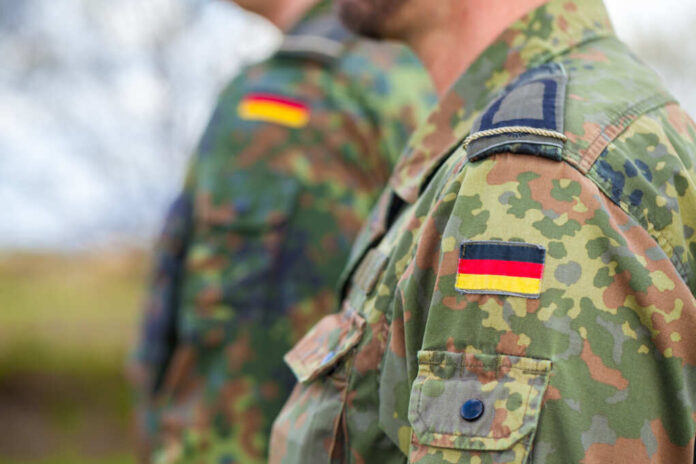
Germany is sending two more US-made Patriot air defense systems to Ukraine, stirring debate yet again over endless Western intervention, ballooning defense costs, and the open question of how much longer American taxpayers and their allies will be asked to bankroll foreign wars while their own borders and communities are neglected.
Story Highlights
- Germany will deliver two additional Patriot launchers to Ukraine in the coming days, with further components arriving within months.
- Ukraine faces a record surge of Russian drone and missile attacks, prompting urgent Western efforts to reinforce air defenses.
- Germany has secured a deal for expedited access to future Patriot systems from the US in exchange for these transfers.
- Patriot system deliveries are piecemeal and complex, raising concerns about coordination and long-term effectiveness.
Germany’s “Leadership” in Ukraine: Who Pays the Price?
On August 1, 2025, Germany’s Federal Ministry of Defence announced it would immediately deliver two more Patriot air defense launchers to Ukraine, adding to the three systems previously sent. The remaining components are scheduled to arrive within two to three months, but the urgency stems from a record-shattering barrage of Russian drone and missile attacks. Over 6,000 long-range drones struck Ukraine in July alone, resulting in devastating civilian casualties—31 killed and 159 wounded, including children, in Kyiv just last month. Germany’s move is being hailed by European leaders as “decisive,” but for those watching the West’s ever-expanding military commitments, the question is simple: When does this so-called leadership stop, and who foots the bill?
Germany now stands as the second largest military aid provider to Ukraine after the United States, and this latest delivery is part of a broader, Western-led push to bolster Ukraine’s air defense. Germany’s motivation is hardly altruistic—by sending its Patriots, it has cut a deal with the US for expedited access to next-generation systems, ensuring its own security needs are met first in the future. European states like Norway, the Netherlands, Denmark, and Sweden are pledging funds to help purchase more Patriots for Ukraine, but the United States remains the linchpin, supplying the very technology and logistical network making this all possible.
Germany says it will supply Ukraine with two Patriot air defense and missile defense systems after reaching an agreement with the US, under which Berlin will receive the latest systems of this type.
Thanks to the agreement with the US, “Germany can support Ukraine first with…
— Belsat in English (@Belsat_Eng) August 1, 2025
Western Priorities: Billions Abroad as Borders Remain Open
The Patriot system, built by Raytheon, is a marvel of modern defense—capable of intercepting missiles and drones with precision. But let’s not fool ourselves: these systems are outrageously expensive, and every shipment abroad means American-made equipment is diverted from our own stockpiles. While Ukraine’s need to defend its skies is real, every new commitment comes with a price tag that lands right in the lap of the taxpayer. As the West races to outspend and out-supply Russia, Americans back home are feeling the pinch of inflation, record-high deficits, and a government that seems more interested in patrolling someone else’s borders than its own. The “piecemeal” nature of these deliveries—one launcher here, a few components there—might look good for press releases, but it’s a logistical nightmare that demands endless training, coordination, and American expertise to keep the whole operation running.
Ukraine’s President Zelensky continues to lobby for at least 10 additional Patriot batteries, and European officials aren’t shy about their willingness to keep that pipeline flowing. But defense analysts warn that Ukraine’s needs far outstrip what’s being delivered, and that a truly effective air defense requires layers of different systems, not just a handful of Patriots. While Germany and its partners trumpet “unity” and “solidarity,” the reality on the ground is a patchwork of rushed deliveries and emergency fixes, funded by citizens who see little to no return on their investment.
Escalation Without End: How Long Will the West Keep Paying?
With every new announcement, the Western alliance edges further into open-ended commitment—one that shows no sign of real resolution. The US and Germany have agreed to further accelerate future Patriot shipments, and logistics hubs like Poland’s Rzeszow airport are now vital arteries in the military supply chain. This deepening cooperation might look impressive on paper, but it’s fueling an arms race that only benefits defense contractors and bureaucrats. Meanwhile, Russia continues to adapt, and experts warn that Moscow could escalate further in response, meaning the cycle of violence and spending is nowhere near its end.
Back home, Americans are left to wonder: Why is there always money for foreign wars, for defending someone else’s sovereignty, but never enough to secure our own borders, protect our citizens, or tackle the crises plaguing our families? The answer, as always, lies in the priorities of those in charge—priorities that seem to favor global entanglements over American strength and security. As Germany, the US, and their allies double down on their costly promises to Ukraine, it’s American taxpayers and communities who are left footing the bill and picking up the pieces.