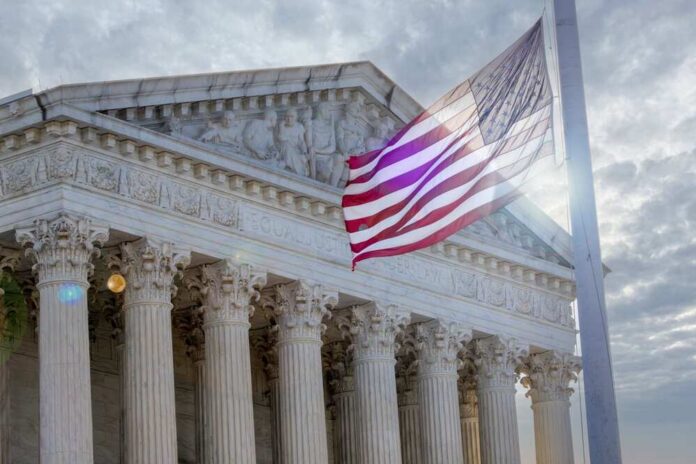
Supreme Court ruling torpedoes Democrats’ redistricting gains, handing Republicans a strategic edge in House control battles.
Story Snapshot
- SCOTUS invalidates Louisiana’s congressional map, mandating GOP-favorable redraw likely restoring 5-2 Republican lean.
- Decision reverses Democratic mid-decade wins in states like Alabama, California, and Utah, potentially costing Dems 3-5 seats.
- Conservative majority limits Voting Rights Act enforcement, empowering state legislatures over federal courts.
- Ongoing flux in FL, NC, LA boosts GOP House majority ahead of 2026 midterms.
Supreme Court Strikes Down Louisiana Map
The U.S. Supreme Court invalidated Louisiana’s redrawn congressional map in early 2026. Federal courts had imposed the map under Voting Rights Act (VRA) Section 2 pressures to create a second majority-Black district. Justices ruled the configuration insufficient, ordering a new map. Louisiana’s GOP-controlled legislature now redraws boundaries, projecting a 5-2 Republican advantage. This restores pre-litigation leans and underscores SCOTUS skepticism toward expansive VRA claims post-2023’s Allen v. Milligan.
Timeline of Mid-Decade Redistricting Battles
Redistricting disputes escalated after the 2020 Census. June 2023’s SCOTUS Allen v. Milligan upheld VRA mandates, forcing Alabama and Louisiana redraws. September 2023 federal courts rejected Alabama’s remedial map, imposing an expert version adding a Democratic seat. November 2024 saw California Prop 50 pass for Dem-favorable lines and Utah courts adopt a Salt Lake Dem-lean district. Early 2026 SCOTUS reversal in Louisiana flipped momentum, with Florida Governor DeSantis signing a GOP-boosting map by May.
These mid-decade changes depart from decennial norms, driven by VRA litigation and GIS mapping precision. Precedents like Rucho v. Common Cause (2019) barred federal partisan gerrymander suits, leaving states dominant.
Stakeholders and Power Shifts
Democrats, via groups like the NDRC, pursued VRA suits for 5-10 seat gains in Alabama, New York, and beyond. Lower court wins proved vulnerable to the 6-3 conservative SCOTUS majority. Republicans, including Florida’s DeSantis and Southern legislatures, defend maps yielding 12-15 seat edges in Ohio and North Carolina. DOJ joined GOP challenges to California’s Prop 50, while Governor Newsom vowed court defenses. Black voter advocates and good government groups fuel grassroots pushes, but SCOTUS empowers GOP state control.
US court torpedoes Democrats' redistricting winhttps://t.co/q0rdyNctHM
— Insider Paper (@TheInsiderPaper) May 8, 2026
Impacts on House Control and Voters
GOP stands to gain 3-5 House seats short-term from Louisiana and Florida redraws, offsetting Democratic holds in California and Utah. Long-term, weakened VRA precedents reduce minority districts through 2030, entrenching Republican edges. Fewer competitive races—down due to tech and rulings—sideline voters, disrupting 2026 primaries. Political stability aids markets under GOP House majority, but erodes trust in voting rights. Both sides lament elite manipulations over fair representation.
Experts like CBS’ Anthony Salvanto note Louisiana’s return to 5-2 GOP lean, with NCSL highlighting state empowerment over federal overreach. Appeals loom, but trends favor limited government and traditional districting principles.
Sources:
Politico: Redistricting could help Democrats win back the House
ABC News: Democrats’ mid-decade redistricting wins face roadblocks
Reuters/StreetInsider: How redistricting and the Supreme Court have cut voters out of US House races
NCSL: Redistricting and the Supreme Court – The Most Significant Cases