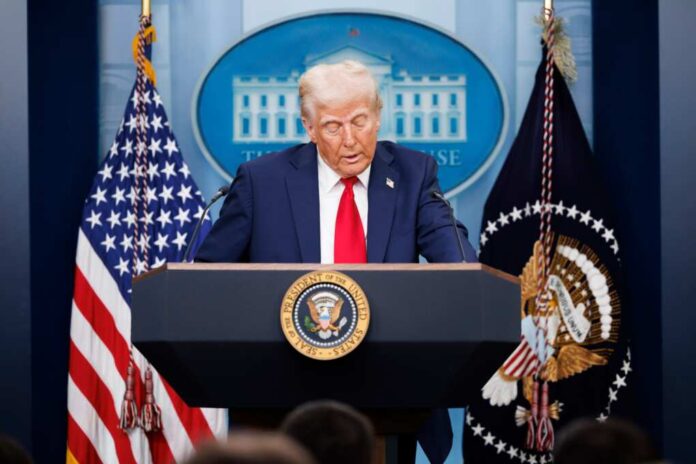
President Trump’s proposed 100% tariff on foreign-made films, including Hollywood productions shot abroad, could reshape the global film industry.
Story Highlights
- Trump’s tariff targets films made outside the U.S., impacting Hollywood and international producers.
- The policy aims to repatriate film production jobs to the United States.
- Concerns rise over potential retaliatory measures from international trade partners.
- Industry experts warn of significant disruptions to the global film business.
Trump’s Tariff Proposal: A New Front in Trade Policy
On September 29, 2025, President Donald Trump announced a groundbreaking policy, proposing a 100% tariff on all foreign-made movies, including Hollywood productions filmed outside the United States. This sweeping measure marks a significant shift in U.S. trade policy, specifically targeting the entertainment sector—a move unprecedented in its scope and impact. The announcement has sent shockwaves through Hollywood and the international film community, raising questions about the future of global film production.
Hollywood studios, heavily reliant on international locations for cost savings and creative diversity, face immediate challenges. The policy could lead to increased production costs, potentially driving filmmakers to reconsider where and how they produce their content. Many industry leaders express concern over the policy’s potential to disrupt ongoing projects and delay releases. The tariff, framed as a protective measure to bolster domestic job creation, aligns with Trump’s broader economic nationalism agenda, which has previously focused on repatriating manufacturing jobs.
Trump vows 100% tariff on movies made outside of the US
Says Hollywood was 'STOLEN like candy from a baby'
If enacted: ticket prices go UP, legal fights erupt, and the movie industry takes a heavy hit pic.twitter.com/jFG7kYnUEs
— RT (@RT_com) September 29, 2025
Reactions from Stakeholders and Global Impact
The response from the film industry has been swift and vocal. Major studios, such as Disney and Warner Bros., are reportedly mobilizing lobbying efforts to oppose the tariffs. Foreign producers and distributors, particularly those in Canada, the UK, and Australia, fear significant economic repercussions. The policy’s intended economic benefits for the U.S. must be weighed against the risk of retaliatory tariffs from international trade partners, which could escalate tensions and complicate existing trade relationships.
Experts in trade and entertainment law suggest that the policy might backfire, increasing costs for American consumers and reducing the competitiveness of U.S. films abroad. Such a move could lead to a restructuring of Hollywood’s global business model, potentially driving investment back to U.S. soil but at the cost of international collaboration. The potential for retaliatory measures by affected countries adds another layer of complexity to the situation, threatening to spark a broader trade conflict.
Future Implications and Industry Outlook
Looking ahead, the proposed tariff could lead to a significant transformation of the film industry. The short-term effects might include disruptions to production schedules and uncertainty for projects in post-production. Long-term, this policy could reshape Hollywood’s approach to international collaborations, potentially fostering a more domestically focused industry. However, the risk of diminishing the diversity and cultural richness of U.S. cinema remains a concern for many stakeholders.
The global film industry is bracing for the potential fallout, with industry leaders and trade analysts closely monitoring developments. As stakeholders await further details on the policy’s implementation, the debate over protectionism versus global collaboration continues to unfold, with significant implications for the creative and economic landscape.
Sources:
https://www.axios.com/2025/09/29/trump-tariff-foreign-movies-hollywood?utm