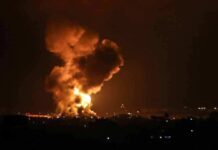

President Trump authorized joint U.S.-Israeli strikes on Tehran targeting Iran’s nuclear infrastructure and regime leadership, marking the most aggressive action against the Islamic Republic since last year’s Twelve-Day War.
Story Snapshot
- Trump announced “Operation Lion’s Roar” strikes on February 28, 2026, targeting sites near Ayatollah Khamenei’s offices after failed nuclear negotiations
- The coordinated assault follows Iran’s continued nuclear weapons development despite previous U.S. strikes that “obliterated” three facilities in 2025
- Iran’s Islamic Revolutionary Guard Corps has conducted threatening military exercises in the Strait of Hormuz while rebuilding weapons capabilities
Trump Takes Decisive Action Against Nuclear Threat
President Trump authorized major combat operations against Iranian targets on February 28, 2026, coordinating with Israeli forces under “Operation Lion’s Roar” to strike facilities near Supreme Leader Ayatollah Ali Khamenei’s Tehran offices. The President’s announcement follows the collapse of Oman-mediated nuclear talks and a 10-to-15-day ultimatum issued February 19, warning Iran to abandon its weapons programs. This decisive action demonstrates the administration’s refusal to tolerate Iran’s nuclear ambitions and ballistic missile development threatening American homeland security. Trump’s State of the Union address on February 24 warned that Iran continues rebuilding nuclear weapons capabilities despite repeated warnings.
Background of Failed Diplomacy and Escalation
The strikes come after over four decades of U.S.-Iran hostility dating to the 1979 hostage crisis, with tensions dramatically escalating during the June 2025 Twelve-Day War. Israel launched the initial airstrikes on June 13, 2025, followed by U.S. forces striking three Iranian nuclear sites on June 21—facilities Trump claimed were “obliterated,” though independent confirmation remains unavailable. Iran responded by firing over 200 missiles at Israel, some evading defenses and killing at least two people. Post-war indirect negotiations through Oman collapsed by February 2026 as the administration expanded demands beyond nuclear weapons to include Iran’s ballistic missile programs and proxy forces like Hezbollah and Hamas threatening regional stability.
Iranian Regime’s Dangerous Nuclear Rebuild
Intelligence assessments confirm Iran has aggressively rebuilt nuclear capabilities destroyed during 2025 operations, developing ballistic missiles with sufficient range to strike the continental United States. The Islamic Revolutionary Guard Corps concluded provocative military exercises in the strategic Strait of Hormuz on February 25, just days before the strikes, signaling Tehran’s readiness for conflict. Expert analysis from the Institute for the Study of War indicates Iran remains unlikely to accept U.S. demands for permanent nuclear disarmament, viewing such concessions as existential threats to the regime. The administration deployed a naval armada to the region in December 2025, demonstrating American resolve to prevent Iran from acquiring nuclear weapons that would destabilize the Middle East and threaten our allies.
Leadership Vulnerabilities Delay Iranian Response
The 2025 Israeli and U.S. operations successfully targeted Iran’s IRGC chain-of-command, creating paranoia within senior leadership about vulnerability to precision strikes. Reports indicate Iranian officials express heightened concern over attacks targeting regime seniors, potentially explaining delays in authorizing counterstrikes. This leadership paralysis, while temporary, provides critical time for American and Israeli forces to consolidate gains and prepare defenses. Analysts warn that Iran will ultimately retaliate through direct missile attacks or proxy forces, threatening U.S. bases and Israeli population centers with devastating consequences for regional security.
Regional and Economic Implications
The military action carries significant short-term and long-term consequences for Middle East stability and global energy markets. Iranian protests have erupted since December 2025, indicating domestic unrest that could either strengthen or weaken the regime’s resolve depending on strike effectiveness. The Strait of Hormuz remains a critical chokepoint for global oil supplies, with Iranian exercises threatening disruptions that would spike energy prices and harm American consumers already suffering from years of inflationary policies. Successful degradation of Iran’s nuclear infrastructure would prevent a nuclear-armed theocracy from dominating the region, but failure risks emboldening Tehran’s “sinister ambitions” and accelerating weapons development. The administration’s willingness to use decisive force demonstrates commitment to protecting American interests and supporting Israel’s right to self-defense against Iranian aggression.
Sources:
Iran Update February 25, 2026 – Critical Threats
US-Iran Conflict: A Timeline of More Than Four Decades of Enmity – NDTV
Iran Update February 26, 2026 – Institute for the Study of War