
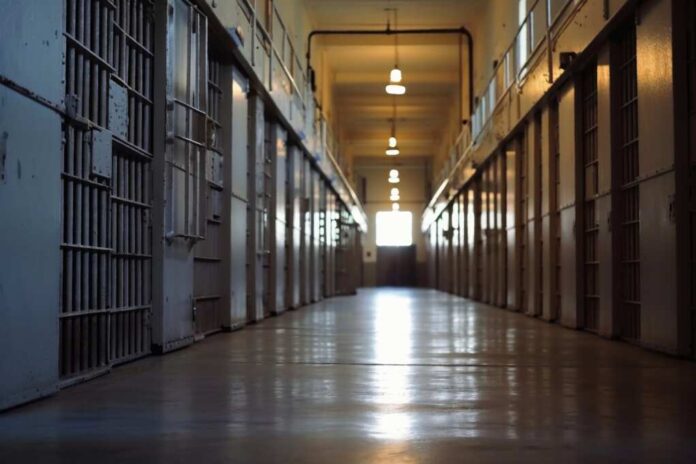
A Tennessee man’s 37-day jailing over an online meme shows how far some officials were willing to go to punish speech they didn’t like—and why Trump’s return is forcing a reckoning over past abuses of power.
Story Snapshot
- Larry Bushart spent 37 days in a Tennessee jail after sharing a meme quoting President Donald Trump; the case was dismissed in October 2025.
- The $2 million bond set by local officials has been cited by legal experts as an extraordinary measure for a social media post.
- The arrest followed the September 10, 2025, assassination of conservative activist Charlie Kirk, a period of heightened national tension.
- Civil liberties advocates argue this case exemplifies the “chilling effect” that selective enforcement has on political discourse.
When Political Speech Becomes “Crime”: Chilling Effects on Ordinary Americans
The arrest of Larry Bushart highlights a significant legal question: when does political satire or “edgy” commentary transition into a “true threat” unprotected by the First Amendment? In this instance, the meme referenced a January 2024 statement made by Donald Trump following a shooting in Perry, Iowa. Because Bushart posted it in a Perry County, Tennessee Facebook group, Sheriff Weems asserted it created “mass hysteria.”
However, legal analysts from the Cato Institute and FIRE note that the criminalization of such speech often depends on the ideological leanings of local law enforcement. When sarcasm or political criticism leads to a 37-day detention and a lost job—as occurred with Bushart—ordinary citizens may begin to self-censor. This trend suggests that the protection of speech is increasingly subject to the discretion of local power brokers rather than a uniform application of constitutional law.
Charlie Kirk’s Assassination and the Online Response
The timing of Bushart’s arrest is inextricably linked to the national climate following the assassination of Turning Point USA founder Charlie Kirk. Kirk was fatally shot at Utah Valley University by Tyler James Robinson, who is currently facing charges of aggravated murder. In the wake of the killing, social media platforms saw a surge in polarizing content, including posts from some users that appeared to celebrate or trivialize the event.
While the U.S. Department of State and Secretary of State Marco Rubio announced measures to penalize non-citizens who praised the assassination, domestic responses remained varied. Conservative critics point to a perceived double standard: authors of posts mocking Kirk’s death rarely faced criminal prosecution, whereas Bushart was jailed for a meme that did not explicitly call for violence. This disparity has fueled concerns that the “incivility” of certain groups is excused while the speech of others is aggressively policed.
Government Overreach and the Path to Reform
The federal lawsuit Bushart v. Weems argues that the jailing was a form of First Amendment retaliation. The case reflects a broader institutional struggle over whether government entities act as neutral arbiters of the law. The First Amendment was designed to protect precisely the type of speech that those in power find distasteful or offensive.
In light of these events, some members of Congress and legal advocacy groups are calling for reforms to “weaponized” bureaucracy and the misuse of threat statutes. By reining in federal and local censorship initiatives, proponents of these reforms aim to ensure that law enforcement cannot treat protected political expression as a public safety threat.
Why These Cases Matter for Everyday Citizens
For Americans engaging in daily online discourse, the Bushart case serves as a precedent for how quickly digital expression can lead to real-world consequences. If authorities are permitted to interpret vague statutes to penalize speech on one side of the political aisle while overlooking hostile rhetoric on the other, the security of constitutional rights becomes selective.
Moving forward, ensuring free speech will require strict legal definitions for “online threats” and a commitment from local officials to uphold the Constitution regardless of personal or political bias. As the legal battle in Tennessee continues, it remains a critical test of whether the American legal system can maintain equal protection for all speech in a highly polarized era.
Sources: