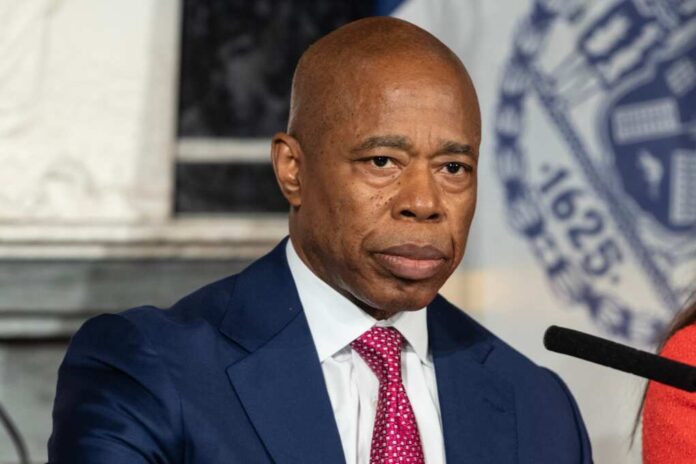
Mayor Eric Adams’ $30 million mental health initiative claims to empower New Yorkers, but persistent funding instability and political maneuvering expose cracks in the city’s approach to serving those most in need.
Story Snapshot
- Mayor Adams has announced that 13 mental health clubhouses are operational across
- New York City, marking the largest expansion in 30 years.
- The $30 million project aims to serve over 6,600 adults with severe mental illness by 2027.
- Despite new openings, funding remains a concern, with advocates warning of possible closures without stable, long-term investment.
- Stakeholders are debating the sustainability and effectiveness of the city’s approach amid ongoing political and budget battles.
Largest Mental Health Clubhouse Expansion in Decades
On October 14, 2024, Mayor Eric Adams declared the completion of a $30 million plan to expand mental health services, opening 13 large “clubhouses” across all five boroughs. These facilities are designed to support adults living with severe mental illness, offering a mix of peer-driven community, access to health care, employment assistance, and educational support. This marks the most significant investment in the clubhouse model in nearly thirty years, representing a doubling of previous funding and a renewed push for community-based care over institutionalization.
Initiated in 2023 by New York’s Department of Health and Mental Hygiene (DOHMH), this effort responds to decades of stalled expansion and mounting public pressure to address homelessness, public disorder, and untreated mental illness. The Adams administration has framed the project as a centerpiece of its mental health campaign, emphasizing public safety, community integration, and sustainable mental health infrastructure.
Mayor Eric Adams celebrates $33M plan expanding mental health services for New Yorkers at city clubhouses https://t.co/w7nQcIe8JW
— Kayla Mamelak Altus (@KaylaMamelak) August 12, 2025
Funding Instability Threatens Clubhouse Model
Despite the headline-grabbing investment, past and present funding for clubhouses in New York City has been a subject of debate. Advocacy groups and providers have fought annual budget battles for decades, with emergency funds from the City Council in June 2024 narrowly averting the closure of five clubhouses. Providers and council members continue to warn that without baseline, multi-year funding, these new and existing clubhouses remain at risk. The city’s strategy relies on a mix of city and state dollars, but the lack of guaranteed, long-term investment has cast doubt on the sustainability of the model and the reliability of services for vulnerable New Yorkers.
Political calculus is complex. While the Adams administration touts the clubhouses as a transformative step, advocates stress that these gains could unravel without structural funding reform. Some providers caution that the rush to expand could inadvertently undermine established clubhouses if new funding is not distributed equitably or if political priorities shift, once again leaving those with severe mental illness in limbo.
Impact, Stakeholders, and Ongoing Debates
Clubhouses offer a preventive, community-driven alternative to institutionalization and emergency services—goals that align with both fiscal responsibility and social stability. By integrating medical, legal, and employment support, these centers aim to reduce social isolation and improve long-term outcomes for adults with serious mental illness. Success would mean relief for overburdened hospitals and shelters, job creation, and strengthened neighborhoods. However, the ultimate beneficiaries—clubhouse members—remain dependent on the city’s willingness to guarantee stable funding and resist political whims that threaten program continuity.
Key players include Mayor Adams, the DOHMH, the City Council, major nonprofit providers, and advocacy coalitions. While most stakeholders support the expansion, underlying tension persists over who controls funding and program direction. Advocates and some providers have publicly called for transparent, multi-year commitments to ensure the clubhouses remain open and effective, regardless of shifting political winds or budget shortfalls.
Sources:
Mayor Adams Opening 13 New Clubhouses to Support New Yorkers Living With Serious Mental Illness
Mayor Adams’ Funding Plan for Mental Health Clubhouses Might Force Some to Close
NYC Hatches New Clubhouses for People With Serious Mental Illness
NYC Community-Based Clubhouse Members, City Leaders, and Advocates Rally at City Hall