As Americans watch gas prices spike and casualties mount, the White House is now fighting a second war at home: a credibility battle over what “success” in Iran actually means.
Story Snapshot
- President Trump snapped back at a reporter asking when the Iran war will end, saying the operation is “way ahead of schedule” while arguing media coverage makes Iran look like it’s “doing wonderfully.”
- By the second week of the conflict, the U.S. military had struck more than 5,000 targets, even as Iran continued daily attacks across the Gulf.
- A preliminary U.S. military investigation found the U.S. responsible for an elementary-school strike that killed at least 160 children, intensifying scrutiny of the campaign.
- Mixed signals inside the administration—Trump suggesting near-victory while the Defense Secretary called it “just the beginning”—are fueling public confusion and congressional attacks.
Trump’s Florida Departure Turns Into a War-Timeline Showdown
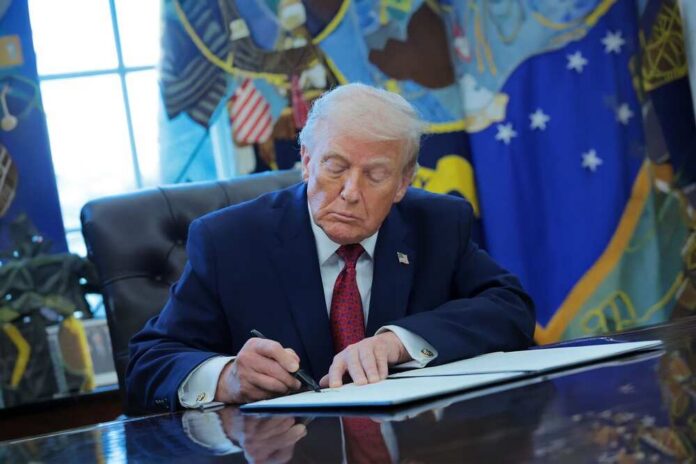
President Donald Trump’s brief exchange with a reporter on March 14, 2026—during the second week of the Iran war—captured the central political problem facing his administration: the country wants clarity on end goals, timelines, and costs. Asked when the war would end as he left for Florida, Trump emphasized the campaign was “way ahead of schedule,” then pivoted to blasting press coverage he said falsely suggested Iran was “doing wonderfully.”
Trump’s comments also highlighted a familiar tension between wartime messaging and wartime realities. The administration is trying to project control and momentum while the battlefield—and the markets—remain volatile. In this environment, every public statement becomes part of the operational picture, affecting allies, adversaries, and domestic patience. When the press frames the question as “when does it end,” it naturally pressures leadership to define what victory looks like and how Americans will measure progress.
Military Operations Are Massive, and Iran Is Still Striking Back
Reports during the first half of March described a campaign of extraordinary scale. By March 10—roughly the 11th day of the war—U.S. forces had already struck more than 5,000 targets inside Iran, alongside extensive U.S.-Israel bombing operations hitting hundreds of additional sites. Despite that tempo, Iran continued launching daily attacks across the Gulf, with intercepts reported from the UAE to Qatar and Bahrain and at least one fatality in a fresh strike.
The conflict’s geography is now bleeding into global energy risk, because planners are also weighing actions tied to the Strait of Hormuz. About 20% of the world’s oil supply moves through that chokepoint, and attacks on oil tankers there have already shaken stocks and pushed fuel prices higher. Some Californians reportedly saw gas prices topping $7 per gallon, an immediate kitchen-table reminder that foreign conflicts can quickly punish working families at home.
Civilian Casualties Add Pressure as Investigations Continue
The most damaging development for public support may be the civilian-casualty controversy. A preliminary U.S. military investigation determined the United States was responsible for a strike on an elementary school that killed at least 160 children. Separate reporting described a New York City vigil mourning dozens of Iranian schoolgirls killed in what may have been an accidental American airstrike on the first day of the war. Key details remain under review, but the allegations are severe.
For Americans who believe in a strong military, these incidents still matter because they cut straight into the moral legitimacy that sustains long campaigns. They also become ammunition for hostile propaganda, and they invite legal and political escalation at home. The responsible posture—especially for conservatives who value accountability and the rule of law—is to demand transparent findings while avoiding speculation before investigations are complete.
Conflicting Messaging Fuels Congress-and-Press Combat at Home
Mixed public statements have widened the opening for critics. Trump has described the effort as a “tremendous success right now,” while also suggesting the fight could continue “until it feels right.” At the same time, the Defense Secretary reportedly called the conflict “just the beginning,” a phrase that clashes with any “nearly done” impression. That split-screen messaging makes it easier for opponents to argue the strategy is unclear, even if the operational plan is evolving.
Trump Confronted By Reporter On When War Will End — Claims Media Says Iran 'Doing Wonderfully' https://t.co/6PCZPKa9Uo
— Mediaite (@Mediaite) March 14, 2026
Sen. Chris Murphy has seized on those contradictions, accusing Trump of misleading Americans, calling the approach “alarming in its incoherence,” warning about billions in taxpayer money, and labeling the war “illegal.” Meanwhile, Secretary of War Pete Hegseth has attacked news coverage as “fake news,” arguing that a “patriotic press” should frame stories to emphasize Iranian desperation rather than escalation. The larger takeaway is practical: without disciplined, consistent communication, Americans are left to sort truth from narrative during a high-stakes crisis.
Sources:
Trump Confronted By Reporter On When War Will End — Claims Media Says Iran ‘Doing Wonderfully’
Pete Hegseth Calls Out Press for Iran War Coverage