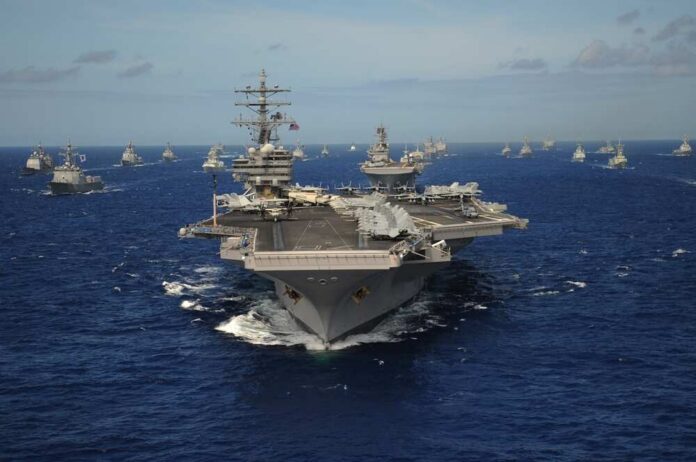
The USS Harry S. Truman, a frontline nuclear aircraft carrier that just completed the most combat-intensive deployment in decades, will be sidelined for nearly five years starting June 2026, raising urgent questions about America’s naval readiness as global threats intensify.
Story Snapshot
- USS Harry S. Truman enters mandatory refueling overhaul from June 2026 through January 2031, reducing active carrier fleet to approximately nine ships during critical geopolitical period
- Carrier returns from grueling eight-month deployment including six months of Red Sea combat operations against Houthi forces and collision damage requiring temporary repairs
- Multi-billion dollar overhaul at Newport News Shipbuilding will refuel nuclear reactors and modernize combat systems, extending the ship’s service life into the 2040s
- Navy faces carrier availability crisis during transition from aging Nimitz-class to delayed Ford-class supercarriers, potentially leaving gaps in Atlantic and Middle Eastern deployments
Routine Maintenance Meets Strategic Vulnerability
The USS Harry S. Truman’s upcoming Refueling and Complex Overhaul represents standard maintenance protocol for Nimitz-class carriers, yet the timing exposes concerning vulnerabilities in America’s naval power projection capabilities. The carrier will enter Newport News Shipbuilding in June 2026 for a 4.5-year overhaul that refuels its nuclear reactors and upgrades combat systems, work required every 25 years to extend these warships to 50-plus years of service. While defense establishment insiders frame this as routine, the reality is that taxpayers are funding multi-billion dollar contracts while the Navy’s carrier fleet shrinks precisely when China accelerates its naval expansion and Middle Eastern threats persist.
Combat-Worn Carrier Returns With Battle Scars
Truman returned to Naval Station Norfolk around June 2025 after an eight-month deployment that stretched crews and systems to their limits. The carrier spent six months in combat operations against Iranian-backed Houthi forces in the Red Sea, executing strikes in Somalia and maintaining presence in one of the world’s most volatile maritime chokepoints. In February 2025, the ship collided with the merchant vessel BESIKTAS-M near Port Said, Egypt, causing hull damage that required temporary bulkhead repairs in Souda Bay, Greece, before resuming operations. Navy investigators later determined the collision was avoidable, adding to four at-sea incidents during the deployment that underscore the operational stresses placed on aging vessels and their crews.
Economic Impact and Workforce Implications
The overhaul contract, estimated at several billion dollars based on historical norms for similar Nimitz-class refuelings, delivers substantial economic benefits to Virginia’s shipbuilding sector while raising questions about allocation of defense resources. Huntington Ingalls Industries-Newport News Shipbuilding will employ thousands of workers on the project through 2031, sustaining the regional economy around Norfolk. However, this massive expenditure occurs as working Americans face continued inflation and economic uncertainty stemming from years of fiscal mismanagement. The Navy’s 2022 Planned Incremental Availability for Truman ran one year over its projected 10-month timeline, a delay pattern seen across similar overhauls like the USS Nimitz, suggesting potential for cost overruns that burden taxpayers while government spending remains unchecked.
Fleet Readiness Crisis During Great Power Competition
Removing Truman from active duty for nearly five years reduces the Navy’s operational carrier fleet to approximately nine ships during a period when strategic competition with China demands maximum naval presence across multiple theaters. The Navy is transitioning from 11 aging Nimitz-class carriers to newer Ford-class supercarriers, but production delays and technical challenges with ships like USS Gerald R. Ford have created gaps in availability. Congressional oversight through the National Defense Authorization Act influences budgeting for these programs, yet elected officials often prioritize political considerations over the hard decisions needed to maintain American military superiority. The January 2031 completion date means Truman will miss critical years of potential conflict escalation in the Taiwan Strait and continued instability in the Middle East, regions where carrier presence has traditionally deterred adversaries.
Aircraft Carrier USS Harry S. Truman ‘Trapped’ in Port Until At Least 2030https://t.co/IZxWMHbasp
— 19FortyFive (@19_forty_five) April 16, 2026
Once modernized, Truman will return to service with upgraded systems capable of supporting advanced air wings through the 2040s, extending America’s naval aviation capabilities for another generation. The refueling process involves removing and replacing the ship’s nuclear fuel cores, work that only Newport News Shipbuilding can perform on the East Coast, creating a monopoly situation that limits competitive pressure on costs and timelines. While the technical necessity of the overhaul is undisputed, the broader context reveals a defense industrial base struggling to maintain the fleet size required for global commitments, a problem exacerbated by decades of procurement decisions driven more by political and corporate interests than strategic military requirements.
Sources:
Navy releases Harry S. Truman Carrier Strike Group investigations
USS Harry S. Truman – Wikipedia
USS Harry S. Truman returns home – Task & Purpose
USS Harry S. Truman is Back – USNI News