Trump’s Cuba pressure campaign just produced a headline “humanitarian” prisoner pardon—right as Washington loosened an oil squeeze that let Russian tankers start feeding Havana again.
Story Snapshot
- Cuba announced April 2 that it will pardon 2,010 prisoners, framing the move as a Holy Week humanitarian gesture.
- The announcement landed days after the Trump administration eased a de facto oil blockade, allowing a Russian tanker to deliver crude to Cuba.
- Havana said it will exclude inmates convicted of serious violent crimes and several other categories, including “crimes against authorities.”
- Reports say Cuba did not publicly credit U.S. pressure, even as prisoner releases have been a long-standing American demand.
Cuba’s “Holy Week” pardon: what was announced and who is excluded
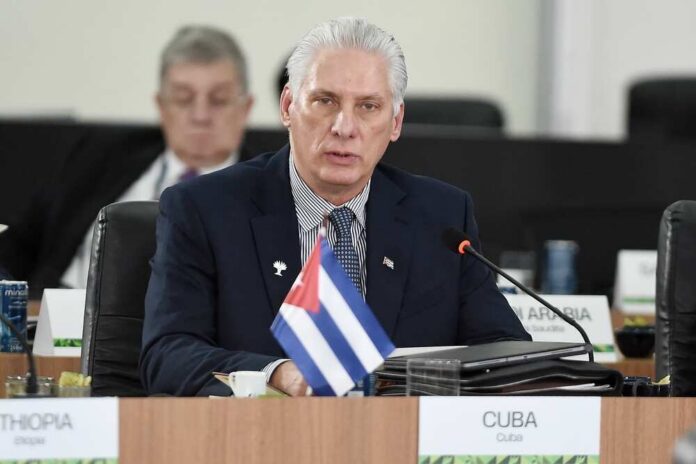
Cuba’s presidency said it will pardon 2,010 prisoners, describing the move as a humanitarian act tied to Easter and Holy Week. State messaging emphasized selection criteria tied to behavior, time served, and health, with special attention to younger inmates, women, prisoners over 60, foreigners, and Cuban citizens abroad. Cuban authorities also listed exclusions, including murder and sexual assault convictions, and said identities were not released publicly.
In practice, the carve-outs matter as much as the headline number. Cuba said it will not include people convicted of drug crimes, theft, illegal livestock slaughter, or “crimes against authorities,” a category that outside observers often watch closely because it can overlap with politically sensitive cases. Reporting also indicated implementation details remain limited, including exactly how many, if any, political prisoners are covered and when each individual will be released.
Trump’s leverage: oil pressure, Russian tankers, and the timing problem
U.S. leverage over Cuba still runs through energy, and the timing around this pardon has raised eyebrows. Days before Havana’s announcement, President Donald Trump’s administration eased a de facto oil blockade, enabling a Russian tanker to deliver crude to the island amid fuel shortages. Around the same window, reporting said Russia signaled a second tanker shipment. Cuba portrays these steps as separate tracks, but the sequence is difficult to ignore.
Cuba’s government publicly avoided saying the pardon came in response to Washington, even though U.S. officials have long pushed for political-prisoner releases in Cuba talks. That gap between what’s said and what’s implied is a classic feature of U.S.-Cuba diplomacy: Havana wants “sovereign” optics, while Washington wants measurable concessions. The Trump administration now owns the policy outcomes—good or bad—because it is the sitting government setting the pressure level.
Why the numbers are clear—but the real substance is still unknown
Multiple outlets reported the same basic facts, though one noted a minor discrepancy in how the total was written: 2,010 versus 2010. The larger uncertainty is not the count but who is in the count. Cuba did not publish names, case types, or how many will be released immediately versus later. Coverage indicated releases may be scheduled within a 6- to 12-month window, leaving families and watchdogs with little to verify.
Another unresolved question is whether “crimes against authorities” exclusions effectively wall off the most politically controversial detainees, which would limit the pardon’s value as a human-rights benchmark. The available reporting does not quantify political cases or provide independent confirmation of categories beyond what Cuba stated. With limited transparency, the public is left parsing official language instead of assessing verifiable court records and release lists.
What this signals for U.S. policy: rights leverage abroad vs. accountability at home
From a conservative standpoint, Americans can support legitimate pressure for political freedom abroad while still demanding clarity on what Washington trades away to get it. Energy concessions that allow adversarial powers to expand influence in the Western Hemisphere are not cost-free, especially when Russia is the supplier backfilling Cuba’s shortages. The question is whether the U.S. gained verifiable releases tied to political repression, or only a broad “humanitarian” move Cuba already uses periodically.
Reporting described this as Cuba’s fifth such pardon since 2011, with more than 11,000 freed across prior rounds. That context matters because it suggests the regime has an established release mechanism it can deploy for optics, religious-calendar alignment, or diplomatic de-escalation. If Washington’s goal is durable change—rather than a one-time headline—then measurable transparency and follow-through become the only real scorecard.For voters already exhausted by years of elite excuses—spending blowouts, border chaos, and foreign-policy drift—this episode also highlights a broader expectation: if America applies pressure, it should be targeted, constitutional in execution, and tied to clear outcomes the public can verify. With the identities still undisclosed and political-prisoner counts unspecified, the story remains a test of whether this administration can convert leverage into results without handing strategic advantages to Moscow.
Sources:
Cuba pardons 2010 prisoners amid United States pressure
Cuba pardons over 2,000 prisoners amid US pressure
Cuba pardons 2,010 people as the US pressures the island’s government