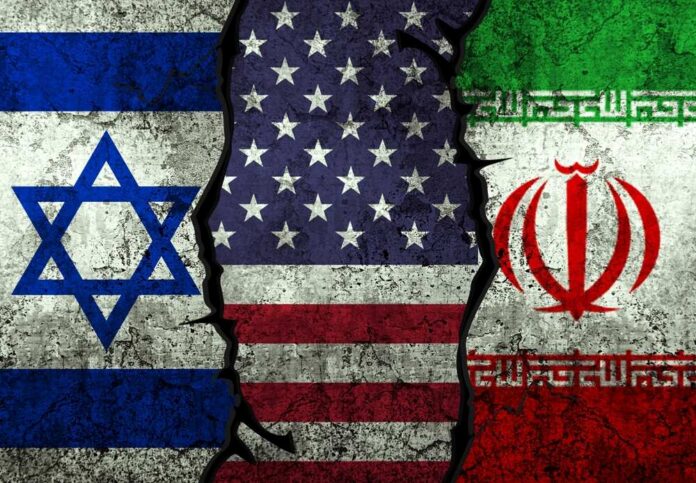
An Israeli decapitation strike in Tehran just killed Iran’s top spy boss—and it’s forcing Trump’s base to ask how close America is to yet another Middle East war.
Quick Take
- Iran confirmed IRGC Intelligence Chief Majid Khademi was killed overnight April 5–6 in Tehran, while Israel publicly credited its air force and military intelligence for the operation.
- Iranian outlets framed the strike as a US-Israeli “terrorist attack,” but public Israeli messaging emphasized a targeted counterterror mission against IRGC leadership.
- The killing is the second reported elimination of an IRGC intelligence chief in under a year, signaling deep Iranian counterintelligence failures.
- War-day reporting points to active ceasefire talks even as President Trump issued warnings about escalation if no deal materializes.
Tehran strike removes IRGC’s intelligence chief as Israel claims responsibility
Israeli and Iranian reporting converged on one central fact: Major General Majid Khademi, head of the IRGC Intelligence Organization, is dead after an overnight strike in Tehran into April 6, 2026. The Israeli Air Force and the IDF said the strike was conducted using military intelligence and described Khademi as a key figure tied to terror planning and internal repression. Iranian state-linked accounts confirmed his death while blaming the US and Israel.
Conflicting details remain about who else may have been hit and what role, if any, the United States played operationally. One widely circulated claim suggests a Quds Force commander, Asghar Bagheri, may also have been eliminated, but confirmation has not been consistent across all reporting. What is clearer is the timing: the strike landed amid a broader US-Israel-Iran confrontation and alongside diplomatic maneuvering, including references to ceasefire talks reportedly brokered through Pakistan.
Why Khademi mattered: the IRGC’s “regime shield” and external operations hub
Iran’s IRGC Intelligence Organization functions as more than a classic spy agency. Multiple outlets describe it as a hybrid instrument of regime protection, counter-espionage, and external targeting—especially through coordination with the Quds Force. In practical terms, that means monitoring dissent inside Iran while building networks and plots abroad. Israel’s framing of Khademi as central to terror activity fits that description, while Iran’s rhetoric emphasizes “foreign enemies” targeting state leadership during wartime.
Khademi’s tenure was also brief and brutal by modern standards. Reporting indicates he was appointed in June 2025 after his predecessor—named variously across outlets as Mohammad Kazemi or a close variant—was killed in a prior strike. If the timeline is correct, Iran has now lost two intelligence chiefs in less than a year. That’s not simply a personnel problem; it suggests an adversary repeatedly locating senior leadership in one of the most security-heavy environments on earth: Tehran.
Decapitation strategy raises the stakes as Trump faces “no new wars” backlash
Conservatives who supported President Trump for border enforcement, cultural pushback, and economic sanity are now watching a different pressure point: war. The strike itself was conducted by Israel, but Iranian messaging continues to bundle the United States into blame for high-profile attacks. In that environment, even limited US support—intelligence sharing, air defense, logistics, or maritime operations—can blur into perceived co-belligerence and invite retaliation, especially if Iran chooses asymmetrical responses.
This is where the MAGA split is becoming harder to ignore. Some voters prioritize standing with Israel against an IRGC described as a terror apparatus targeting Jews and Americans. Others see a familiar pathway to escalation: targeted killings, retaliatory cycles, and then Washington gets pulled deeper—while energy prices rise and “temporary” deployments become long commitments. The reporting also notes President Trump warning of escalation if no deal emerges, language that may reassure hawks but alarms voters who expected a clean break from regime-change era logic.
What’s confirmed, what’s not, and what Americans should watch next
Confirmed across multiple reports: Khademi was killed; Iran acknowledges the death; Israel claims the operation and portrays it as precise and intelligence-driven. Less solid: the reported death of the Quds Force commander alongside him, and the extent of direct US operational involvement beyond political alignment and strategic backing. Some outlets also cite large casualty totals for IRGC and security leadership over the wider conflict, but those figures are difficult to independently verify from the information provided.
Next steps that matter for Americans are concrete and measurable. Watch for any declared US authorization for expanded strikes, new congressional funding requests, or emergency executive actions that could widen executive war-making power without clear constitutional buy-in. Also watch the energy angle: threats around oil routes or escalation talk can hit household budgets fast, and that economic squeeze is often what turns foreign policy debates into domestic political shocks—especially for older families living on fixed incomes.
Sources:
Israel army says killed commander of Iran’s Quds force …
US-Israeli strikes in Iran are intensifying, with top figures …