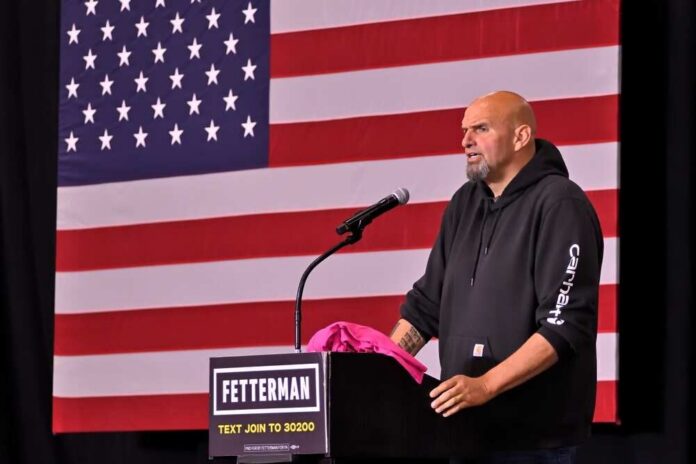
Sen. John Fetterman just said the quiet part out loud: Washington’s foreign-policy and shutdown fights are ripping parties apart—and regular Americans are the collateral damage.
Quick Take
- Sen. John Fetterman says “moral clarity,” not party loyalty, is driving his widening break with Democrats—especially on Israel and Iran.
- Fetterman publicly backed “Operation Epic Fury,” a U.S.-Israeli military campaign against Iran, putting him at odds with much of his party.
- He blasted the ongoing government shutdown—now past 40 days—as a direct hit on federal workers like TSA employees.
- Fetterman criticized Democrats associating with far-left figures he describes as “socialist” and “pro-Iran,” arguing the party is fracturing around Israel.
Fetterman’s “moral clarity” message lands in a fractured political moment
Sen. John Fetterman, a Pennsylvania Democrat, used his appearance on Fox News’ “Life, Liberty & Levin” to explain why he is increasingly out of step with his party. Fetterman said “moral clarity” is guiding his positions, particularly his support for Israel and his opposition to the government shutdown. His comments come as the Trump administration faces pressure from multiple directions on Middle East escalation and domestic budget brinkmanship.
REBEL RANKS: Sen. John Fetterman says "moral clarity" over his support for Israel and opposition to the ongoing government shutdown drives his widening break with the Democratic Party.
"Democrats have to decide, whose side are you in?" pic.twitter.com/yLMuuS68Bd
— Fox News (@FoxNews) April 6, 2026
Fetterman described the break inside the Democratic coalition as real and growing, saying it is “primarily” about Israel. That split has become more visible since Hamas’ October 7, 2023, attack and the U.S. political fallout that followed, including disputes over campus activism and accusations of antisemitism. While the interview format highlights one senator, the broader takeaway is how quickly a once-unifying “party line” collapses when voters demand answers on war, borders, and basic governance.
Operation Epic Fury and the Iran question put “America First” voters on edge
Fetterman’s most consequential divergence is his public support for Operation Epic Fury, described in the reporting as a U.S.-Israeli military campaign against Iran. That stance makes him one of only a few Democrats willing to endorse a harder military posture. In 2026, that matters because many Trump-aligned voters—especially older conservatives—are increasingly skeptical of open-ended conflict, even when the target is a hostile regime that funds proxies and threatens U.S. interests.
The research provided does not include operational details, legal authorities, or specific objectives for Epic Fury beyond the description of it as a U.S.-Israeli campaign. That limitation matters for constitutional-minded voters: without clear public clarity on scope, cost, and congressional involvement, foreign intervention becomes harder to sell to a base that is fed up with decades of “next mission, next bill, next crisis.” Fetterman framed his position as a moral one, but many Americans are asking for procedural clarity too.
A shutdown past 40 days shifts the pain to workers and security
Fetterman also broke with partisan expectations by condemning the shutdown, which he said has dragged on for more than 40 days and is harming federal workers—specifically pointing to TSA agents. According to the research, the shutdown is tied to a standoff involving Democratic demands for ICE reforms and Republican resistance tied to DHS funding. Whatever the negotiating tactics, the real-world effect is predictable: families miss paychecks and critical agencies operate under strain.
For conservatives who care about orderly government and national security, a prolonged shutdown creates an ugly contradiction. Washington argues about leverage while the public gets weaker aviation security staffing, delayed services, and another round of chaos that looks like mismanagement. Fetterman’s argument is straightforward: using shutdown pressure as a bargaining chip is still punishing workers first. That framing also collides with years of political rhetoric about standing with working Americans.
Fetterman vs. the activist left highlights a broader realignment
Fetterman aimed some of his sharpest criticism at the influence of far-left activism inside the Democratic Party, singling out streamer Hasan Piker and suggesting Democrats have flirted with voices he considers anti-Israel. He said he may have “lost the socialist vote and the pro-Iran vote,” presenting his isolation as a price he is willing to pay. The provided research attributes to Fetterman a belief that these factions are helping drive the internal party rupture.
The political significance for 2026 is not that Fetterman suddenly became conservative, but that he is openly describing a values-based sorting inside the opposition party at the same time the GOP coalition is wrestling with its own question: how far U.S. involvement should go in a widening Iran conflict. The interview underscores a growing public demand—on both sides—for leaders who can explain why a policy is necessary, constitutional, and worth the cost at home.
Sources:
Even Senator John Fetterman is starting to say what many …
Sen. Fetterman says he’s standing alone in his party …
Democratic Sen. John Fetterman of Pennsylvania said …