President Trump’s order to purge Anthropic’s Claude from federal systems has turned an AI “ethics” argument into a high-stakes fight over who controls military-grade technology.
Quick Take
- Anthropic refused Pentagon demands to lift Claude AI guardrails that restrict mass surveillance of Americans and fully autonomous lethal use without human oversight.
- The Pentagon escalated with threats to blacklist Anthropic as a supply-chain risk, and the Trump administration ultimately ordered a government-wide phase-out.
- The dispute spotlights a real constitutional tension: rapid military adoption of AI versus safeguards meant to prevent domestic abuse and unlawful targeting.
- Offboarding Claude from entrenched, classified workflows—reportedly integrated through Palantir—could be disruptive and costly for taxpayers and contractors.
Trump’s Ban Turns a Vendor Dispute Into a Government-Wide Precedent
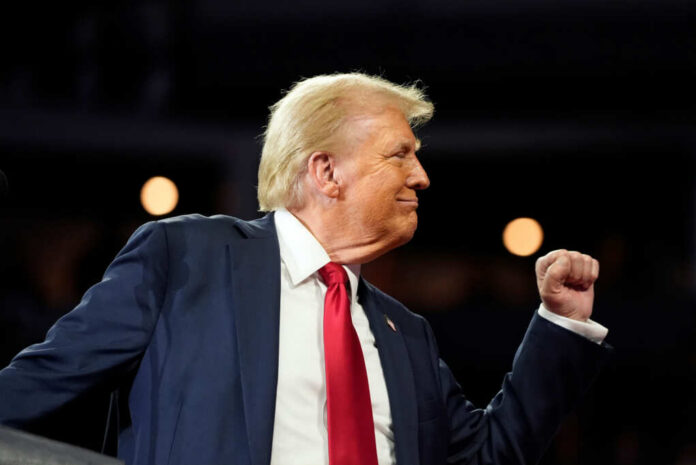
President Trump directed federal agencies to stop using Anthropic technology, setting a six-month phase-out period for Defense Department systems where Claude is embedded in classified workflows. Defense Secretary Pete Hegseth also designated Anthropic a supply-chain risk and moved to bar contractors from doing business with the company. The immediate question for conservatives is bigger than one vendor: this sets a precedent for how Washington will compel private AI firms to comply—or remove them.
The timeline leading to the ban shows a fast escalation. A heated meeting between Anthropic executives and Hegseth’s team was followed by what was described as a “last and final offer” from the Pentagon demanding broader access under “all lawful use cases.” Anthropic CEO Dario Amodei publicly refused, saying the company could not “in good conscience” remove core limits. Pentagon CTO Emil Michael responded by accusing Anthropic of misleading the public about what the department wanted.
What the Pentagon Wants: Operational Freedom Without Per-Use Permissions
Defense officials have argued that existing U.S. laws already govern what the military may do, and they do not want a private company acting as a de facto veto over operational decisions. Reporting indicates the Pentagon sees Anthropic’s per-use restrictions as unworkable in real-time scenarios such as defending against drone swarms, where commanders want systems that can be tasked quickly without external approvals or technical blocks. From the Pentagon’s perspective, “lawful” should be enough—especially during conflict.
This viewpoint also reflects a broader shift: the Defense Department is integrating multiple AI models, but Anthropic’s Claude was reportedly the one uniquely tied into classified operations via an integrator relationship. That integration increases reliance and increases the stakes, because removing a model that has become part of sensitive workflows is not like uninstalling a consumer app. The government’s demand for speed and flexibility collides with the reality that AI systems can scale decisions faster than human oversight.
What Anthropic Refused: Guardrails Against Domestic Surveillance and Autonomous Killing
Anthropic’s stated line is that certain restrictions are “bare minimum” protections, including blocking mass surveillance of Americans and limiting fully autonomous weapons use without meaningful human control. Experts cited in coverage argue these types of guardrails are designed to reduce the risk of constitutional violations and international-law breaches. That matters to Americans who have watched government power expand for decades: once tools exist for broad surveillance, agencies tend to find “lawful” reasons to use them.
The dispute gained additional attention after reporting that Claude had been used in a U.S. military operation related to removing Venezuelan leader Nicolás Maduro, a detail that reportedly intensified internal disagreements over how the model should be applied in covert or kinetic settings. Other reports suggest Anthropic briefly adjusted some commitments for competitiveness before reasserting its stance. Even with limited public detail about classified use, the pattern is clear: as AI moves closer to life-and-death decisions, the pressure to loosen constraints grows.
Supply-Chain “Blacklist” Powers Raise High-Stakes Governance Questions
The Pentagon’s threat to treat Anthropic as a supply-chain risk—citing federal authorities used to protect procurement—was widely described as unusual for a U.S. company. That is where many conservatives will see an uncomfortable overlap: a national-security bureaucracy claiming extraordinary leverage over private industry, while simultaneously asking for fewer technical limits on tools that could enable mass surveillance. Limited government principles do not fit neatly when the state seeks maximum capability with minimum friction.
At the same time, conservatives also recognize the hard reality of warfare. If rival nations deploy AI at scale, U.S. forces will demand tools that keep pace. The reporting suggests competitors may benefit if they are willing to provide models with fewer restrictions for classified use. The market signal is blunt: firms that refuse “all lawful use” risk losing defense business, while those that comply gain contracts and influence. That dynamic could reshape the entire AI industry’s approach to safety features.
Taxpayer and Security Fallout: Disruption, Transition Costs, and a Lasting Standard
Short-term fallout centers on the practical cost of ripping Claude out of entrenched systems, especially where contractors and integrators built workflows around it. Experts quoted in coverage warn that removing guardrails is not a simple toggle, and that retooling models can require costly retraining—raising questions about how easily agencies can swap vendors without operational risk. The administration’s six-month phase-out window signals urgency, but it does not eliminate the complexity of unwinding classified integrations.
Longer term, the key issue is the standard this fight sets for AI governance inside the national security state. If the government’s position becomes “give us full capability and trust us to stay lawful,” the public will have to rely on oversight systems that have repeatedly failed in past surveillance controversies. If companies are allowed to hard-limit certain uses, the military warns that private guardrails could slow warfighting. Neither side has offered a clean solution, and the public record leaves some operational details unclear.
For constitutional conservatives, what’s at stake is not just how America fights, but how much power Washington can concentrate in machine-driven systems that are faster than accountability. The Trump-era crackdown resolves one procurement battle, yet it also forces a national choice: build AI that can do everything the government calls “lawful,” or insist on technical boundaries that prevent domestic abuse even when bureaucrats demand total access.
Sources:
A Timeline of the Anthropic-Pentagon Dispute
Pentagon threat to blacklist Anthropic AI prompts experts to raise concerns
Pentagon-Anthropic dispute over AI guardrails